
COURTKUTCHEHRY SPECIAL ON IRDAI KEY CHANGES IN RULES ON HEALTH INSUARNCE REJECTIONS
IRDAI Tightens Rules on Health Insurance Claim Rejections Over Pre-Existing Diseases
Moratorium period reduced to five years, giving policyholders stronger protection
Non-disclosure disputes remain a challenge despite new safeguards
By Business Reporter
New Delhi: February 19, 2026:
The Insurance Regulatory and Development Authority of India (IRDAI) has introduced new rules to protect health insurance policyholders from claim rejections linked to pre-existing diseases. The regulator has reduced the moratorium period—the time after which claims cannot be contested on grounds of non-disclosure—from eight years to five years. This change, effective April 1, 2024, is expected to benefit millions of policyholders who often face disputes over alleged non-disclosure of medical history.
[Suggested Resource]
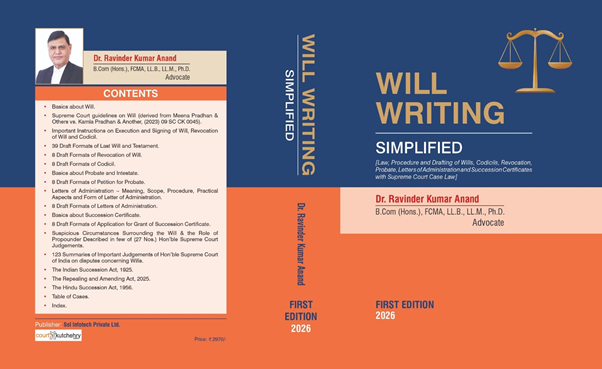
Legal professionals and students alike will benefit from Will Writing Simplified, which covers procedure and case law in detail. Amazon 📘 Buy "Will Writing Simplified" online: 🔹 Flipkart
Background of the Issue
Also Read: Credit Score as Social Currency: Why Financial Discipline Matters More Than Ever
- Health insurance claims are frequently rejected when insurers allege that policyholders failed to disclose pre-existing conditions such as diabetes, hypertension, or heart disease.
- Many customers say they were advised by agents not to disclose such conditions to avoid higher premiums.
- The IRDAI’s new rules aim to balance insurer concerns with consumer rights, ensuring that claim disputes do not drag on indefinitely.
Key Changes in IRDAI Guidelines
- Moratorium Period – Reduced from eight years to five years. After five years of continuous coverage, insurers cannot reject claims citing non-disclosure of pre-existing conditions.
- Waiting Period – Reduced from four years to three years for declared pre-existing conditions. This means policyholders can get coverage sooner for illnesses they disclose.
- Free-Look Period – Policyholders continue to have 15 days to review terms and cancel if they find clauses unclear.
- Transparency Mandate – Insurers must clearly explain exclusions and waiting periods at the time of sale.
Why This Matters
- For Policyholders: Greater protection against unfair claim rejections, especially for long-term customers.
- For Insurers: Encourages better underwriting practices and reduces litigation.
- For the Market: Builds trust in health insurance, which is critical in India’s growing healthcare sector.
Also Read: Rajasthan High Court Surprise Inspection Finds 8 Judges Absent in Jodhpur District Court
Challenges That Remain
- Agent Misguidance: Many disputes arise because agents advise customers to hide medical history. Without proof, policyholders struggle to contest rejections.
- Awareness Gap: Customers often do not read policy documents carefully, missing key clauses.
- Legal Complexity: Courts have repeatedly ruled that insurers cannot deny claims arbitrarily, but litigation remains costly and time-consuming.
Expert Views
Insurance experts say the reduced moratorium period is a progressive step that aligns India with global best practices. However, they caution that policyholders must still disclose all known medical conditions to avoid disputes. Legal professionals emphasize that the new rules will strengthen consumer rights but will not protect deliberate misrepresentation.
Conclusion
The IRDAI’s new rules on pre-existing disease disclosure mark a turning point in India’s health insurance sector. By reducing the moratorium period and waiting time, the regulator has given policyholders stronger protection against unfair claim rejections. Yet the responsibility remains on both insurers and customers to ensure transparency and honesty in the process.
Also Read: Madras High Court Declares Consideration for Promotion a Fundamental Right
Keywords for SEO & Faster Searches
- IRDAI health insurance rules 2024
- Pre-existing disease claim rejection India
- Moratorium period health insurance
- Free-look period IRDAI guidelines
- Health insurance non-disclosure disputes
- IRDAI claim rejection rules
- Policyholder rights India health insurance
Also Read: Supreme Court: All High Courts Are Equal, No Practice of Transferring Matters to One Court