V Chandra Sekhar & Anr. Vs Koguru Suresh Babu & Ors.
Andhra Pradesh High Court · (2026) 09 AP CK 4540
Code of Civil Procedure, 1908-Section 151
AI-powered legal research across 12 lakh+ Indian judgments — precedents, summaries and legal principles in seconds.
0+
Searchable Judgments
All Major Courts
Supreme Court and High Court coverage
Verified Sources
Authentic court records and citations
AI-Powered
Summaries, relevance scoring and related cases
ONE RESEARCH PLATFORM
CourtKutchehry brings Indian judgments, intelligent filters and AI-assisted analysis into one workspace — so a question asked in plain language leads directly to the authorities, provisions and reasoning that matter, with every step of the trail preserved.
Ask a legal question
Start with a case name, citation, provision or a question in plain language.
Search relevant judgments
Query more than 12 lakh judgments across all major courts together.
Compare relevance and legal principles
Relevance indicators and principle tags show which authorities matter most.
Summarise, save or download the result
Generate structured summaries, organise research folders and export PDFs.
CourtKutchehry AI
CourtKutchehry AI searches the platform’s judgment database, identifies relevant legal principles and shows the supporting sources behind every response.
Open CourtKutchehry AIDelay in filing an FIR is not automatically fatal to the prosecution. Courts generally examine whether the delay has been satisfactorily explained and whether it creates a reasonable possibility of embellishment or consultation.
SUPPORTING JUDGMENTS
Lalita Kumari v. Govt. of Uttar Pradesh
Supreme Court of India · 2013 · (2014) 2 SCC 1
Amar Singh v. State of Punjab
Punjab & Haryana High Court · 2009 · 2009 SCC OnLine P&H 4041
Thulia Kali v. State of Tamil Nadu
Supreme Court of India · 1972 · (1972) 3 SCC 393
AI-assisted legal research should be reviewed by a qualified legal professional.
Suresh Chandra Jana v. State of West Bengal
SelectedSupreme Court of India · 12 Aug 2017 · (2017) 16 SCC 466 · Bench: 2 Judges
AI JUDGMENT SUMMARIES
Generate structured summaries covering case background, material facts, legal issues, arguments, court reasoning, the final decision, key legal principles, cases cited and similar judgments.
Appeal against conviction under Section 302 IPC. The Supreme Court examined whether an unexplained delay in lodging the FIR, combined with inconsistencies in eyewitness accounts, rendered the prosecution case unreliable.
Discover cases with similar facts, legal questions, statutory provisions and judicial reasoning.
SELECTED JUDGMENT
Rangappa v. Sri Mohan
Supreme Court of India · 2010 · (2010) 11 SCC 441
M/s Meters and Instruments v. Kanchan Mehta
Supreme Court of India · 2017
Same interpretation of Section 138 — scope of compounding at the appellate stage.
Basalingappa v. Mudibasappa
Supreme Court of India · 2019
Similar factual circumstances — rebuttal of the presumption of a legally enforceable debt.
Bir Singh v. Mukesh Kumar
Supreme Court of India · 2019
Followed by later Supreme Court ruling on signed blank cheques handed over voluntarily.
Andhra Pradesh High Court · (2026) 09 AP CK 4540
Code of Civil Procedure, 1908-Section 151
Andhra Pradesh High Court · (2026) 09 AP CK 4536
Bharatiya Nagarik Suraksha Sanhita, 2023-Sections 480, 483 · Bharatiya Nyaya Sanhitha, 2023-Sections 329(4), 118(1), 191(2), 191(3), 109(1) read with 190
Andhra Pradesh High Court · (2026) 09 AP CK 4535
CPC-Section 47, 151 · Constitution of India-Article 227 · Legal Services Authorities Act 2002 (Act No.37 of 2002)-Section 22C(1) · Legal Services Authority (Amendment) Act 2002
Calcutta High Court · (2026) 09 CAL CK 4505
CPC-Order VI, Rule 17 · Limitation Act
Uttarakhand High Court · (2026) 09 UK CK 4502
B.N.S., 2023-Sections 106(1), 281
Calcutta High Court · 2025 INSC 684
West Bengal Agricultural Produce Marketing (Regulation) Act, 1972-Section 2(1)(a), 2(mb), 2(na), 2(mn), 12, 13, 17, Explanation I, Explanation II, Explanation III, 34 · Industries (Development and Regulation) Act, 1951-Section 2, 3(i), 9, 9(4), 28 of Schedule 1(one) · Constitution of India-Article 19, 19(1)(g), 245(3), 254, 301, 302-304, 304, 304(b), Part III, Entry 26 of the State List, Entry 66 of the State List, Entry 7 of the Concurrent List · Sale of Goods Act, 1930-Section 4, 5, 5(2) · Indian Contract Act-Chapter VII · Central Excise Act-Section 2(f) · Bengal Finance (Sales Tax) Act, 1941 · Maharashtra Agricultural Produce Marketing (Regulation) Act of 1964 · West Bengal Agricultural Produce Marketing (Regulation) (Amendment) Act, 2014 · West Bengal Agricultural Produce Marketing (Regulation) Amendment Act, 2017 · The West Bengal Agricultural Produce Marketing Regulation) Rules, 1982
Search or ask
Enter a case name, citation, provision or legal question.
Review relevant sources
Compare judgments and relevance indicators.
Understand the decision
Generate structured summaries and identify key legal principles.
Build your research
Save, organise, cite and download useful material.
BUILT FOR EVERY PRACTICE
Locate supporting precedents faster
Prepare case arguments with connected authorities
Summarise lengthy judgments before hearings
Search legislation and judicial interpretation together
WORKSPACE PREVIEW
Hearing preparation workspace
Trusted
“One connected workspace”
CourtKutchehry reduces the time spent moving between multiple legal databases. The relevance indicators and structured summaries make the first stage of research significantly more focused.
“Connected research”
The ability to move from a legal provision to related judgments creates a much more connected research workflow.
“A running start”
CourtKutchehry AI is especially useful for identifying an initial set of authorities before conducting a detailed manual review.
“Prepared for hearings”
Structured summaries before a hearing mean I walk in already knowing the reasoning of every authority the other side may cite.
“Beyond keyword search”
Similar judgment discovery has surfaced precedents I would simply not have found through keyword search alone.
“Doctrinal work, faster”
For doctrinal work, tracing how a single provision has been interpreted across decades is now a one-afternoon task.
“One connected workspace”
CourtKutchehry reduces the time spent moving between multiple legal databases. The relevance indicators and structured summaries make the first stage of research significantly more focused.
“Connected research”
The ability to move from a legal provision to related judgments creates a much more connected research workflow.
“A running start”
CourtKutchehry AI is especially useful for identifying an initial set of authorities before conducting a detailed manual review.
“Prepared for hearings”
Structured summaries before a hearing mean I walk in already knowing the reasoning of every authority the other side may cite.
“Beyond keyword search”
Similar judgment discovery has surfaced precedents I would simply not have found through keyword search alone.
“Doctrinal work, faster”
For doctrinal work, tracing how a single provision has been interpreted across decades is now a one-afternoon task.
Placeholder testimonials — hover to pause; replace with verified quotes.
Start with a month of full access.
₹299
1 month · paid once + applicable tax
₹299 / month
Total including tax: ₹352.82
1,000
Court Kutchehry AI Credits / month
Build a regular research routine.
₹759
3 months · paid once + applicable tax
₹253 / month
Total including tax: ₹895.62
1,100
Court Kutchehry AI Credits / month
More time for the work that matters.
₹1,299
6 months · paid once + applicable tax
₹216.50 / month
Total including tax: ₹1,532.82
1,200
Court Kutchehry AI Credits / month
A full year. Our best membership value.
₹2,199
12 months · paid once + applicable tax
₹183.25 / month
Total including tax: ₹2,594.82
1,300
Court Kutchehry AI Credits / month
One payment. No auto-renewal. Applicable tax added at checkout.
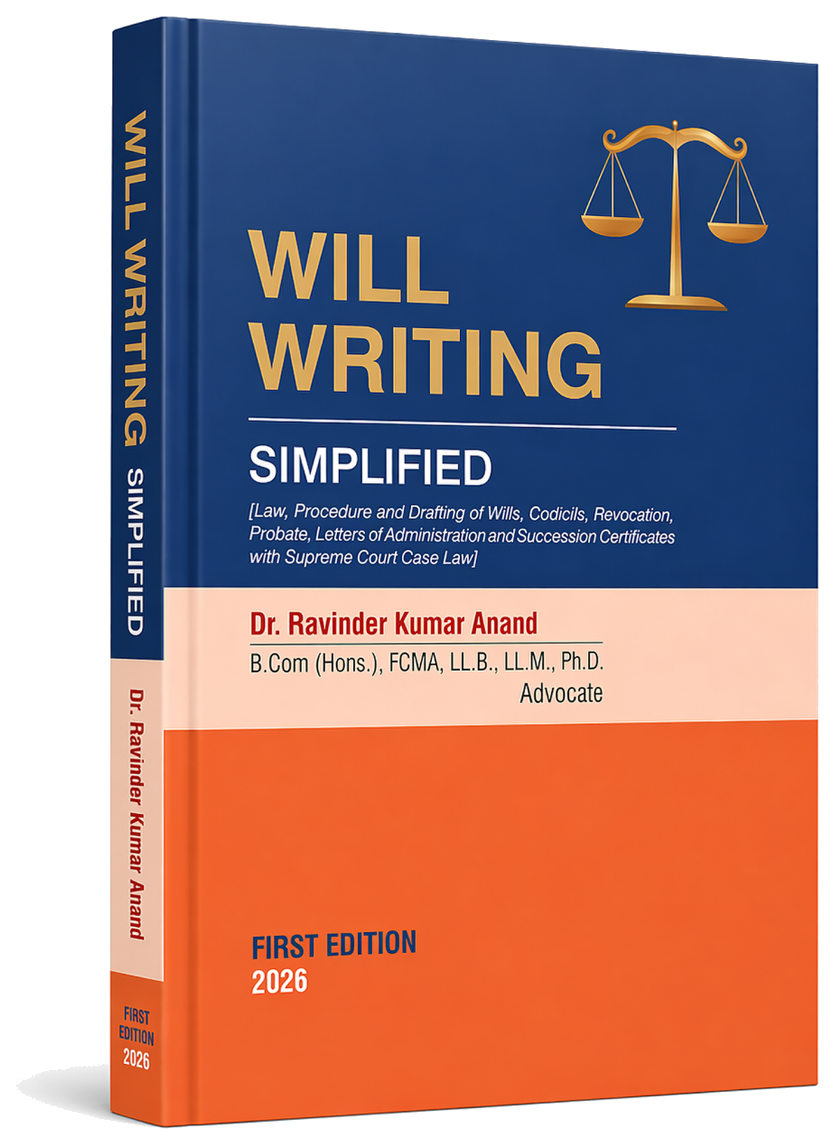
NEW · 2026Will Writing Simplified · Dr. Ravinder Kumar Anand, Advocate · First Edition 2026
The law, procedure and drafting of wills, codicils, revocation, probate, letters of administration and succession certificates — explained without jargon, backed by Supreme Court case law.
The platform covers more than 12 lakh judgments from the Supreme Court of India and High Courts, spanning criminal, civil, constitutional, commercial, service and family law, alongside landmark and recently reported decisions.
Yes. You can search by legal issue, statutory provision, citation, court, judge or plain-language description — the search understands legal concepts, not just exact case titles.
It analyses your question, searches the judgment database for matching legal principles and factual patterns, and ranks results with relevance indicators — always showing the supporting sources behind each response.
AI summaries and research results are designed to assist and accelerate research, not replace it. They should always be verified against the original judgments and statutory materials before being relied on in practice.
Yes. All paid plans include judgment PDF downloads.
Very much so. Structured summaries, landmark case collections and connected legal research make it useful for coursework, moots and building foundational legal understanding.
Yes. You can upgrade, downgrade or cancel at any time — changes apply from your next billing cycle with no hidden charges.
Search Indian judgments, understand legal principles and discover relevant authorities through one connected legal research platform.