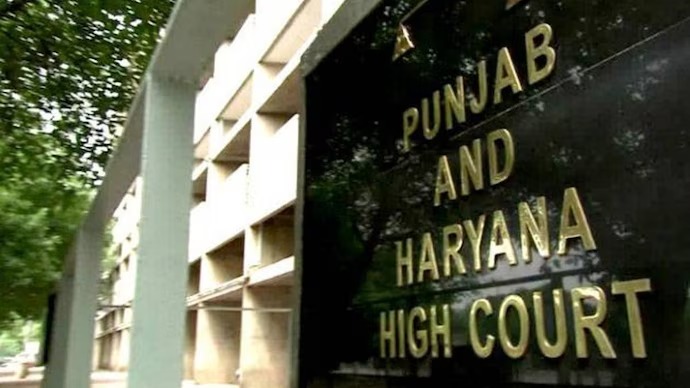
Sudhir Agarwal, J.@mdashThis is an appeal against acquittal of all accused by the Special/Additional Sessions Judge, Meerut vide judgment dated 12th of June 1990, in Sessions Trial No. 418 of 1987. Accused were ten in number, namely, Babu, Wasiyat, Chaman, Shahzama, Zafar, Kalwa, Saida alias Sayeed Hasan, Anwar, Mohd. Ilyas and Riyasat who were prosecuted for offences under Sections 147, 148, 149, 302 IPC. Earlier, the accused were fortunate enough since their appeal was dismissed by an Hon''ble Single Judge (it was cognizable at that time by Single Judge) at the threshold vide order dated 10th July, 1992 but the destiny did not allow the matter to rest here and the State preferred Criminal Appeal No.118 of 1996 before the Apex Court. It was allowed by the judgment dated 29th January 1996 and setting aside the order of the Hon''ble Single Judge, the Apex Court remitted the matter back with the direction to grant leave, admit appeal, issue notice to the respondents and then decide the matter on its own merits. Accordingly, the Division Bench vide order dated 14.5.1996 granted leave to appeal and issued notices to the respondents and trial court''s record was summoned. After service of notice on the accused respondents, vide order dated 20.5.2005, this Court admitted the appeal. That is how this appeal has come up before this Bench for hearing afresh. It is to be noticed at this stage that during pendency of the matter, accused respondent No. 7 Saida alias Sayeed Hasan son of Hamid and accused respondent No. 9 Mohd. Ilyas have died and, therefore, the appeal stood abated against them and presently, it is concerned with only 8 accused respondents, namely, Shahjama, Chaman, Zafar, Kalwa, Anwar, Riyasad, Babu and Wasiyat.
2. We have heard Sri Koruunanan Bajpayee, learned A.G.A. for the State-appellant, Sri P.N. Mishra, Senior Advocate assisted by Sri V.M. Zaidi Advocate for the accused respondents and have perused the material on record.
3. Broad essentials of the prosecution case as surfacing from the First Information Report and evidence may be put forth. As per the First Information Report made on 19.4.1983 by informant Jamshed Ali, PW 5 to the S.S.P. Meerut, registered as case crime No. 111 A/83 u/s 302 IPC, P.S. Kharkhoda, District Meerut, the incident took place on 18.4.1983, in the evening at the residence of accused respondent Sakhawat in village Ajrara, P.S. Kharkhoda of Meerut District. It recites that on 18.4.1983 accused Sakhawat, Babu and Wasiyat all residents of village Ajrara went to Radhana-village of the informant and told Shamsher (son of the informant Jamshed Ali, PW 5) that a Panchayat (compromise meeting) was scheduled to be held in their (accuseds'') village to conciliate the enmity that had cropped in between the accused and the informant side on account of murder of one Phurkan. They said that several other persons and relatives would participate in Panchayat and requested Shamsher to accompany them as a Panch. They also told Shamsher that Intzar, Ishtiyaq, Master Abbas, Munkad, Liyakat Ali and Kalwa all residents of village Radhna were also going to village Ajrara to participate in Panchyat by the tractor of Kalwa alias Habib, PW 3. Shamsher said that the aforesaid persons may go by tractor and he along with Zahid would be reaching at the place of compromise meeting by motorcycle. All the above named persons left for village Ajrara (accused''s village) at 5.30 PM, the same day by the aforementioned conveyance, which had been witnessed by the informant PW 5, Abbas, Abbas''s son Nanhe and several others. The next morning (19.4.1983), Wasi, Zahid etc. told the complainant that under a planned conspiracy, the accused Sakahawat, Wasiyat, Wasim, Babu etc. had committed murder of Shamsher, Intezar, Ishtiyaq and Ramzani and threatened all other persons present in Panchayat of dire consequences in case they dared to tender evidence against them as a result whereof all of them fled away.
4. The incident was reported by the informant Jamshed Ali, PW 5, to the S.S.P., Meerut on 19.4.1983, who forwarded the same to the concerned police station with the direction to register the case and make investigation. Consequently, FIR (Ex.Ka-2) was lodged at Police Station Kharkhoda, district Meerut and a case was registered on 21.4.1983 at 2.15 P.M. as Crime No. 111/A u/s 302 IPC. The case was initially registered only against three accused, namely, Sakhawat, Wasiyat and Babu. Investigation was undertaken by Virendra Kumar Yadav, PW 8, who was S.O., Police Station Kharkhoda, District Meerut at the relevant time and had submitted chargesheet against Sakhawat, Babu, and Wasiyat initially and Shahzama, Chaman, Shaukat, Zafar, Kalwa, Saida @ Sayeed Hasan Anwar, later on. After his transfer, new incumbent, PW 4, S.I. J.C. Sharma concluded the investigation and submitted chargesheet against Ilyas and Riyasat.
5. It is pertinent to mention here that on 18.4.1983 at 8.15 P.M., an FIR had already been lodged at the Police Outpost Mundal; of Kharkhoda Police Station, District Meerut as case crime No. 38 of 1983, u/s 147/148/149/307 IPC, by Sakhawat (accused of case crime No. 111/A/83, u/s 302 IPC, registered on the FIR lodged by Jamshed Ali PW 5), setting forth the story that he was pairokar in certain criminal cases from the side of prosecution wherein Intzar, Ishtiyaq, Mahtab, Nawab and others were accused of the murder of one Phurkan. On account of pairvy being done by him, the aforesaid persons bore enmity with the complainant Sakhawat and wanted to kill him. As he did not possess any firearm licence, therefore, for his personal security at night he used to keep with him armed persons of his village holding valid licence. On 18.4.1983 at about 6.45 P.M., he was sitting in his Baithak (drawing room), along with Sayeed Hasan and Kalwa, Ikram, Chhotey, Intzar, Irshad and Abiti. Sayid Hasan and Kalwa were armed with DBBL guns. All of a sudden Intzar, Ishtiyaq, Nawab, Mahtab, Adil, Shamsher all residents of village Radhna & Ramzani r/o village Saundat along with 4, 5 other unknown miscreants came there running, hurling abuses and shouting at Sakhawat to come out of his house and they would be putting an end to his pairokari and would send him also to his deceased brother and sister''s son. They resorted to indiscriminate firing, injuring Ikram and Chhotey who were sitting along with the complainant Sakhawat. Few pellets allegedly dashed with the walls. Hearing the noise of firearm, several persons of the village including Zafar rind Anwar reached the spot with their licensed gun. Some other persons were having Balkati and lathis. It is further stated in the FIR that the persons on the side of Sakhawat, opened fire from their licensed guns in self-defence and some persons threw bricks at the miscreants. In the incident Intzar, Ishtiyaq, and Shamsher all residents of village Radhna and Ramzani of village Saudat were killed. Certain firearms were said to be found in possession of the deceased. This FIR was registered as case crime No. 38 of 1983 under Sections 147/148/149/307 IPC, and 39 to 42 of 1983, u/s 25 of the Arms Act, Police Outpost Mundali undor police station Kharkhoda, district Meerut.
6. It has come in evidence that on receipt of FIR lodged by Sakhawat on 18.4.1983 at 8.15 P.M., the Investigating Officer visited the spot the same night. The S.S.P. and the Circle Officer had also reached the place of occurrence. Due to paucity of time Panchayatnama (inquest report) could not be prepared on 13.4.1983. On 19.4.1983 the Investigating Officer again visited the spot, took blood stained and plain earth samples and sealed in separately, prepared inquest report and sealed four dead bodies in presence of witnesses to be sent for postmortem. He prepared Phards/memos (Ex. Ka 13 to Ka-16) of all the articles found at the spot and taken into possession, including tractor, motorcycle etc and completed all the requisite formalities. The Panchnamas (inquest reports) show that bodies of the all deceased were found at Chabutara which was in front of Baithak of the accused Sakhawat and all had died of gunshot and other wounds. However, pursuant to subsequent FIR registered as case crime No. 111/A, on the direction of the SSP, Meerut, investigation proceeded and chargesheets were submitted against the accused respondents.
7. Autopsy on the dead body of the deceased Ishtiyaq was done on 20.4.1983 at 12.30 P.M. by PW 6, Dr. P.N. Khanna of Medical College, Meerut. The deceased was aged about 30 years and about 1 1/2 days had passed since he died. Rigor mortis was present in lower extremities. He found following ante mortem injuries on his person:
1. Gunshot wound of entry 3 x 1 cm x cheek cavity deep on upper part of left side of neck, close to lower jaw.
2. Gunshot wound of exit 5 x 2 cm x mid and out on left side of neck, 8 cm. below left ear.
3. Gunshot wound of exit 3 cm. x 2 1/2 cm. x mid on the back of neck in its middle.
4. Gunshot wound of entry 1 1/2 cm. x 1 1/2 cm. x b.d. (bone deep) on outer right side of neck, 7 cm. below right ear.
5. Gunshot wound of entry 2 1/2 cm x b.d. (bone deep) on the outer upper left thigh, 6 cm below waist line with fr. (fracture) of left femur bone in its upper half.
8. The Doctor noticed B.S.T. (blackening, scorching and tattooing on the wounds of entry. Further, 32 metallic shots and wad pieces were taken out from thighs which were scaled and sent to SSP. In his opinion, death occurred due to syncope as a result of gunshot injuries.
The same Doctor, PW 6 examined the dead body of Intezar on 20.4.1983 at 1 P.M. According to him, the deceased was aged about 35 years and about 1 1/2 days had passed since his death. Rigor mortis was found present over exts (extremities). He found following ante mortem injuries on his person.
1. Multiple abrasions in an area of 8 x 3 cms on left upper part of face, scorching present.
2. Gunshot wound of entry 5 cm x 2 cm x bone deep on the left angle of mouth.
3. Gunshot wound of entry 4 x 3 cm. x brain cavity deep, brain matter out. Right mastoid region with complete laceration of right ear in two halves.
4. Traumatic swelling 6 x 4 cms on the back of left ear.
5. Gunshot wound of entry 5 x 4 cm x b.d.(bone deep) on the left groin with fracture of head of femur.
6. Multiple abrasions with scorched margins in an area of 14 x 5 cm on lower part of abdomen, 7 cm above private parts.
7. Multiple wounds of gunshot in an area of 8 x 4 cm x m.d. (muscle deep) on the outer upper left thighs (maximum size 1 x 1 cm. minimum 1/2 x 1/4 cm x m.d.(muscle deep) and s.d.(skin deep)
The Doctor noticed B.S.T. (blackening, scorching and tattooing on the wounds of entry. 37 + 1 metallic shots and wad pieces were recovered from the brain cavity and left thigh. As per the doctor, cause of death was syncope.
9. On autopsy conducted over the dead body of Ramjani, Dr. P.N. Khanna, PW 6 opined that he was aged about 30 years and about 1 1/2 days had passed. Rigor mortis was present in lower exts. Following ante mortem injuries were found on the person of the deceased:
1. Gunshot wound of entry 3 x 2 cm x bone deep on outer side of fingers.
2. Gunshot wound of exit 14 x 8 cm x b.d. (bone deep) on the outer side of left hand incl. wrist joint with fracture of underlying bones (3,4,5 metacarpal phalanges lower end of radius, ulna).
3. Gunshot wound of entry 1 1/2 cm. x 1 cm. x b.d. (bone deep) on outer right side of right chin with fracture of right side of lower jaw.
3. Lacerated wound 4 x 2 cm x b.d.(bone deep) on the top of head, 11 cm from root of back of neck.
4. Gunshot wound of exit 3 1/2 x 2 1/2 cm x abd. (abdominal) cavity deep on the medial line on back, 15 cm above waist line.
6. Gunshot wound of entry 1 cm x 1 cm x b.d. (bone deep) on lower part of front of chest in its middle, 14 cm from right nipple when measured obliquely.
7. Gunshot wound of entry 3 x 2 1/2 cm x abd. (abdominal) cavity deep, 11 cm from umbilicus on outer left side of abdomen with intestine coming out.
8. Gunshot wound of entry 3 1/2 x 2 1/2 cm x bone deep on the upper part of right thigh, close to groin.
According to the Doctor B.S.T. (blackening, scorching and tattooing on the wounds of entry were found present. Cause of death was syncope as a result of gunshot injuries.
10. Autopsy over the dead body of Shamsher conducted by Dr. Khanna, PW 6 revealed that probable age of the deceased was about 30 years and about 11/2 days had passed since his death. Rigor mortis was found present in lower extremities. Following ante mortem injuries were found on his person:
1. Gunshot wound of entry 2 x 2 cm x bone deep on left shoulder with fracture of joint bones. B.S.T. (blackening, scorching and tattooing) present.
2. Gunshot wound of entry 2 1/2 x 2 1/2 cm x abd. (abdominal) cavity deep on left side of abdomen, 12 cm. below left nipple and 61/2 cm from mid line. B.S.T. Present.
3. Gunshot wound of entry 4 x 3 cm x abd. (abdominal) cavity deep with pieces of small intestine coming out, on lower part of abdomen, left side, 13 cm. below injury No. 2.
The doctor found heart and both the lungs punctured and lacerated. 45 metallic shots and 4 wad pieces recovered from the abdominal and back. In his opinion the deceased died due to syncope as a result of noted gunshot injuries.
11. The investigating officer initially submitted chargesheet dated 4.6.1983 against Sakhawat, Babu and Wasiyat only. Subsequently, vide second chargesheet dated 29.6.1983, accused Shahjama, Chaman, Shaukat, Zafar, Kalwa, Saida alias Sayeed Hasan and Anwar were chargesheeted and again vide third chargesheet dated 5.7.1983 accused Iliyas and Riyasat were also chargesheeted. Two accused namely, Shaukat and Sakhawat died before committal of the case to the Court of Sessions. Thus after committal of the case to the Court of Sessions, trial proceeded against 10 accused-respondents only, namely, (1) Shahzama (2) Chaman (3) Zafar (4) Kalwa (5) Saida alias Sayeed Hasan (6) Anwar (7) Mohd. Ilyas (8) Riyasat (9) Babu and (10) Wasiyat for the offences under Sections 147/148/302 read with Section 149 IPC.
12. The prosecution examined in all 8 witnesses out of whom Waris Ali PW 1, Rafiq PW 2, Habib alias Kalwa PW 3 and the complainant Jamshed Ali, PW 5 were witnesses of fact whereas remaining witnesses were formal in nature. They were: first Investigating Officer Inspector Virendra Kumar Yadav PW 8, second Investigating Officer S.I. J.C. Sharma PW 4, Dr. P.N. Khanna PW 6 who conducted autopsy over the dead bodies of the four deceased persons and Head Constable Manpal Singh PW 7 who scribed the check FIR and made entry in G.D. on the basis of the FIR received from the office of SSP, Meerut.
13. The accused respondents denied charges levelled against them and stated to have been falsely implicated. Zafar, Kalwa, Saida Hasan and Anwar admitted in their statement u/s 313 Cr.P.C. that they opened fire from their respective firearms in self-defence. The defence taken by the accused respondents was chiefly based on the FIR dated 18.4.1983 registered as case crime No. 38/1983, u/s 147/148/307 IPC, wherein the prosecution side had been alleged to be aggressors. The defence also examined two witnesses who are formal in nature, namely, Dr. M.D. Vyas as DW 1 and Head Constable Harpal Singh as DW 2. Dr. M.D. Vyas DW 1 had examined Ekram and Chhote on 21.4.1983, who were alleged to be injured in the incident occurred on 18.4.1983. Both of them had sustained simple injuries of abrasions and contusions of trivial dimensions. DW 2 Harpal Singh was examined by the defence to prove the written report Ex. Ka-6 filed by the accused respondent Sakhawat at Chauki Mundali, P.S. Kharkhoda, district Meerut on 18.4.1983.
14. Before we proceed further, it will be appropriate to deal with an argument seriously raised by Sri V.M. Zaidi, Advocate on behalf of the accused respondents that they having been in one or the other manner, It is contended that if two views are possible in an appeal against acquittal, the appellate court would not interfere with the view taken by the trial court and shall not reverse its findings. Reliance has been placed on the judgments of the Apex Court in Shailendra Pratap and Anr. v. State of U.P. acquitted by the trial court, their innocence has been strengthened by the judgment of the trial court; and, therefore, in an appeal against acquittal, this Court should not interfere with the findings of fact recorded by the trial court believing or disbelieving evidence 2003 SCC 432: Ram Swaroop and Ors. v. State of Rajasthan 2004 Cri. L.J. 5043 ;
15. No doubt, a person has a profound right to be acquitted of an offence which is not established by evidential standard of proof beyond reasonable doubt. The presumption lies in favour of innocence of an accused unless it is proved that he is guilty of an offence punishable in law. In case of acquittal, presumption in favour of the accused gets double. Firstly, under fundamental principle of criminal jurisprudence, the presumption already exists that every person should be presumed to be innocent unless proved to be guilty by a competent court, and secondly the accused having secured an acquittal from a court of law, the presumption of his innocence certainly is not weakened but reinforced, reaffirmed and strengthened by such order. The principles are well established but the matter is no more res integra having undergone judicial review time and again and the power of appellate Court in such matter is now very well defined by a catena of decisions of Apex Court which is binding on this Court also being law of the land. It would be useful to refer some of the authorities as under.
16. Considering the scope of Section 417 Cr.P.C. (old) I (corresponding to Section 378 of present Cr.P.C), the Privy Council in
...To state this however is only to say that the High Court in its conduct of the appeal should and will act in accordance with rules and principles well known and recognized in the administration of justice.
17. The aforesaid view was reiterated by the Privy Council in Nur Mohammad v. Emperor AIR 1954 PC 151 and affirmed by the Apex Court also in
This Court obviously did not and could not add a condition to Section 417 of the Criminal Procedure Code. The words were intended to convey the idea that an appellate court not only shall bear in mind the principles laid down by the Privy Council but also must give its clear reasons for coming to the conclusion that the order of acquittal was wrong.
It concluded as under:
The foregoing discussion yields the following results: (1) an appellate court has full power to review the evidence upon which the order of acquittal is founded; (2) the principles laid down in Sheo Swarup''s case afford a correct guide for the appellate court''s approach to a case in disposing of such an appeal; and (3) the different phraseology used in the judgments of this Court, such as; (i) "substantial and compelling reasons", (ii) "good and sufficiently cogent reasons", and (iii) strong reasons" are not intended to curtail the undoubted power of an appellate court in an appeal against acquittal to review the entire evidence and to come to its own conclusion; but in doing so it should not only consider every matter on record having a bearing on the questions of fact and the reasons given by the court below in support of its order of acquittal in its arriving at a conclusion on those facts, but should also express those reasons in its judgment which lead it to hold that the acquittal was not justified.
18. A Constitution Bench of the Apex Court again reviewed all the aforesaid judgements in
19. In
20. In
...Occasionally phrases like ''manifestly illegal'', ''grossly unjust'', have been used to describe the orders of acquittal which warrant interference. But, such expressions have been used more, as flourishes of language, to emphasise the reluctance of the Appellate Court to interfere with an order of acquittal than to curtail the power of the Appellate Court to review the entire evidence and to come to its own conclusion....
...If two reasonably probable and evenly balanced views of the evidence are possible, one must necessarily concede the existence of a reasonable doubt. But, fanciful and remote possibilities must be left out of account. To entitle an accused person to the benefit of a doubt arising from the possibility of a duality of views, the possible view in favour of the accused must be as nearly reasonably probable as that against him....
21. There has not been any change and in all subsequent decisions, i.e.,
(1) An appellate Court has full power to review, appreciate and reconsider the evidence upon which the order of acquittal is founded.
(2) The Code of Criminal Procedure, 1973 puts no limitation, restriction or condition on exercise of such power and an appellate Court on the evidence before it may reach its own conclusion, both on questions of fact and of law;
(3) Various expressions, such as, ''substantial and compelling reasons; ''good and sufficient grounds'', ''very strong circumstances'', ''distorted conclusions'', ''glaring mistakes'', etc. are not intended to curtail extensive powers of an appellate Court in an appeal against acquittal. Such phraseologies are more in the nature of ''flourishes of language'' to emphasize the reluctant of an appellate Court to interfere with acquittal than to curtail the power of the Court to review the evidence and to come to its own conclusion.
(4) An appellate court, however, must bear in mind that in case of acquittal, there is double presumption in favour of the accused. Firstly, the presumption of innocence available to him under the fundamental principle of criminal jurisprudence that every persons should be presumed to be innocent unless he is proved guilty by a competent court of law. Secondly, the accused having secured his acquittal, the presumption of his innocence it further reinforced, reaffirmed and strengthened by the trial court.
(5) If two reasonable conclusions are possible on the basis of evidence on record, the appellate court should not disturb the finding of acquittal recorded by the trial court.
In view of the aforesaid exposition of law, applying the same, we would now consider whether the judgment under appeal needs to be disturbed or not.
22. Assailing the judgment of the trial court, it has contended on behalf of the appellant that the analysis of evidence and reasons of acquittal recorded by the trial Court are wholly perverse and against evidence on record. The ocular testimony has not been appreciated by the court below in right perspective with relation to medical evidence and other attending circumstances. The learned trial judge has taken too hyper-technical legal view ignoring the factual aspect and picked up and chose part of the evidence in order to justify the finding of acquittal which is based on surmises and conjectures and partial appreciation of ocular testimony. Minor discrepancies in statement of prosecution witnesses have been given undue credence. It is further contended that the prosecution witnesses have been disbelieved on wholly illegal and untenable grounds, namely, that they are related to the deceased or that there is some minor discrepancies in their statements. It is submitted that time, date, place of occurrence and death of four persons was admitted. Some of the accused persons have also admitted having fired at the deceased in self-defence. Therefore, here was a case where commission of offence was virtually not disputed by the accused persons and prosecution story corroborated with substantial evidence made it abundantly clear that the deceased persons were killed in a cold-blooded manner by the accused, yet the trial court by giving totally improbable, perverse and illegal findings has acquitted all the accused persons ignoring relevant material and evidence on record. It is said that it is well settled legal exposition that if a document is admitted by the accused, it would mean that truthfulness of the document is also admitted and the same becomes a substantial piece of evidence. Considering all the evidence adduced by the prosecution as also various documents filed on behalf of the accused respondents, the commission of offence by the accused respondents and at least five of the accused respondents, namely, Sakhawat, Zafar, Anwar, Kalwa and Sayeed was proved beyond doubt, i.e., reasonable doubt and in these circumstances, the judgment of the trial court acquitting all the accused persons cannot sustain and is liable to be set aside.
23. Per contra, learned Counsel appearing for the defence supporting the judgment of the trial court acquitting all the accused persons, contended that the findings of fact recorded by the trial court believing the defence version and disbelieving prosecution version should not be interfered with by the appellate court when two views are possible. The trial court has accepted one version favouring the accused respondents. Thus the view of the trial court cannot be faulted He also contended that burden lies on the prosecution to prove its case beyond reasonable doubt which it failed and, therefore, there is no illegality in the judgment of the trial court warranting interference. It is said that the entire story set up by the prosecution has been found unproved. Genesis of crime being old and trenched enmity between the family members of the deceased and accused persons, namely, Sakhawat-first informant of the FIR dated 18.4.1983, witnesses of that FIR on one hand and the deceased persons on the other. The deceased persons in the instant matter prior to the said incident had committed murder of brother and nephew of the accused-informant (Sakhawat). The deceased as per the FIR lodged by Sakhawat, were hardened criminals and involved in dozen of cases of heinous nature. The above version of the prosecution was not supported by any evidence fend on the contrary, the defence story being fully corroborated by various other evidence on record justify acquittal of accused persons |by the trial court and, therefore, the appeal is liable to be dismissed. It was further contended by the learned Counsel for the accused respondents that the FIR was lodged by Jamshed Ali PW 5 after three days of the occurrence and there is no valid explanation for delay, material witnesses of the incident were withheld by the prosecution and the testimony of the two witnesses namely, Waris Ali PW 1 and Rafiq PW 2 had been rightly discarded by the trial court for the reason that they kept silence for days together and gave statement to the police after a long gap of time though they were present in the village on the day of the incident. Justifying appreciation of evidence acquitting the accused by the trial court, it is said that the guilt of the accused has not been proved beyond doubt and benefit has to be accorded to the accused on appreciation of evidence when two views are possible. He further pointed out that the prosecution failed to get identification of the accused Chaman and Shahzad despite the orders of the trial court. Firearms were recovered from the possession of the deceased persons but those weapons were not subjected to forensic examination in order to ascertain whether they were in fact used by the deceased-aggressors or planted by the accused persons. Further, only three accused were named in the FIR while remaining nine were implicated during the course of investigation, All these facts and circumstances, according to the defence counsel, collectively go in favour of the accused persons justifying their acquittal. He thus contended that the accused were rightly acquitted warranting no interference by this Court of appeal with the findings recorded by the trial court in favour of the accused respondents.
24. From record, the facts and evidence as emerge show that it is not disputed by either side that four persons were killed on 18.4.1983 in the evening at the residence of Sakhawat-one of the accused respondents of village Ajrara. Death was on account of gunshot injuries. At least four of the accused have admitted having opened fire on the deceased at the same time and place using firearms which they possessed. Accused respondent Zafar in his statement u/s 313 Cr.P.C. has said: "Fire Ki Awaz Jab Maine Suni To Maine Bhi Apni Bandook Se Fire Kiye" (When I heard the sound of fire, I too opened fire from my gun.)
25. Accused Anwar stated "Ghatna Wali Raat Sakhawat Pradhan Ke Yahan Karib Paune Saat Baje Badmash Charh Aaye. Goliyon Ki Awaz Sunkar Main Wahan Bandook Lekar Pahuncha. Maine Badmashon Par Fire Kiye" (On the night of incident at about 6.45 PM, miscreants rushed to the residence of Sakhawat Pradhan. Hearing the sound of fire, I reached there. I opened fire at the miscreants.)
26. Accused Sayeed stated that "Jis Din Ki Ghatna Kahi Jati Rai, Karib 7 Baje Ya 10 Minute Upar Hue Honge Sakhawat Ke Makan Par Badmash Aaye. Jaise Hi Unhone Hamla Kiya Wa Fire Kiye Hamne Pradhan Ko Apne Liye Bachane Ko Un Par Apni Bandook Se Fire Kiye. Mai Us Samay Pradhan Ki Dukaria Me Baitha Tha" (On the day when the incident is alleged, at about 7 or 10 minutes above, miscreants came to the house of Sakhawat. As soon as they attacked and opened fire, I in order to save Sakhawat Pradhan and myself, fired on them by my gun. At that time I was sitting in Dukaria of Pradhan.)
27. Likewise, accused Kalwa stated in his statement u/s 313 Cr.P.C. that "Kathit Ghatna Wali Raat Karib 7 Ya 8 Baje Hamne Pradhan Ki Baithak Par Fire Ki Awaz Suni. Badmash Wahin Charh Aaye Aur Unhone Firing Kiya. Hamne Bhi Apni Bandook Se Un Par Bachav Me Fire Kiye" (On the night of of the alleged incident at about at about 7 or 8 PM, I heard the sound of fire at the Baithak of Pradhan. Miscreants had reached there and they opened fire. I too oppened fire from my gun in self defence.)
28. The Place occurrence, time and killing of the deceased by some of the co-accused has been admitted by Sakhawat, one of the I co-accused in his FIR lodged at Police Outpost Mundali, P.S. Kharkhoda, District Meerut registered as Case Crime No. 38 of 1983. It is evident from the record that the police also came into action pursuant to the report lodged at case crime No. 38 of 1983 only, recovered four dead bodies from the residence of Sakhawat, i.e., the place of occurrence and also other evidence, namely, bloodstained and simple earth soil and sent the dead bodies for post mortem examination. The said FIR has been marked as Ex. Ka-6. None of the accused, in fact, has disputed in any manner, either this document or evidence of defence witnesses who have proved the said FIR and have also not disputed the contents of the said FIR. The four accused persons who opened fire on the deceased, sought to explain the reason for their action, namely, self-defence and to protect Sakhawat and others. The prosecution has examined three witnesses of fact namely, Waris Ali PW 1, Rafiq PW 2 and Kalwa alias Habib PW 3. From their deposition the common thread of story that emerges is that the said deceased were killed as a result of discriminate firing and attack resorted to by the accused including the four accused respondents who have admitted of having opened fire on the deceased persons. Therefore, the story set up by the prosecution that the deceased were killed by the respondents or some of them is corroborated by the evidence produced by the prosecution as also by the defence.
29. No doubt, in long run examination of witnesses that too after long interval from the date of incident, some discrepancies are likely to occur in such deposition. But in such matters, the duty of the Court is to find out the truth and do justice accordingly. The evidence of the prosecution witnesses can neither be brushed aside on mere existence of some discrepancies or on the ground of other factors, namely, relationship, lack of independent witnesses etc. but the entire evidence has to be considered, appreciated and adjudged in wholesome manner. The duty of the Court of law is heavy in the sense that it should ensure that no innocent should be punished but simultaneously it is also under an obligation to see that no guilty person should escape from the clutches of law by taking advantage of so-called technicalities as this will not only lead to further serious threats to the entire society but may also shake the confidence of public at large in the system of dispensation of justice. Our experience has shown that exonerating a guilty person due to any reason whatsoever has caused more damage to the society since it has multiplied the occurrence of crime as well as has also produced more criminals attracting them to commit crime since easy acquittal has resulted in encouraging them to break law with impunity. It will be useful to remind with the words of caution as observed by the Hon''ble Apex Court (Krishna Ayer J.) in Shiva Ji Sahabrao Bobade (supra) emphasizing to keep balance between the individual liberty and evil of acquitting guilty persons. The Court observed that we should remind ourselves of necessary social perspective in criminal cases which suffers from insufficient forensic appreciation. The dangers of exaggerated devotion to the rule of benefit of doubt at the expense of social defence and to the soothing sentiment that all acquittals are always good regardless of justice to the victim and the community, demand special emphasis in the contemporary context of escalating crime and escape. The Courts having duty of judicial review owe the public accountability of such system. The golden thread of proof beyond reasonable doubt should not be stretched morbidly to embrace every hunch, hesitancy and degree of doubt. The excessive solicitude reflected in the attitude that a thousand guilty men may go but one innocent martyr shall not suffer is a false dilemma. Only reasonable doubts belong to the accused. Otherwise any practical system of justice will then break down and lose credibility with the community. The evil of acquitting a guilty person light-heart idly goes much beyond the simple fact that just one guilty person has gone unpunished. If unmerited acquittals become general, they tend to lead to a cynical disregard of the law, and this in turn leads to a public demand for harsher legal presumption against indicted persons and more severe punishment of those who are found guilty. Too frequent acquittals of the guilty may lead to a ferocious penal law, eventually eroding the judicial protection of the guiltless. Miscarriage of justice nay arise from the acquittal of the guilty no less than from the conviction of innocent.
30. What was observed and apprehended about 30 years back is to be reiterated having been proved by the time and fact that law and order in society is or continuous deterioration and law enforcing machinery is finding itself in great difficulty to control. On the contrary, time and again the instances are being highlighted where despite broad daylight crimes the accused are being acquitted and wandering fearlessly in the society with greater boldness. The fear of legal proceedings has varnished.
31. Therefore, in a case of the kind which is in hand, the evidence has to be assessed and considered in the light of the facts which are not disputed by the parties and also to find out the evidence which is duly corroborated and once such evidence in respect to certain facts is there, the same should not be ignored merely due to existence of some discrepancies in the statements of the prosecution witnesses or other reasons unless the duly corroborated evidence is found to be wholly unreliable.
32. Now we propose to consider whether the trial court has rightly held that in the facts end circumstances of the case, the prosecution has failed to discharge its burden of proving the guilt against all or some of the accused. The first evidence which is on the record is the FIR lodged by Sakhawat one of the accused respondent, i.e., Ex. Ka-6 which was placed on record and also by the accused themselves showing that on 18.4.1983, in the evening, When the deceased and others reached the place of occurrence at village Ajrara, they were fired at by some of the accused respondents resulting in death of four accused persons. The next fact is recovery of dead bodies pursuant to the said FIR by the police from the place of incident, collection of bloodstained and simple earth, preparation of site plan with respect to the place where the dead bodies had been found. Photographs of dead bodies were also taken which are also on record. Therefore, with respect to place of incident, time of firing of gunshots by some of the accused resulting in death of four deceased is narrated by these evidence. The reason and manner of killing though stated in different words, but the killing is proved. The statements of Waris AH PW 1 and Rafiq PW 2 and the story indicating the manner in which the incident took place as stated by PW 1 and PW 2 is fully corroborated by Kalwa alias Habib PW 3 in all material particulars. Kalwa is the owner of tractor-trolley which carried the deceased and others to the place of incident from their village Radhna on the fateful day. The tractor-trolley and the motorcycle, it is not disputed, were recovered from the spot which too corroborated and supported the story of the prosecution eyewitnesses.
33. Then comes one of the most circumstantial evidence, i.e., post mortem reports which would have explained the important aspect of the manner of causing death of the deceased and would have corroborated the version of either side. If the manner in which the murders took place as reported by Sakhawat that the deceased had been shot dead while acting as aggressors, opening indiscriminate firing on Sakhawat and others and the accused respondents opened fire acting in self defence, is assumed to be true, this could have been possible if shots had been fired from some distance otherwise cross-firing would not have been possible. But, as a matter of fact, as we have already noticed, the autopsy reports clearly show that there were presence of blackening, scorching and tattooinq on the gunshot wounds of entry of all the deceased. Multiple gunshot injuries and that too mostly on the upper part, i.e., head area fare present.
34. The Apex Court in Birendra Rai and Ors. v. State of Bihar 2005 SCC 1455, has affirmed that where firing from firearms took place from a close range, blackening on the margin of wounds appeared to be only normal. Modi''s Medical Jurisprudence and Toxicology, 21st Edition, dealing with the subject "Distance of the firearm" at page 268/269, shows that in no case blackening, scorching and tattooing is permissible if the firearm is used beyond a distance of one to three feet. This is corroborated by Dr. P.N. Khanna, PW 6 who conducted autopsy over the dead bodies of the four deceased and specifically mentioned the presence of B.S.T. (blackening, scorching and tattooing) in all the gunshot entry wounds. In his statement in court he also stated that B.S.T. was present indicating that shots were fired from close range. He has also stated that direction of all the injuries was straight meaning thereby that firing took place at least from the same level and close range. The trial Court, however, has completely misread the post-mortem reports as is evident from para 32 of the judgment where it has observed:
...In the case of Intzar scorching was mentioned in injury No. 1 which was multiple abrasions and injury No. 6 which is also multiple abrasions. In the case of Ramzani a note was given in the end to state that B.S.T. Present. There was no such remarks or mention of scorching etc. in the case of Shamsher. The general statement of Dr. Khanna, therefore, about scorching is not reliable. Further at the most in the case of Ramjani it can be held that there were scorching etc. and, therefore, the argument of prosecution side that all the deceased were murdered from close range is not believable....
35. Waris Ali PW 1 stated that the accused were firing upon the deceased on the Chabutara of respondent Sakhawat. Dead bodies were found at Chabutara as noted in the Panchayatnamas (Ex. Ka 13 to 16) and direction of injuries as found by the Doctor in post mortem report and also stated by him, was straight. All these facts, in our view, belie the story set up by the defence that the deceased and others came as aggressors and had opened fire on them whereupon some of the accused came alongwith other villagers and opened fire besides using lathis, brickbats, Balkati etc. causing death of four persons. Site plan prepared by the Investigating Officer does not support the defence version inasmuch as, if the deceased were already present on Chabutara/Baithak of Sakhawat and were firing on them meaning thereby that others who came near Chabutara were from the back of the deceased and that too with a level of 6 feet down the Chabutara. In such circumstances, the injuries could not have been caused in straight direction. The trial court has also misread that PW 6 Dr. P.N. Khanna has not given direction of fire and therefore, it could not be proved that the deceased had sustained injuries while in sitting position. The reasons shown to disbelieve the post mortem reports and the statement of PW 6, in our view, are apparently flimsy, nonest and wholly perverse.
36. In para 14 of the judgment the trial court has discussed legal proposition with respect to the plea of self-defence taken by some of the accused and has held that heavy burden lies on the prosecution to prove its case beyond reasonable doubt and the accused can discharge his onus by mere preponderance of probabilities. The accused is required only to create reasonable doubt about the prosecution case and can discharge his onus by mere preponderance of probabilities. He has held that burden to prove self-defence is much lighter than the burden on the prosecution to prove its case beyond reasonable doubt. In our view, the legal position as discussed and understood by the trial court is not in correct perspective. It has to be seen in totality of the facts and circumstances of a particular case. In law there is nothing like mathematical calculation whereby assessment of facts can be made with precision like a mathematician irrespective of varying facts and circumstances of each case. It is no doubt true that when a person is charged of an offence, the burden lies upon the prosecution to prove its allegations beyond reasonable doubt, failing which, the accused is to be benefited and acquitted.
37. The moot question would be as to what are the facts and circumstances of a case whereby such burden of prosecution would stand discharged. For example, where happening of an incident is not disputed and some of the accused also admit some acts of omission/commission on his part resulting in occurrence of such incident but trying to explain the circumstances in which he was compelled to act in that particular way, in such case where the incident is admitted by some of the accused, in our opinion, the burden of prosecution will stand reduced for the reason that the incident and participation of some of the accused is not disputed and the question would be whether the accused were justified in acting in such a manner which may justify their exoneration from the offence alleged against them. Ex.Ka-6 i.e., the first FIR lodged by Sakhawat--one of the accused shows that all the deceased were murdered at his residence. It is also evident that they were killed by using firearms. He has also named some of the accused-respondents who used firearms resulting in the said killings. It is corroborated by the statements of Zafar recorded u/s 313 Cr.P.C. that he opened fire from his gun on hearing the sound of gunshot. Similarly, Kalwa admitted his presence at the residence of Sakhawat on the date of occurrence and stated that when the miscreants reached there and opened fire, he opened fire upon them in self-defence. Similar are the statements made by Sayeed and Anwar. Therefore, use of firearms by the aforesaid four accused on the alleged miscreants (deceased) was clearly admitted by the aforesaid four accused respondents in their statements u/s 313 Cr.P.C, corroborating the incident narrated in the first FIR lodged by Sakhawat. Whether the deceased had reached the residence of Sakhawat of their own to assault him or were invited by the latter by deceitful means in a planned manner to cause their murder, was a fact to be considered in order to justify the truthfulness of the defence taken by the accused but killing of those persons by the firearms used by the aforesaid four accused respondents, in our view, stands proved and corroborated by the said evidence. It is further strengthened by the prosecution witnesses, namely, PW-1 Waris Ali who categorically deposed that he was present when the accused were firing resulting in death of four persons. He also stated that all the accused were having guns in their hands. He has narrated the entire story supporting the prosecution case in its entirety. But the trial court has disbelieved the statement of Waris Ali PW-1, by observing that he was a relative of Jamshed--complainant of the second FIR (Ex.Ka-7). His participation in the alleged Panchayat had been disbelieved by observing that neither he was a respectable member of the village like Pradhan, Up Pradhan, nor rich or influential person of the locality; his father and uncle were alive and he had also an elder brother; he had never been elected a Panch in any of the Panchayats or decided any matter and, therefore, according to the trial court, he could not be expected to be a person to be called for holding a Panchayat. From these facts the trial court held that the factum of holding Panchayat is not proved by the prosecution. The approach of the trial court is neither legal nor justified.
38. The trial court has also stated in para 16 of the judgment that admittedly there were murders on both sides and there was a long enmity between the two sides. This finding is also factually incorrect and contrary to the record.
39. The evidence on record shows that one Phurkan--Bhanja (sister''s son) of Sakhawat had been murdered wherein Ishtiyaq, Intezar, Mahtab and Jabbar were prosecuted but subsequently acquitted. Intezar and Ishtiyaq were brothers and presidents of village Radhna. Long back, one Liyaqat--real brother of Iliyas had been murdered wherein Ramzani and Nazeer were accused but they too were acquitted. In 1976 Chhotwas--real brother of Sakhawat was murdered. Therefore, the trial court wrongly held that murders took place on both sides causing an old enmity between the two sides. On the contrary, all the murders took place of the persons related to one or the other accused. The accused respondents, therefore had strong motive to take revenge from the deceased persons. The trial court without any reason has held that it is not convincing that the deceased were dragged by the accused and were murdered in such cold blooded manner. In our view, the trial court while observing that when the deceased could murder three persons of the accused side, they could have raided their (accused''s side) place on fourth occasion to commit further murders, has ignored the facts that the last murder took place in 1976 and almost seven years had gone by at the time of the incident in question. In 1983, the deceased were in the age group of 30-35 years when the advancing attitude and conduct of a person changes and it cannot be said that the aggression and vitality one might be having at the time when he was much younger would continue to be the same after a long time. In 1983 if some persons tried to mediate between the two sides, the possibility cannot be ruled out on the part of the deceased that they had agreed to give up the enmity, if any, so that further risk of losing life on their part may also be lessened. Further, in rural India, when the people talk of Panchayat, one should not understand it always like the proceedings of Gram Panchayat as contemplated with respect to the elected Panchayats, observing rules and regulations. Mediation/conciliation proceedings by private settlement with involvement of some family members, common friends or relatives or local persons of repute are commonly called Panchayat in such matters and the manner in which PW 1 Waris Ali explained the Panchayat is of that type.
40. The trial court has observed PW 1 Waris Ali as a chance witness and also that his presence was not proved since he did not report the incident to Jamshed Ali PW 5 at the earliest nor informed any other person or police though remained in village for 2-3 days, which shows that he was a chance witness and his evidence must be perused with caution being relative of the complainant Jamshed Ali PW 5. In our view, the court below has proceeded mere on conjectures and surmises and in a wholly illegal manner. Mere relationship of a witness to the deceased or complainant would not suffice to discredit his evidence. The law is well settled in this regard. The Apex Court in
26. A witness is normally to be considered independent unless he or she springs from sources which are likely to be tainted and that usually means unless the witness has cause, such as enmity against the accused, to wish to implicate him falsely. Ordinarily a close relation would be the last to screen the real culprit and falsely implicate an innocent person. It is true, when feelings run high and there is personal cause for enmity, that there is a tendency to drag in an innocent person against whom a witness has a grudge along with the guilty, but foundation must be laid for such a criticism and the mere fact of relationship far from being a foundation is often a sure guarantee of truth. However, we are not attempting any sweeping generalisation. Each case must be judged on its own facts. Our observations are only made to combat what is so often put forward in cases before us as a general rule of prudence. There is no such general rule. Each case must be limited to and be governed by its own facts.
41. The above decision has been followed in
42. In
But it would, we think, be unreasonable to contend that evidence given by witnesses should be discarded only on the ground that it is evidence of partisan or interested witnesses. The mechanical rejection of such evidence on the sole ground that it is partisan would invariably lead to failure of justice. No hard and fast rule can be laid down as to how much evidence should be appreciated. Judicial approach has to be cautious in dealing with such evidence; but the plea that such evidence should be (ejected because it is partisan cannot be accepted as correct.
43. In
44. Israr v. State of U.P. (supra) rejecting the concept of discarding a witness on the ground of relationship the Court in para 12 of the judgment held as under:
...Relationship is not a factor to affect credibility of a witness. It is more often than not that a relation would not conceal the actual culprit and make allegations against an innocent person. Foundation has to be laid if plea of false implication is made. In such cases, the court has to adopt a careful approach and analyse evidence to find out whether it is cogent and credible.
45. As said by Bentham, the witnesses are eyes and ears of justice. Eyewitnesses'' account would require a careful independent assessment and evaluation for their credibility and must be tested for its inherent consistency and the inherent probability of the story; consistency with the account of other witnesses held to be creditworthy; consistency with the undisputed facts; the ''credit'' of the witnesses; their performance in the witness box; their power of observation.
46. It is true that Waris Ali PW 1 did not report the incident to Jamshed Ali PW 5 or to anyone else immediately. One must consider his mental and psychological state having witnessed brutal and heinous cold blooded murder of four persons and having escaped himself from a similar destiny. Whether the police station was near and why he did not dare to report the matter to the police or some other known person or relative, cannot be a fact to simply discredit or brush aside the testimony of a witness who has explained his state of mind at that time disclosing that being frightened with the incident he tried to remain unnoticed by all which in our opinion, is quite natural as a result of shock that might have been sustained by the witness in such a terrible situation. The court below in our view has wrongly appreciated the evidence in this respect. There is no set rule of reaction. Every one reacts in his own special way and in what way a witness would react cannot be predicted. In
6. Yet another reason given by the learned Sessions Judge to doubt the presence of the witnesses was that their conduct in not going to the rescue of the deceased when he was in the clutches of the assailants was unnatural. We must say that the comment is most unreal. Every person who witnesses a murder reacts in his own way. Some are stunned, become speechless and stand rooted to the spot. Some become hysteric and start Wailing. Some start shouting for help. Others run away to keep themselves as far removed from the spot as possible. Yet others rush to the rescue of the victim, even going to the extent of counter-attaching the assailants. Every one reacts in his own special way. There is no set rule of natural reaction. To discard the evidence of a witness on the ground that he did not react in any particular manner is to appreciate evidence in a wholly unrealistic and unimaginative way.
47. In
12. Human behaviour vary from man to man. Different people behave and react differently id different situations. Human behaviour depends upon the facts and circumstances of each case. How a man would behave in a particular situation, can never be predicted. In the given circumstances, the behaviour of Joginder Singh, PW 4 sleeping on the roof of the house of Sukhwant Singh, after seeing the accused armed with weapons and hearing the firing, jumping from the roof and running towards his Village Mastewala to inform his hither and family members instead of loitering around in the Village Dholewala and informing somebody risking his life, is quite natural. One should not forget that the incident had happened at 1.00 a.m. and that at that odd time, nobody would be readily available to be informed without loss of time. In the process, the life of the witness would be at great risk.
48. Similar are the observations made by the Apex Court in State of Punjab v. Hardam Singh and Ors. 2005 SCC 834 where the Apex Court noticed the fact that the village where the incident had taken place is the village of the accused who was Sarpanch thereat and had instigated and conspired the murder. The Apex Court observed that it is a matter of common knowledge that a Sarpanch of the village wields enough power and influence and, therefore, anyone) approaching the said village/adjoining village would be risking his own life.
49. Bearing in mind the aforesaid proposition enunciated by the Supreme Court, coming to the case in hand, we do not find anything unnatural or unrealistic in the statement of Waris Ali PW 1, explaining that on witnessing the murders, he and others ran away in the forest area and continued to run till he reached village Siana. After 3-4 days when he came to know that FIR had been lodged at the police station against the accused respondents, only then he came back to the village and narrated the incident to Jamshed. He has given minute details of the incident as to how and when he reached the place of occurrence; that all the accused had surrounded the deceased and were fining from Chabutara which was 20-25 yards in length and 10-12 yards in width and 6 feet high. The site plans are part of the record proving that all the dead bodies were found lying on the said Chabutara. The details of Chabutara etc. has not been shown to be incorrect by any evidence or material placed on record.
50. The testimonial assertions and story given by Waris Ali PW 1 has been corroborated by another witness of fact, namely, Habib @ Kalwa PW 3 who was an independent witness. He was owner of the tractor used by the deceased and others to reach the village of Sakahawat. He had carried some persons including some of the deceased in his tractor-trolley from village Radhna to Ajrara. It is stated that all collected in the Baithak of Munshi Sakhawat. Obviously, he had a respect for Sakhawat since he was Pradhan of village Ajrara and must be wielding sufficient respect and influence in the nearby area. This is apparent from the statement of Habib alias Kalwa PW 3 who has addressed him as "Munshi Sakhawat". It is also evident that Sakhawat knew him from before and had also asked him for taking meals before going back. He has also stated that Waris Ali PW 1 was one of the persons present at the said place. How and in what manner the firing started has not been described by him but he has clearly said that while he had gone to take food in the house belonging either to Sakhawat or his brother, he heard sound of firing from Baithak and on inquiry he was told that there was some dispute causing firing, whereupon, he immediately ran on foot. The time of firing has been noticed by him by saying that at that time evening prayer ''Ajaan'' was being performed which corroborates the statement of Waris Ali with respect to time and place of the incident.
51. The trial court has tried to disbelieve the statements referred above, by referring to minor discrepancies/variations like Dukaria, Biathak, room etc. completely losing sight of the fact that the place of the incident, killing all the deceased persons by using firearms was admitted by one of the accused Sakhawat himself in the FIR Ex. Ka-6. Opening of gunshots on deceased persons by some of the accused was also admitted. Dead bodies had been found at the Chabutara of Sakhawat as is evident from the site plans which are part and parcel of the record and are not disputed. In our view, cogent and reliable evidence beyond reasonable doubt has completely been ignored and sought to be brushed aside by finding out one or the other wholly illegal or irrelevant and misconceived reasons which has resulted in travesty of justice.
52. Similarly, we find that the statement of PW 2 Rafiq who is a witness of fact, has also broadly corroborated the evidence tendered by the a her two eyewitnesses, namely, PW 1 Waris Ali and RW 3 Habib alias Kalwa, in all material particulars, with respect to killing of the deceased by the accused. The trial court has disbelieved this witness too on the ground that he is brother-in-law of the deceased Ishtiyaq and Intezar, though he belonged to village Ajrara but did not inform the police about the actual offence. It has again ignored the fact that the principal accused Sakhawat who had hatched the conspiracy and executed his evil design of murdering the four deceased persons, was Pradhan of the same village and having seen barbarous incident of killing of four persons, he had remained silent to protect himself instead of risking his life. The fear of life caused him to leave village after few days and he had gone to village Kithore. The trial court further sought to discredit him on variations/discrepancies, such as, he did not see arms with the accused at the time when he reached the place of incident to participate in the Panchayat and wherefrom they got arms, has not been explained. Further, the incident took place in Dukaria though in the statement of Waris Ali PW 1 it has come that the firing took place at Chabutara. Here it would be useful to refer the site plan of the place of incident which is on record showing that after a big Chabutara there is some open but covered space which is termed as Verandah and thereafter on three sides there are five rooms, some are big and some are small. In villages generally an open Verandah is normally used for meeting outsiders particularly, when they are male members. Sakhawat in his FIR Ex.Ka-6 has mentioned that he was sitting in the Baithak of his house and accused Sayeed Hasan and Kalwa were also present there along with their licensed guns besides Ikram, Chhotey and Aabid. The five persons already present and sitting in the residence could not have been sitting in a small room. From Chabutara the Verandah and Baithak are all virtually in straight line. If the story set up by Sakhawat is accepted that the deceased and others were aggressors and on reaching the Chabutara they abused Sakahawat and resorted to firing whereafter other people from the village including Jafar and Anwar reached there along with their licensed guns, Balkati and lathis and in their defence, they fired and also used lathis, brickbats etc. causing death of four of the aggressors and others ran away, we find that the only direction wherefrom others could have reached the place of incident is the Chabutara since it is on three sides surrounded by some open If space. If other villagers came subsequently, they must have reached on the back of deceased and could have been standing about 6 feet down on the ground since the height of Chabutara is stated to be about 6 ft. in the statement of Waris Ali which has not been shown to be incorrect by any other evidence. This could not have resulted in causing injuries to the deceased with a close range, leaving the marks of blackening, scorching and tattooing on the gunshot entry wounds.
53. The perversity and illegality in the findings of the trial court with respect to acquittal of all the accused respondents, in our view, are writ large.
54. Now we consider some other aspects which have been dealt with by the court below to disbelieve the prosecution witnesses. It is said that they could not produce any witness to show that their was any Panchayat summon to be convened on the date of incident at the residence of Sakhawat at village Ajrara and the statement given by PW 1 Waris Ali and PW 2 Rafiq in this respect did not give much confidence. The record, on the contrary, shows that the kind of Panchayat which has been talked by the witnesses is in the nature of settlement/compromise or conciliation between the parties and not a kind of Panchayat as contemplated under the statute. When the parties seeks to resolve their dispute amicably, it is normally, participated by their relatives, acquaintances and sometimes by some resourceful person(s) of the locality concerned. Here Sakhawat himself was Pradhan of Village Ajrara. On the side of the deceased and others if they were accompanied by the persons known them, though they were not holding high position in the village, it does not mean that they could not participate in such kind settlement and for that reason alone the testimony of prosecution witnesses that the deceased were called at village Ajrara at the residence of Sakhawat for compromise meeting in order to give a burial to the enmity which has developed due to death of Phurkan etc., relatives of Sakhawat. The motive to take revenge from the deceased by the accused Sakhawat and others was writ large since murders had taken place of the persons who were related to Sakhawnt and others and not of other side. In such meeting of compromise nobody on his own act as a Panch or arbitrator but the people other than the two concerned parties act like witnesses to such meeting and are normally persons who belong to one or the other side and also includes certain persons who are known and exercise influence on both the sides. Mere non-examination of such persons would not be relevant since the court has to see not as to what evidence has not been produced but has to examine the entire case on the basis of evidence which had been produced before it and to find out as to which evidence is worth acceptance. Waris Ali PW 2 accompanied the deceased and others in such meetings despite his father and his elder brother were there but did not participate and that by itself is wholly irrelevant aspect which in our view, is not relevant to discredit the evidence of Waris Ali PW 1 with respect to the act which had taken place on the fateful day. The trial court in our view has failed to consider that killing of deceased at the residence of Sakhawat was reported by Sakhawat himself in his FIR Ex. Ka-6 and opening of fire using firearms on the deceased was admitted by four accused, namely, Anwar, Kalwa, Sayeed and Zafar. Moreover, when such brutal murders have taken place, it is not uncommon that independent and unconnected witnesses are normally not available since they do not want to involve themselves in a matter, which may cause them enmity with the accused. On account of fear, the persons normally avoid to depose their evidence. Wherefore, the court must proceed to confine and evaluate evidence which has been made available and not to disbelieve or ignore the same by considering as to what evidence has not been produced or made available. The fact that the deceased have been killed in village Ajrara at the place belonging to one of the accused Sakhawat itself is an important fact to show that they had gone to the place for the reason as explained by the prosecution unless the respondents prove otherwise, namely, that the deceased were aggressors. At this stage, it is argued that since firearms were recovered near the body of all the four deceased besides recovery of empty and live cartridges showing that the deceased had come to the place of incident as aggressors and were killed in self defence. The inquest-report Ex. Ka-16 shows recovery of firearms near the deceased. At this stage, it would be necessary to recollect the events as they have actually taken place. On 18th April 1983 about 6.45 P.M. to 7.00 P.M. the incident took place resulting in the death of four persons. Rest of the persons who were accompanying the deceased ran away. Sakhawat lodged a report on the same day at Chowki Mundali, Thana Kharkhoda, which has been shown to be registered at 8.15 PM on 18th April 1983. It mentions the death of Ramzani, Ishtiyaq, Shamsher and Intezar. It also mentions the kind of firearms and cartridges which were lying at the spot near the dead bodies of the four deceased, namely, 315 bore rifle, 12 bore gun, 315 bore countrymade pistol and 12 bore countrymade pistol. Pursuant to the said report, the police reached the site and prepared inquest report on 19.4.1983 which also mentions the same firearms said to be recovered near the dead bodies of the four deceased persons. The said firearms were actually possessed and brought by the deceased has not been proved by any evidence. The fact that the said arms were also actually used by the deceased on the fateful day, has also not been proved even by obtaining ballistic report. The dead bodies were taken into possession by the police and sent for post mortem which has conducted on 20th April, 1983 by Dr.P.N. Khanna, PW 6. Ishtiyaq, s/o Musthaq had received five gunshot injuries and blackening, scorching and tattooing was found in entry of wounds. Simiar|y, Ramzani has received gunshot wounds and one lacerated wound, Shamsher had 3 gunshot wounds and Ishtiyaq has 4 gunshot wounds besides multiple abrasions, traumatic swelling and in Respect to all the deceased, BST in all the entry wounds was found. The trial court has observed that use of Balkati and other sharp edged weapons have not been proved by the post mortem report, put the story of the prosecution that the people assembled not only opened fire but some persons were also having lathi etc. cannot be disbelieved for the reason that traumatic swelling, multiple abrasions and lacerated wounds were also there on the body of some of the deceased. All the four deceased have been killed having received more than one gunshot injury. Dr. P.N. Khanna, PW 6 has also supported it by stating that abrasions and lacerated wounds, swellings etc. on may be on account of use of brickbats but the death is on account of gunshot wounds. He has also proved that all shots had been fired from close ranges. The inquest report only shows that certain arms were found near the body of the deceased, but whether they actually belong and used by the deceased has not been proved in any manner. The injuries said to have been sustained by Ikram and Chhotu who were present along with Sakhawat at his residence have not been shown to be proved having been caused by firearms and on the contrary, DW 1 Dr. M.D. Vyas in his cross examination has clearly said that the injuries of Chhotu and Ikram were simple and were on approachable parts of the body and could have been self-inflicted. He has further admitted that these injuries could have been sustained on 19th and 20th April also. He had examined the said injuries on 21st April 1983 and not on the date of incident or immediately thereafter. Therefore, the alleged injuries of Chhotu and Ikram did not help the accused to give any credence to their story of self defence and aggression by the deceased which ultimately goes to prove the case of the prosecution that the deceased were murdered on false pretext by Sakhawat, who masterminded and conspired the entire plan and got them killed with the help of other accused.
55. The court below has further observed that though some accused have admitted to have opened fire on the deceased but they have not said that they killed anybody and if it is Sakhawat, who had fired and caused death, others cannot be held responsible since there is no evidence of conspiracy or forming of any unlawful assembly and every accused is responsible for his own individual act. It is contrary to what has been stated by Sakhawat in his report and has not been disputed by the other accused. Rather, on the contrary, the report lodged by Sakhawat has been corroborated by at least 4 accused, namely, Zafar, Kalwa, Anwar and Saida alias Sayeed Hasan who claimed to have fired to save Sakhawat and in defence. Therefore, they have admitted their presence in unlawful assembly with Sakhawat and in absence of any evidence with respect to the plea of self defence, it cannot be said that the prosecution has failed to prove that the said accused were guilty of forming an unlawful assembly with the common objective of killing the deceased and, therefore, they are responsible and guilty of committing murder of the deceased.
56. It is argued on behalf of the defence that the prosecution has not obtained any forensic opinion in order to ascertain as to which deceased had been killed by which accused, namely the co-relation of the gunshot injuries with the weapons used by particular accused. It is argued that in absence of any such evidence, it cannot be said that the deceased persons had been killed by the gunshot injuries caused by firing by the four accused persons, namely, Zafar, Kalwa, Anwar and Saida alias Sayeed Hasan. In our view, in a case where a number of persons indiscriminately opened fire at the deceased, it is wholly irrelevant to ascertain as to which of the four deceased sustained gunshot injury by which particular gunshot and out of the four accused persons who had caused that particular gunshot injury by the specific weapon possessed by him. It is nobody''s case that on the side of the accused there were any other person who had opened fire on the deceased. It is one of the accused, namely, Sakhawat himself who in his report clearly stated that the four accused persons opened fire and some others used brick-bats, Balkati, lathis etc. resulting in death of four persons. Postmoretm reports too made it abundantly clear that all the four persons died as a result of gunshot injuries. Therefore, evidence on record is sufficient enough to ascertain without reasonable doubt that there were only these four accused who had opened fire and caused death of the four deceased. In the circumstances, coupled with overwhelming evidence already discussed to prove these facts, it is wholly irrelevant as to which accused caused death of which person.
57. The defence also pointed out that the trial court has remarked that there was no bloodstains found at the place, namely, Chabutara where the dead bodies of the four deceases were recovered by the police and, therefore, the finding of the trial court doubting the place of occurrence cannot be faulted. The argument, in our view, strangely ignores the admitted evidence that Chabutara, Verandah and Baithak were in straight line and as stated by Sakhawat himself, he along with others was sitting in Baithak when the deceased allegedly came on Chabutara and resorted to indiscriminate firing whereupon the aforesaid four accused in self defence reacted by opening gunshots from their respective firearms, resulting in death of the alleged four deceased-aggressors. Therefore, firing by the four accused and the place is not disputed. Waris Ali PW 1 has clearly stated that all the four accused were firing on the four deceased persons on Chabutara. The bodies of deceased persons have been found on Chabutara and this fact has not been disputed at all. Mere absence of some bloodstains on Chabutara or its non-mention by the Investigating Officer in inquest reports would not affect the prosecution case adversely, inasmuch as, we cannot lose sight of the fact that Sakhawat hatched a well planned conspiracy of murder, in execution whereof, he called the deceased and others at his own residence on the pretext of entering into some sort of settlement and when the deceased, incognizant and unsuspectful of evil design conspired by the accused side, reached there, they were charged by the accused with close range and done to death leaving no scope for them to escape. As we have already noticed, the medical reports as well as evidence of Dr. P.N. Khanna PW 6 confirm close range firing on all the deceased since B.S.T. (blackening, scorching and tattooing) were found preset on all gunshot entry wounds of the four deceased. In the circumstances, certain deficiencies or lapses, if any, appearing in the efforts of the Investigating Officer without there being any contradiction in otherwise reliable evidence proving the guilt of the four accused named above, cannot be attached much significance. Reliable evidence proving the guilt of the accused, cannot be thrown away or discarded merely on account of minor aberrations or discrepancies which, in fact, has no real impact on such reliable evidence.
58. Moreover, the record also shows that investigation, on the second report lodged by Jamshed Ali PW 5, proceeded later prior to which Panchnama, inquest and autopsy over the dead bodies had been done and post mortem reports prepared pursuant to lodging of the first FIR (Ex. Ka-6) by Sakhawat. Therefore, the accused had enough time and occasion to set up the scene in the way suiting to them without any hurdle in their way, inasmuch as, it has come in evidence that after firing and murders of the four deceased, others who had accompanied the deceased had already fled away from the scene. So far as; the observation of the trial court to the effect that there was no evidence that defence changed the place or has manipulated anything, is concerned, we may observe that it has completely ignored the fact that entire scene and situation was in control of the accused without any obstacle and they were in a position to manage the things in their own way suiting to their benefit. In such kind of cases, the Court instead of doubting prosecution case for want of independent witness on the point or other minor discrepancies must consider the broad spectrum of prosecution version and then try to sort out the truth, of course, with due regard to probabilities, if any, suggested by the accused. The Court must bear in mind that witnesses to a serious crime, like the present one in which as many as four persons have been done to death in a most gruesome manner, may not react in normal manner nor do they react uniformly. Their course of conduct may not be of ordinary type in normal circumstances. The Apex Court in
...Experience reminds us that civilized people are generally insensitive when when a crime is committed even in their presence. They withdraw both from the victim and the vigilante. They keep themselves away from the Court unless it is inevitable. They think that crime like civil dispute is between two individuals or parties and they should not involve themselves. This kind of apathy of the general public is indeed unfortunate, but it is there everywhere whether in village life, towns or cities. One cannot ignore this handicap with which the investigating agency has to discharge its duties. The Court, therefore, instead of doubting the prosecution case for want of independent witness must consider the broad spectrum of the nugget of truth with due regard to probability, if any, suggested by the accused. The Court, however, must bear in mind that witnesses to a serious crime may not react in a normal manner. Nor do they react uniformly. The horror stricken witnesses at a dastardly crime or an act of egregious nature may react differently. Their course of conduct may not be of ordinary type in the normal circumstances. The Court, therefore, cannot reject their evidence merely because they have behaved or reacted in an unusual manner....
59. Therefore, unless there are discrepancies going to the Spot of the matter and shaking the basic version of the witnesses, the evidence of the prosecution should not be discredited or disgraced. The Court should not attach undue importance to such discrepancies, more so, when all important probabilities echoes in favour of the version narrated by the witnesses.
60. It is also argued on behalf of the defence that they have to prove only the preponderance of probabilities for plea taken in defence and need not prove their case beyond reasonable doubt and, therefore, when the plea of self-defence was set up by some of the accused, it raises at least a benefit of doubt and this should go in favour of those accused. The principle in law cannot be disputed as is also supported by a decision of the Apex Court in State of Punjab v. Gurbux Singh and Ors. 1996 SCC 88, but in our view it has no application to the facts and material as is available in the case in hand, inasmuch as, when murders of all the deceased have been committed by shooting from a close range, the very plea of self-defence, in our view, vanishes away and in absence of any further corroborative evidence, we do not find that there is any doubt which has been created by the accused by raising the plea of self-defence. Right of private defence is a right of defence and not of retribution. It is available in face of imminent peril to those who act in good faith and, in no case, it can be conceded to a person who stage-manages a situation wherein the right can be used as shield to justify an act of aggression. In the case in hand, in the absence of any serious injuries on the side of the accused and point blank range injuries on the bodies of the deceased make it very clear that there was no aggression by the deceased, rather they have been killed by the accused respondents by opening gunshots fire on the deceased from point blank range which negates the entire plea of aggression by the deceased and self-defence by the accused. Therefore, even the preponderance of probabilities for any action in self-defence does not arjse and in absence thereof, it cannot be said that the accused Zafar, Kalwa, Anwar and Saida alias Sayeed Hasan opened fire on the deceased in self-defence. As observed by the Apex Court in State of U.P. v. Ram Swarup and Ors. 1974 SCC 674, the circumstances of the case can negate the existence of such right. As we have already discussed, the manner in which the deceased had been killed, negates the existence of the plea of self-defence on the part of the accused in totality and we find that the trial court has erred in law in holding that in the absence of any other evidence, the plea of self-defence taken by the accused deserves to be accepted. The said finding cannot be sustained.
61. In view of the aforesaid, we have no hesitation in holding that the Judgment of the trial court in acquitting all the accused cannot sustain. The prosecution has successfully proved the murder of the four deceased persons. However, Sakhawat and Sayeed have already died. In our view, Zafar, Kalwa and Anwar could not have been acquitted since offence on their part has been proved beyond reasonable doubt and, therefore, the Judgment of the trial court in acquitting the said accused is clearly illegal and cannot sustain. However, with respect to the other accused for their presence on the date of incident, except the statement of PW-1, we do not find any corroborative evidence to show that they were also present on the spot and have any role in the murder of the deceased persons. Therefore, rest of the accused are entitled for benefit of doubt and their acquittal has to be sustained.
62. From the above discussion the we reach at the following conclusions:
1. Death of four deceased persons had been caused on the date, time and place, i.e., at the residence of Sakhawat accused of village Ajrara.
2. The deceased had been shot dead by the fire admittedly opened by Sayeed, Zafar, Kalwa and Anwar accused.
3. The defence has miserably failed to prove the theory that the deceased side was aggressor and they resorted to firing in self-defence and, in fact, no evidence had been led by the defence on this aspect.
4. Testimonial assertions made in the statements of eyewitnesses are fully corroborated and strengthened by the medical evidence oral as well as documentary.
5. The trial court has misread the oral and documentary evidence; has given undue credence to the minor discrepancies; and miserably failed to appreciate the oral as well as documentary evidence corroborated by medical evidence in correct perspective and even ignored the facts admitted to both the sides. As such findings recorded by the trial court are wholly unjust, perverse and against the principles of natural justice.
63. In the result, this appeal is allowed in part. The Judgment dated 12.6.1990 passed by the Court of Special/Additional Sessions Judge, Meerut in ST No. 408 to the extent of acquitting Zafar, Kalwa and Anwar is hereby set aside. Zafar son of Khursheed, Kaiwa son of Jodha and Anwar son of Mohd. Abbas are held guilty of committing offence u/s 302 read with Section 149 IPC and, therefore, each of them is convicted and sentenced to undergo rigorous imprisonment for life. They are on bail. Their bail bonds and surety bonds ars cancelled. The C.J.M. Meerut shall cause them to be arrested and lodged in jail to serve out the sentences passed against them. The compliance shall be reported within two months.
64. In respect to other accused respondents, namely, Shahjama, Chaman, Riyasad, Babu and Wasiyat, the appeal is hereby dismissed and the Judgment under appeal is confirmed to that extent.
Certify this judgment to the lower court immediately.