
Allahabad High Court Quashes GST Arrest, Orders Release of Businessman Jai Kumar Aggarwal
Court Clarifies ‘Reasons to Believe’ vs. ‘Grounds of Arrest’ Under CGST Act
Landmark Ruling Reinforces Safeguards Against Arbitrary Detention
By Our Legal Correspondent
New Delhi: February 18, 2026:
In a significant judgment, the Allahabad High Court has quashed the arrest and remand of businessman Jai Kumar Aggarwal in a case filed by the Directorate General of GST Intelligence (DGGI). The Division Bench of Justice Siddharth and Justice Jai Krishna Upadhyay ruled that while the Commissioner under Section 69 of the Central Goods and Services Tax (CGST) Act must record “reasons to believe” before authorizing an arrest, these reasons need not be furnished to the accused. However, the grounds of arrest must mandatorily be supplied as an annexure to the arrest memo. The court found that this requirement was not met in Aggarwal’s case, rendering his custody illegal and ordering his immediate release.
Background of the Case
- Jai Kumar Aggarwal was arrested by GST authorities in Meerut on allegations of tax evasion.
- The arrest memo did not provide detailed grounds of arrest, only citing “reasons to believe” recorded internally.
- Aggarwal filed a habeas corpus petition before the Allahabad High Court, challenging the legality of his detention.
- The Chief Judicial Magistrate’s remand order was also questioned for failing to comply with statutory safeguards.
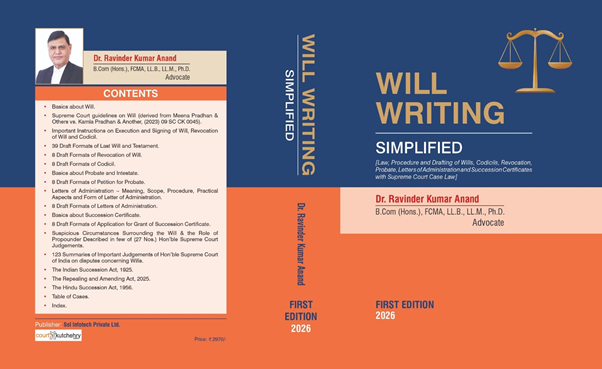
[📘 Legal professionals and students alike will benefit from Will Writing Simplified, which covers procedure and case law in detail.]
🔹 Buy online: Amazon | Flipkart
Court’s Observations
The High Court made several important clarifications:
- Reasons to Believe: These are internal records of the Commissioner and need not be shared with the accused.
- Grounds of Arrest: These must be furnished in writing as part of the arrest memo. Failure to do so violates due process.
- Remand Order: The CJM’s remand was set aside as it was based on an incomplete arrest memo.
The court emphasized that procedural safeguards under the CGST Act are designed to prevent arbitrary arrests and ensure transparency.
Legal Significance
This ruling strengthens protections for individuals facing GST investigations:
- It draws a clear line between internal reasoning and mandatory disclosure.
- It ensures that accused persons are informed of the exact grounds for their arrest.
- It sets a precedent for future GST cases, reinforcing judicial oversight over enforcement actions.
Legal experts note that the judgment balances the state’s power to investigate tax evasion with citizens’ fundamental rights.
Reactions from Legal Community
- Tax lawyers welcomed the ruling, saying it prevents misuse of arrest powers under GST law.
- Business associations expressed relief, noting that arbitrary arrests harm investor confidence.
- Government officials acknowledged the need to comply with procedural safeguards but maintained that enforcement powers remain essential to curb tax fraud.
Broader Implications
The case highlights ongoing tensions between tax enforcement and civil liberties:
- GST authorities have been criticized for aggressive use of arrest powers.
- Courts are increasingly scrutinizing whether procedural safeguards are followed.
- The ruling may prompt revisions in how arrest memos are drafted and issued.
Why Awareness Matters
For businesses and professionals, understanding the distinction between “reasons to believe” and “grounds of arrest” is crucial. Legal professionals and students studying GST law will find this case a valuable reference in interpreting Section 69 of the CGST Act.
Conclusion
The Allahabad High Court’s ruling in Jai Kumar Aggarwal v. Directorate General of GST Intelligence is a landmark in GST jurisprudence. By quashing the arrest and remand order, the court reinforced the principle that procedural safeguards are not optional but mandatory. This decision will likely shape future enforcement actions under the CGST Act and strengthen judicial oversight in tax-related arrests.
Suggested Keywords for SEO & Faster Searches
- Allahabad High Court GST arrest quashed
- Jai Kumar Aggarwal GST Intelligence case
- CGST Act Section 69 reasons to believe grounds of arrest
- Habeas corpus GST case India
- GST arrest memo legality India
- Businessman release GST case Allahabad HC
- Procedural safeguards GST law India
- Tax enforcement vs civil liberties India
- Will Writing Simplified book
- GST jurisprudence India
Also Read: Supreme Court Rules: Loosening Pyjama String Is Attempt to Rape, Quashes Allahabad HC Order