
Allahabad High Court: Mutation Proceedings Cannot Be Stalled Due to Pending Municipal Dues
Court says mutation is a statutory right
Municipal authorities lack power to impose extra conditions
By Our Legal Correspondent
New Delhi: March 03, 2026:
In a significant judgment, the Allahabad High Court at Lucknow has ruled that municipal authorities cannot stall mutation proceedings merely because municipal dues are pending. The Division Bench, comprising Justice Rajan Roy and Justice Abdhesh Kumar Chaudhary, clarified that mutation is a statutory process linked to ownership rights and cannot be obstructed by conditions not explicitly provided in law.
The ruling, delivered in March 2026, is expected to have wide implications for property owners across Uttar Pradesh, where municipal bodies often delay mutation citing unpaid dues.
Background of the Case
- The case was filed by Deepa Gupta, who sought mutation of her name in municipal records after purchasing a property.
- The municipal commissioner refused to process the mutation, citing pending dues on the property.
- Gupta challenged the refusal, arguing that mutation proceedings are independent of municipal tax recovery.
- The High Court agreed, holding that mutation cannot be stalled unless the governing statute explicitly permits such a condition.
[Suggested Legal Resource]
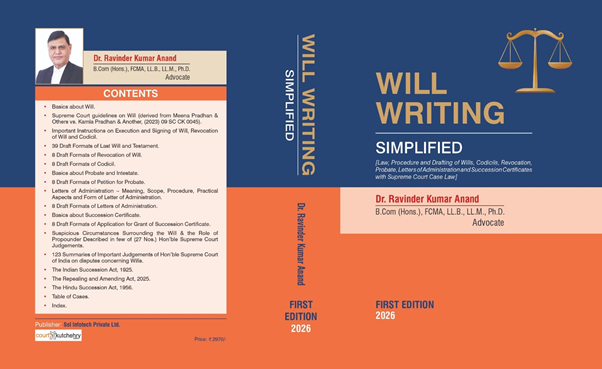
If you want practical guidance on drafting wills, codicils, and probate procedures, Will Writing Simplified is an invaluable resource. BUY NOW: Amazon 🔹 Flipkart
Court’s Observations
- Statutory Right: Mutation is a statutory right linked to ownership and succession. It cannot be denied on grounds outside the statute.
- No Extra Conditions: Municipal authorities cannot impose conditions for mutation that are not contained in the governing law.
- Tax Recovery Separate: Pending municipal dues must be recovered through appropriate legal mechanisms, but they cannot be used to block mutation.
- Administrative Accountability: The Court stressed that municipal commissioners must act within their statutory authority and cannot expand their powers arbitrarily.
Why This Matters
- Property Owners’ Relief: The ruling protects property buyers from unnecessary delays in mutation caused by municipal dues disputes.
- Legal Clarity: It clarifies the distinction between mutation proceedings and municipal tax recovery.
- Governance Reform: The judgment curbs arbitrary practices by municipal authorities, ensuring smoother property transactions.
Reactions and Implications
- Legal Experts: Many hailed the ruling as a progressive step that strengthens property rights and prevents misuse of administrative powers.
- Property Buyers: Citizens welcomed the judgment, noting that mutation delays often create hurdles in selling, mortgaging, or inheriting property.
- Municipal Bodies: Officials acknowledged the ruling but expressed concern about ensuring timely recovery of dues through other mechanisms.
Wider Context
- Mutation is the process of updating ownership records in municipal or revenue registers after property transfer.
- It is essential for property transactions, inheritance, and taxation.
- Municipal authorities often link mutation to pending dues, creating delays and disputes.
- The Allahabad High Court’s ruling aligns with earlier judgments that emphasized mutation as a statutory right independent of tax recovery.
Conclusion
The Allahabad High Court’s decision that mutation proceedings cannot be stalled due to pending municipal dues is a landmark ruling that strengthens property rights in Uttar Pradesh. By separating mutation from tax recovery, the Court has ensured that property owners are not unfairly penalized for dues disputes. The judgment is expected to streamline property transactions and reinforce accountability in municipal governance.
Keywords for SEO & Faster Searches
Allahabad High Court mutation ruling, municipal dues property mutation, Deepa Gupta case Lucknow bench, mutation statutory right India, property ownership records Uttar Pradesh, municipal commissioner authority mutation, mutation vs tax recovery India, Allahabad HC March 2026 judgment, property law mutation proceedings India, mutation relief property buyers