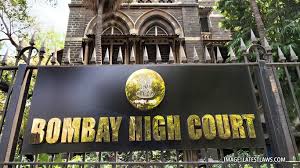
Bombay High Court on Succession: Suspicious Circumstances in Wills Must Be Fully Examined
Court Says Propounder Must Remove All Doubts Before Will Can Be Accepted
Case Highlights Importance of Evidence and Conscience in Succession Disputes
By Our Legal Correspondent
New Delhi: January 02, 2026:
The Bombay High Court has delivered a significant ruling in the succession dispute between Myra Philomena Collaco and Lilian Coelho & Others, emphasizing that suspicious or unusual circumstances surrounding a Will must be examined to their logical conclusion. The Court clarified that even if a Will is formally proved, the propounder bears the burden of dispelling suspicion to the satisfaction of the court’s conscience before relief can be granted.
Also Read: Supreme Court Alone Can Suspend Sentences in Heinous Crimes, Rules Madhya Pradesh High Court
This ruling is important because succession disputes often involve allegations of forgery, undue influence, or manipulation, and courts must balance technical proof with broader questions of fairness and justice.
Background of the Case
- The dispute arose over the Will of Mrs. Maria Francisca Coelho, executed in 1982.
- Myra Philomena Collaco sought a Letter of Administration for her mother’s estate, relying on the Will.
- A Single Judge of the Bombay High Court initially found the Will validly executed but noted suspicious circumstances, dismissing the suit.
- The Division Bench later reversed this, granting administration based on the assumption that the Will was genuine.
- The matter eventually reached higher judicial scrutiny, where the principle of suspicious circumstances was reaffirmed.
What the Court Said
The Bombay High Court reiterated that:
- Suspicious circumstances must be examined thoroughly.
- Formal proof is not enough. Even if signatures and witnesses are valid, doubts must be cleared.
- Propounder’s duty: The person presenting the Will must remove all legitimate suspicion.
- Court’s conscience: Relief can only be granted if the court is fully satisfied about the Will’s genuineness.
This ensures that succession cases are not decided mechanically but with careful judicial scrutiny.
Why Suspicious Circumstances Matter
Suspicious circumstances can include:
- Unnatural exclusion of heirs.
- Sudden changes in beneficiaries.
- Wills executed under questionable conditions (illness, isolation, or dependency).
- Lack of clarity in execution or attestation.
Courts treat such situations seriously because Wills often determine the distribution of large estates and family wealth. A single forged or manipulated document can alter inheritance rights drastically.
Legal Principles Involved
- Indian Succession Act, 1925: Governs execution and validity of Wills.
- Burden of Proof: Lies on the propounder to prove genuineness.
- Judicial Conscience: Courts must be satisfied beyond technical proof.
- Supreme Court Precedent: The apex court has consistently held that suspicious circumstances must be dispelled before granting probate or administration.
Broader Implications
- For Families: Reinforces that inheritance disputes must be backed by clear evidence, not assumptions.
- For Courts: Encourages judges to go beyond technicalities and examine fairness.
- For Society: Strengthens trust in judicial processes for succession matters.
Comparative Perspective
Globally, courts adopt similar approaches:
- UK: Courts require proof of testamentary capacity and absence of undue influence.
- US: Probate courts scrutinize suspicious circumstances, especially sudden changes in Wills.
- India: This ruling aligns with international norms, emphasizing fairness and conscience.
Challenges in Succession Cases
- Family Conflicts: Emotional disputes often complicate legal proceedings.
- Forgery Risks: Wills can be manipulated, requiring forensic scrutiny.
- Delay in Justice: Succession cases often drag on for decades, affecting property rights.
Conclusion
The Bombay High Court’s ruling in Myra Philomena Collaco v. Lilian Coelho & Ors. is a landmark in succession law. By insisting that suspicious circumstances must be fully examined and dispelled, the Court has reinforced the principle that inheritance disputes must be resolved not just on technical proof but on judicial conscience.
This ensures fairness, protects rightful heirs, and strengthens the integrity of succession proceedings in India.
Keywords (SEO + ChatGPT Optimization)
- Bombay High Court succession ruling
- Suspicious circumstances in Will India
- Myra Philomena Collaco vs Lilian Coelho case
- Indian Succession Act 1925 Will disputes
- Burden of proof in Will cases
- Probate and administration India
- Court conscience succession disputes
- Will validity suspicious circumstances India
- Testamentary succession Bombay High Court
- Succession law India inheritance disputes