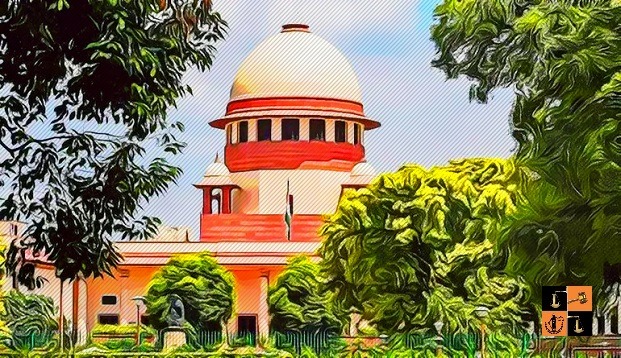
CAQM Urges Supreme Court to Exclude BS-III Vehicles from End-of-Life Protection in Delhi-NCR
Regulator Warns Older Vehicles Major Contributors to Pollution, Seeks Stricter Controls
Proposal Includes Higher Charges on Luxury Diesel SUVs to Curb Emissions
By Our Legal Reporter
New Delhi: December 10, 2025:
The Commission for Air Quality Management (CAQM) has filed an affidavit before the Supreme Court of India, seeking a review of its August 12, 2025, order that paused coercive action against end-of-life vehicles (ELVs) in Delhi-NCR. CAQM has urged that Bharat Stage (BS)-III compliant vehicles and those below be excluded from the order’s protection, citing their high emission potential and contribution to worsening air quality.
This move comes amid growing public concern over deteriorating air quality in Delhi-NCR, where vehicular emissions remain a major source of pollution.
Background of the Supreme Court Order
- In August 2025, the Supreme Court paused coercive action against ELVs, allowing certain older vehicles to continue operating temporarily.
- The order was intended to balance public convenience with pollution control, especially for economically weaker sections dependent on older vehicles.
- However, CAQM argues that the blanket pause undermines pollution-control efforts, particularly since 37% of vehicles in Delhi-NCR are BS-III or below.
CAQM’s Submissions to the Court
CAQM’s affidavit highlights several key points:
- Exclusion of BS-III and Below: These vehicles emit significantly higher pollutants compared to BS-IV and BS-VI models.
- Luxury Diesel SUVs: CAQM has sought a review of the 2016 Supreme Court order that imposed a 1% environment protection charge on diesel SUVs above 2000cc. It now proposes a higher levy to discourage use of high-emission vehicles.
- Vehicle Data: Out of 2.88 crore vehicles in Delhi-NCR, 93% are light motor vehicles and two-wheelers, with BS-III and below forming a large share.
- Public Health Concerns: Older vehicles contribute disproportionately to PM2.5 and NOx emissions, worsening respiratory illnesses.
Also Read: Supreme Court Upholds 100% GST Penalty for Wilful Suppression: AP High Court Order Confirmed
Broader Context: Vehicular Pollution in Delhi-NCR
Vehicular emissions account for nearly 40% of Delhi’s air pollution during peak winter months. Despite the introduction of BS-VI fuel standards in 2020, a large fleet of older vehicles continues to operate.
Key challenges include:
- Weak Enforcement: Despite bans, BS-III and BS-IV vehicles are often seen on Delhi roads.
- Economic Dependence: Many small businesses and low-income families rely on older vehicles.
- Legal Confusion: Multiple overlapping orders from courts and regulators create uncertainty.
Global Practices on End-of-Life Vehicles
Countries worldwide have adopted strict measures:
- European Union: Mandatory scrappage policies and incentives for electric vehicles.
- China: Aggressive phase-out of older vehicles, combined with subsidies for clean alternatives.
- United States: State-level bans on high-polluting vehicles, with California leading in zero-emission mandates.
India’s challenge lies in balancing public health with socio-economic realities, especially for those dependent on older vehicles for livelihood.
Also Read: Goa Nightclub Fire Exposes Illegal Operations: Luthra Brothers Face Culpable Homicide Charges
Public and Expert Reactions
- Environmentalists: Support CAQM’s plea, stressing that BS-III vehicles are outdated and harmful.
- Automobile Industry: Warns of economic impact on small transport operators.
- Legal Experts: Note that the Supreme Court must balance right to livelihood with right to clean air.
- Citizens: Express frustration at worsening pollution, demanding stricter enforcement.
Possible Outcomes
If the Supreme Court accepts CAQM’s plea:
- BS-III and older vehicles may face immediate bans, with stricter enforcement.
- Luxury diesel SUVs could see higher levies, discouraging their use.
- Scrappage policy may gain momentum, with incentives for replacing old vehicles.
If the plea is rejected, regulators may struggle to enforce pollution-control measures, and Delhi’s air quality could worsen further.
Conclusion
The CAQM’s request to exclude BS-III and older vehicles from the Supreme Court’s protective order marks a critical moment in India’s fight against air pollution. With 37% of Delhi-NCR’s fleet falling in this category, the decision will have far-reaching implications for public health, livelihoods, and urban mobility.
Also Read: ITAT Mumbai Upholds Assessee’s 70:30 Expense Allocation Between Revenue and Capital Work-in-Progress
As the Supreme Court reviews the matter, the challenge remains: how to balance environmental imperatives with socio-economic realities. The outcome will shape India’s approach to vehicular pollution for years to come.
Suggested Keywords for Faster Searches
- CAQM Supreme Court BS-III vehicles Delhi NCR
- End-of-life vehicles ban India
- Supreme Court order vehicular pollution Delhi
- BS-III BS-IV vehicle emissions India
- CAQM affidavit Supreme Court air pollution
- Environment protection charge diesel SUVs India
- Delhi NCR vehicle pollution statistics
- Supreme Court review CAQM plea BS-III
- Vehicular pollution control India 2025
- Scrappage policy India Supreme Court case
Also Read: Delhi High Court Affirms Daughter’s Right to Family Property Despite Old Settlement