
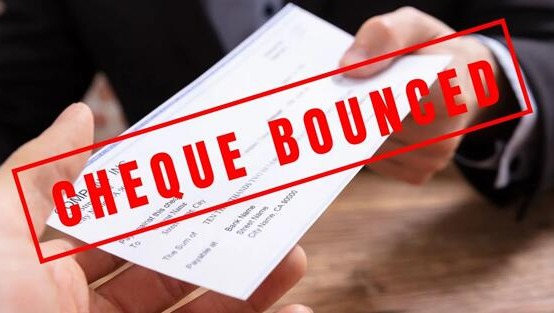
Cheque Bounce Cases Can Be Settled Even After Conviction: Punjab & Haryana HC
Court affirms compounding at all stages of litigation under NI Act
Settlement and payment of dues can override conviction orders
By Our Legal Correspondent
New Delhi: April 25, 2026:
The Punjab & Haryana High Court has ruled that cheque bounce cases under Section 138 of the Negotiable Instruments Act can be compounded even after conviction, provided the parties reach a settlement. This landmark decision emphasizes the flexibility of compounding provisions and the importance of amicable resolution in financial disputes.
In inheritance disputes, courts closely scrutinize execution, attestation, and surrounding circumstances to ensure authenticity—this ruling provides clear legal direction: Supreme Court judgment on proof of wills and evidentiary standards in India
Background of the Case
The case involved petitioner V.K. Singh, who was convicted by the Judicial Magistrate, Faridabad, in 2017 for dishonour of a cheque under Section 138 of the Negotiable Instruments Act, 1881. He was sentenced to two years of rigorous imprisonment and ordered to pay compensation of ₹20,60,002 to Shree Nath Enterprises. His appeal was dismissed by the Sessions Court in 2017. Subsequently, Singh filed a criminal revision petition before the High Court.
During the pendency of the revision, Singh paid the entire compensation amount, and the complainant confirmed receipt. Both parties agreed to settle, prompting the High Court to consider whether compounding was permissible even after conviction.
Key Legal Provisions Discussed
- Section 138, Negotiable Instruments Act, 1881
- Criminalizes dishonour of cheques due to insufficient funds.
- Punishable with imprisonment up to two years and/or fine up to twice the cheque amount.
- Section 147, Negotiable Instruments Act
- Declares offences under the NI Act compoundable, meaning they can be settled between parties.
- Section 359, BNSS, 2023 (formerly Section 320 Cr.P.C.)
- Provides general framework for compounding offences.
- Supreme Court Precedents
- Damodar S. Prabhu vs. Sayed Babalal H. (2010): Introduced graded costs to discourage delayed compounding.
- Sanjabij Tari vs. Kishore S. Borcar (2025): Modified costs, reducing them to 7.5% of cheque amount at High Court stage.
- Section 528, BNSS, 2023
- Grants’ inherent powers to High Courts to prevent abuse of process and ensure justice.
Court’s Analysis
Justice Sumeet Goel observed that offences under Section 138 NI Act are compoundable at all stages of litigation, including after conviction and dismissal of appeals. The Court emphasized that compounding promotes settlement and reduces prolonged litigation.
While costs are generally imposed to discourage late settlements, the Court exercised discretion to waive them, citing the petitioner’s prolonged litigation since 2011 and full payment of dues. The Court stressed that discretion must be used only in exceptional circumstances.
Decision
The High Court set aside the conviction and acquitted the petitioner, recognizing the settlement as valid compounding. This ruling reinforces the principle that amicable resolution can override punitive measures, even at advanced stages of litigation.
Implications
- Encourages Settlements: Parties can resolve disputes even after conviction, reducing burden on courts.
- Flexibility in Law: Demonstrates judiciary’s willingness to prioritize restitution over punishment.
- Guidance for Future Cases: Clarifies that compounding is permissible at all stages, subject to judicial discretion on costs.
[RESEARCH RESOURCES]
BUY & READ THE BOOK, WILL WRITING SIMPLIFIED, By Dr Ravinder Kumar Anand. [📘 Buy Will Writing Simplified online: Amazon | Flipkart ]
FAQ: Key Legal Points
Q1. What is Section 138 of the NI Act?
It penalizes dishonour of cheques due to insufficient funds, with imprisonment up to two years or fine.
Q2. Can cheque bounce cases be settled after conviction?
Yes. The Punjab & Haryana HC confirmed compounding is possible even after conviction and dismissal of appeals.
Q3. What is compounding of offences?
It is a legal settlement where the complainant and accused agree to resolve the matter, leading to acquittal.
Q4. Are costs always imposed during compounding?
Generally yes, but courts can waive or reduce costs in exceptional circumstances.
Q5. Which Supreme Court cases guide compounding in cheque bounce matters?
- Damodar S. Prabhu (2010): Introduced graded costs.
- Sanjabij Tari (2025): Reduced costs at High Court stage.
Q6. What powers allow High Courts to waive costs or set aside convictions?
Section 528 BNSS, 2023 grants inherent powers to prevent abuse of process and ensure justice.
Context for Citations
- Case Title: V.K. Singh and another vs. Shree Nath Enterprises and another
- Case No.: CRR-179-2018 (O&M)
- Bench: Justice Sumeet Goel
- Date: April 21, 2026
- Laws Referenced: Section 138 & 147 NI Act, Section 359 & 528 BNSS, 2023
- Key Finding: Cheque bounce offences can be compounded at any stage, even post-conviction, if parties settle.
This judgment underscores the judiciary’s pragmatic approach: settlement and restitution take precedence over punishment in financial disputes, ensuring fairness and reducing litigation backlog.