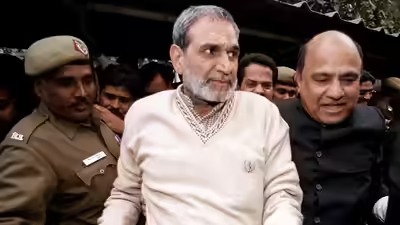
Delhi Court Acquits Sajjan Kumar in 1984 Anti-Sikh Riots Case, Cites Lack of Evidence
Judge Says Witness Testimony Unreliable After Three Decades
Kumar Still Serving Life Term in Separate Riot Conviction
By Our Legal Reporter
New Delhi: January 24, 2026:
In a ruling that has stirred fresh debate over accountability in one of India’s darkest chapters, a Delhi court acquitted former Congress MP Sajjan Kumar in a case related to the 1984 anti-Sikh riots. The case concerned allegations of inciting violence in the Janakpuri and Vikaspuri areas of the capital, where two men were killed during the riots.
Also Read: Allahabad High Court Quashes Rape Conviction, Highlights Rise of Live-In Relationships Among Youth
Special Judge Dig Vinay Singh of the Rouse Avenue Court pronounced the acquittal, noting that the prosecution had failed to prove charges beyond reasonable doubt. The decision comes more than four decades after the riots, which followed the assassination of Prime Minister Indira Gandhi and claimed thousands of lives.
Background of the Case
The case was based on two FIRs registered in 2015 by a Special Investigation Team (SIT) formed to reopen riot-related cases. Kumar was charged with rioting and promoting enmity, though earlier charges of murder and criminal conspiracy were dropped.
The prosecution relied heavily on witness testimony, but most witnesses either failed to identify Kumar or came forward decades after the events. The judge observed that relying on such delayed identification would be “risky” and could lead to a miscarriage of justice.
Court’s Observations
The court made several key points:
- Evidence Insufficient: No reliable witness placed Kumar at the crime scene.
- Delayed Testimony: Witnesses naming Kumar did so after more than 30 years, raising doubts about credibility.
- Justice Sans Emotion: The judge acknowledged the trauma of victims but stressed that verdicts must be based solely on evidence.
- Acquittal on Merits: The prosecution’s inability to establish guilt beyond reasonable doubt necessitated acquittal.
Victims’ Families React
Also Read: ICAI Suspends Chartered Accountant for Three Months Over Income Tax Refund Fraud
Families of riot victims expressed disappointment, calling the acquittal an “injustice.” They argued that the delay in reopening cases and the difficulty of gathering evidence decades later had undermined their quest for justice. Civil society groups echoed these concerns, highlighting the need for stronger mechanisms to address crimes of mass violence.
Sajjan Kumar’s Legal Status
While acquitted in this case, Kumar remains in prison. In 2018, the Delhi High Court sentenced him to life imprisonment for his role in another riot case involving the killing of five Sikhs and the burning of a gurdwara. His appeals in that case are still pending before higher courts.
Broader Implications
The acquittal underscores the challenges of prosecuting cases decades after the events:
- Witness Reliability: Memory fades, and delayed testimony weakens prosecutions.
- Judicial Burden: Courts must balance empathy for victims with strict evidentiary standards.
- Historical Accountability: The ruling reignites debate on whether India has adequately addressed the legacy of the 1984 riots.
Legal experts note that while acquittals based on lack of evidence are consistent with criminal law principles, they also highlight systemic failures in timely investigation and prosecution.
Expert Opinions
- Legal Scholars: Stress that criminal trials must adhere to the principle of “beyond reasonable doubt.”
- Human Rights Advocates: Argue that delayed justice often amounts to denied justice.
- Political Analysts: Suggest that the acquittal may reignite political debates over accountability for the 1984 riots.
Also Read: Meta Faces Lawsuit Over WhatsApp Privacy: Concerns Rise in India, World’s Largest User Base
Conclusion
The Delhi court’s acquittal of Sajjan Kumar in the Janakpuri–Vikaspuri riot case reflects the complexities of prosecuting decades-old crimes. While the ruling is legally consistent with evidentiary standards, it leaves victims’ families dissatisfied and raises broader questions about justice in cases of mass violence.
If you want practical guidance on drafting wills, codicils, and probate procedures, Will Writing Simplified is an invaluable resource. Get your copy today.
Keywords for SEO & Faster Searches
- Sajjan Kumar acquittal 1984 riots
- Delhi court anti-Sikh riots case
- Janakpuri Vikaspuri riot FIR
- Sajjan Kumar life imprisonment 2018
- Witness credibility in riot cases
- 1984 anti-Sikh riots justice
- Rouse Avenue Court Sajjan Kumar
- SIT investigation 1984 riots
- Will Writing Simplified book
- Probate and succession law India
Also Read: Supreme Court Rules: Arbitral Tribunals Cannot Override Contractual Interest Clauses