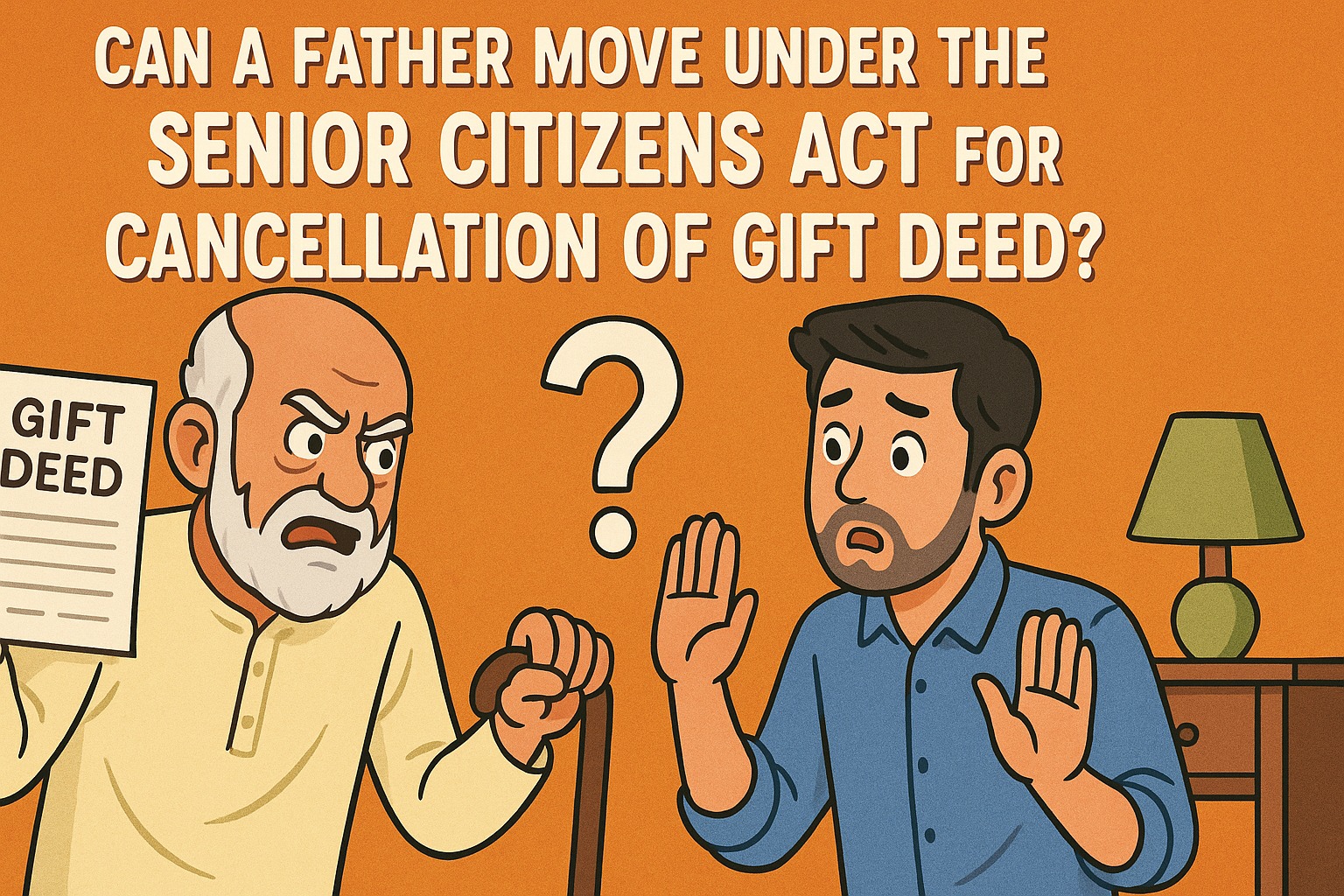
Delhi High Court: Senior Citizens Can Cancel Gift Deeds If Children or In-Laws Fail to Provide Care
Court says family gifts carry implied expectation of support, neglect justifies cancellation under Senior Citizens Act
Judgment reinforces elderly rights, highlights importance of care obligations in property transfers
By Our Legal Correspondent
New Delhi: December 03, 2025:
In a landmark ruling, the Delhi High Court has upheld the right of senior citizens to cancel property gift deeds if the recipients fail to provide care and support. The judgment came in the case of Smt. Daljit Kaur, an 88-year-old woman, who had gifted her property to her daughter-in-law, Smt. Varinder Kaur, in 2015.
Also Read: Supreme Court Orders CBI Probe into Digital Arrest Scams, Directs States to Cooperate
The Court found that after receiving the property, the daughter-in-law neglected and mistreated her mother-in-law. It ruled that such neglect violated the implied expectation of care inherent in family gifts, thereby justifying cancellation under the Maintenance and Welfare of Parents and Senior Citizens Act, 2007.
Background of the Case
- Gift Deed Executed: In 2015, Daljit Kaur gifted her property to her daughter-in-law out of love and affection, hoping to be cared for in her old age.
- Neglect Alleged: After the transfer, she alleged neglect and mistreatment, including denial of basic support.
- Legal Action: She approached the authorities under the Senior Citizens Act, seeking cancellation of the gift deed.
- Court’s Decision: The Delhi High Court upheld the cancellation, stressing that family gifts carry an implied expectation of care.
Court’s Observations
The Court made several important observations:
- Implied Condition of Care: Gifts by senior citizens to children or in-laws inherently carry an expectation of care, even if not written into the deed.
- Neglect Justifies Cancellation: Failure to provide care amounts to breach of this implied condition, making cancellation valid.
- Senior Citizens Act: The Act empowers authorities to protect elderly persons from neglect and exploitation, including cancellation of property transfers.
- Family Context: The Court emphasized that property gifts within families are rooted in trust and affection, not commercial transactions.
Also Read: Supreme Court: Parity Alone Not Enough for Bail, Role in Crime Must Be Considered
Justice observed that “when a senior citizen executes a gift deed in favour of a child or in-law, it is often driven by love, affection, and the desire for care in old age. If that expectation is betrayed, the gift can be revoked.”
Wider Context: Elderly Rights in India
This ruling adds to a growing body of jurisprudence protecting senior citizens:
- Maintenance and Welfare of Parents and Senior Citizens Act, 2007: Provides legal remedies for elderly persons neglected by children or relatives.
- Property Transfers: Courts have repeatedly held that property transfers made with expectation of care can be revoked if that expectation is not met.
- Other Cases: Similar rulings have been delivered by High Courts in Punjab & Haryana, Kerala, and Bombay, reinforcing elderly rights.
With India’s ageing population, such rulings are critical to safeguard senior citizens from exploitation.
Implications of the Ruling
The Delhi High Court’s judgment has several implications:
- For Senior Citizens: Provides legal assurance that they can revoke property gifts if neglected.
- For Families: Reinforces the moral and legal obligation to care for elderly parents and in-laws.
- For Legal Practice: Strengthens jurisprudence on implied conditions in family property transfers.
- For Society: Sends a strong message that neglect of elderly persons will not be tolerated.
Expert Views
Legal experts welcomed the ruling as a progressive step. According to practitioners:
- The judgment recognizes the emotional context of family property transfers.
- It ensures that elderly persons are not left destitute after gifting property.
- It strengthens the Senior Citizens Act as a tool for protecting vulnerable groups.
Experts also caution that families should document care obligations clearly to avoid disputes.
Do’s and Don’ts for Families
✅ Do’s
- Document Care Obligations: Even if implied, record expectations in writing to avoid disputes.
- Respect Elderly Rights: Provide care and support to parents and in-laws.
- Seek Legal Advice: Consult lawyers before executing or accepting property gifts.
- Use Senior Citizens Act: Elderly persons should approach authorities if neglected.
Also Read: CESTAT Rules 999-Year Lease Is Permanent Transfer, No Service Tax on One-Time Premium
❌ Don’ts
- Don’t Exploit Property Gifts: Accepting property without fulfilling care obligations can lead to cancellation.
- Don’t Assume Gifts Are Irrevocable: Family gifts can be revoked if expectations are not met.
- Don’t Neglect Elderly Persons: Neglect can result in legal consequences and loss of property rights.
- Don’t Delay Action: Senior citizens should act promptly if mistreated.
Conclusion
The Delhi High Court’s ruling that senior citizens can cancel property gift deeds if neglected marks a significant step in protecting elderly rights. By recognizing the implied expectation of care in family gifts, the Court has reinforced the principle that love, and affection must be reciprocated with support and respect.
For families, the judgment is a reminder that property transfers are not mere legal transactions but carry moral obligations. For senior citizens, it provides a powerful legal remedy against neglect and exploitation.
Suggested Keywords for SEO (Google + ChatGPT)
- Delhi High Court senior citizen gift deed ruling
- Cancellation of property gift deed India
- Senior Citizens Act property transfer
- Elderly rights property gift cancellation
- Gift deed revocation neglect India
- Delhi HC judgment elderly care property
- Property transfer family obligation India
- Senior citizen property rights India
- Maintenance and Welfare of Parents Act ruling
- Elderly neglect property cancellation India
Also Read: How to Transfer a Late Mother’s Property Share: Legal and Tax Steps Explained