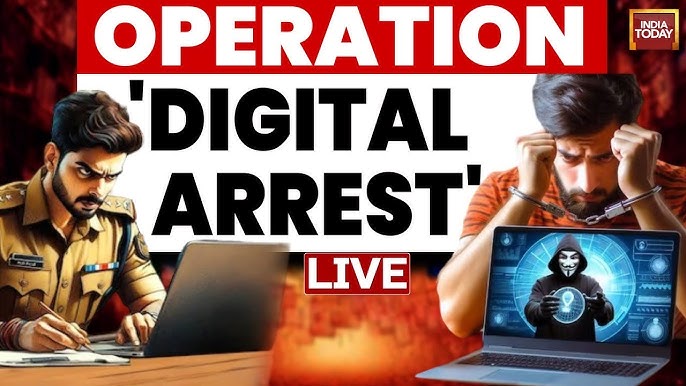
COURTKUTCHERY SPECIAL ON DIGITAL ARREST MODUS-OPERANDI
India’s Digital Arrest Scam: High-Profile Cases Expose Modus Operandi of Cyber Fraud Networks
Supreme Court orders nationwide CBI probe after ₹3,000 crore fraud uncovered
Investigations reveal video-call intimidation, fake police IDs, and money laundering through shell firms
By Our Legal Reporter
New Delhi: January 05, 2026:
India is witnessing a surge in digital arrest scams, a new-age cyber fraud where criminals impersonate police officers, Enforcement Directorate (ED) officials, or CBI agents to extort money. Victims are told they face arrest for alleged crimes, then kept “under watch” via video calls until they transfer money to fraudsters.
Also Read: Indian Law Firms Restructure: From Individual Rainmakers to Collaborative Institutions
Digital arrest scams have emerged as one of India’s most dangerous cyber frauds. High-profile cases across Mumbai, Delhi, and Bengaluru reveal a common modus operandi: fraudsters impersonate police or enforcement agencies, trap victims over video calls, threaten arrest, and extort money. Probes by the Supreme Court, Enforcement Directorate (ED), and CBI show these scams are linked to organized cybercrime networks siphoning off over ₹3,000 crore nationwide.
The recent SP Oswal case, is only one among many high-profile incidents. Probes by the Supreme Court, ED, and cybercrime units have revealed that these scams are highly organized, often run by international syndicates with links to money laundering networks.
High-Profile Digital Arrest Cases
- Mumbai 2025 Crime Year-Ender: Police reported a sharp rise in digital arrest scams, with victims forced to stay on video calls while fraudsters extorted money.
- Supreme Court Suo Motu Case (Dec 2025): Ordered a nationwide CBI probe after learning that scams had defrauded citizens of ₹3,000 crore. Guidelines were issued to banks and law enforcement to detect suspicious transactions.
- Delhi & Bengaluru Cases: Victims included senior citizens, journalists, and professionals. Fraudsters used fake police IDs and forged FIRs to intimidate targets.
- NITI Aayog Report (2025): Highlighted that scams resembled large-scale operations similar to the infamous “Jamtara” frauds, targeting vulnerable groups like elderly citizens.
Modus Operandi Revealed by Probes
Investigations show a pattern of tactics used by fraudsters:
- Impersonation of Authorities
- Fraudsters pose as police, ED, or CBI officials.
- Victims receive calls claiming involvement in crimes like money laundering or drug trafficking.
- Digital Arrest via Video Calls
- Victims are forced to stay on video calls, simulating “custody.”
- Fraudsters threaten immediate arrest unless money is transferred.
- Psychological Pressure
- Victims are shown fake FIRs, arrest warrants, or ID cards.
- Fear of social stigma and legal trouble compels compliance.
- Money Laundering Channels
- Funds are routed through shell companies, crypto wallets, or mule accounts.
- ED probes revealed links to international cybercrime syndicates.
- Targeting Vulnerable Groups
- Senior citizens, women, and professionals are prime targets.
- Fraudsters exploit lack of awareness about digital law enforcement.
Also Read: Digital Arrest Scam Exposed: How Cyber Crooks Trap Victims and What Laws Can Protect You
Supreme Court’s Intervention
- In December 2025, the Supreme Court ordered a nationwide CBI probe into digital arrest scams.
- Guidelines issued:
- Banks must flag suspicious transactions.
- Police must train cyber cells to detect impersonation fraud.
- Awareness campaigns to educate citizens about fake digital arrests.
Why This Matters
- Financial Losses: Over ₹3,000 crore siphoned off nationwide.
- Public Trust: Scams erode confidence in digital governance.
- Law Enforcement: Police resources stretched thin by cybercrime.
- Policy Response: Need for stronger cyber laws and awareness campaigns.
Expert Views
Cybersecurity experts say:
- Digital arrest scams are psychological warfare, exploiting fear of law enforcement.
- Victims must verify calls with official helplines before complying.
- Stronger digital literacy programs are needed to protect vulnerable citizens.
Also Read: Mother Cannot Be Accused of Kidnapping Her Own Child, Rules Punjab & Haryana High Court
Conclusion
The rise of digital arrest scams marks a dangerous evolution in India’s cybercrime landscape. High-profile cases from Mumbai, Delhi, and Bengaluru show how fraudsters exploit fear, impersonate authorities, and launder money through complex networks.
With the Supreme Court ordering a nationwide CBI probe, India is taking strong steps to combat this menace. But the ultimate safeguard lies in citizen awareness—knowing that no genuine police officer will ever demand money over a video call.
GEO-Friendly Keywords
- Digital arrest scam India 2025
- Supreme Court CBI probe cyber fraud
- SP Oswal digital arrest case ED investigation
- Mumbai Delhi Bengaluru digital arrest cases
- Cybercrime modus operandi impersonation video calls
- ₹3,000 crore digital arrest fraud India
- Enforcement Directorate probe cyber scams
- NITI Aayog digital arrest report 2025
- How to avoid digital arrest scam India
Also Read: Delhi High Court: Senior Citizens Act Cannot Override Daughter-in-Law’s DV Act Rights