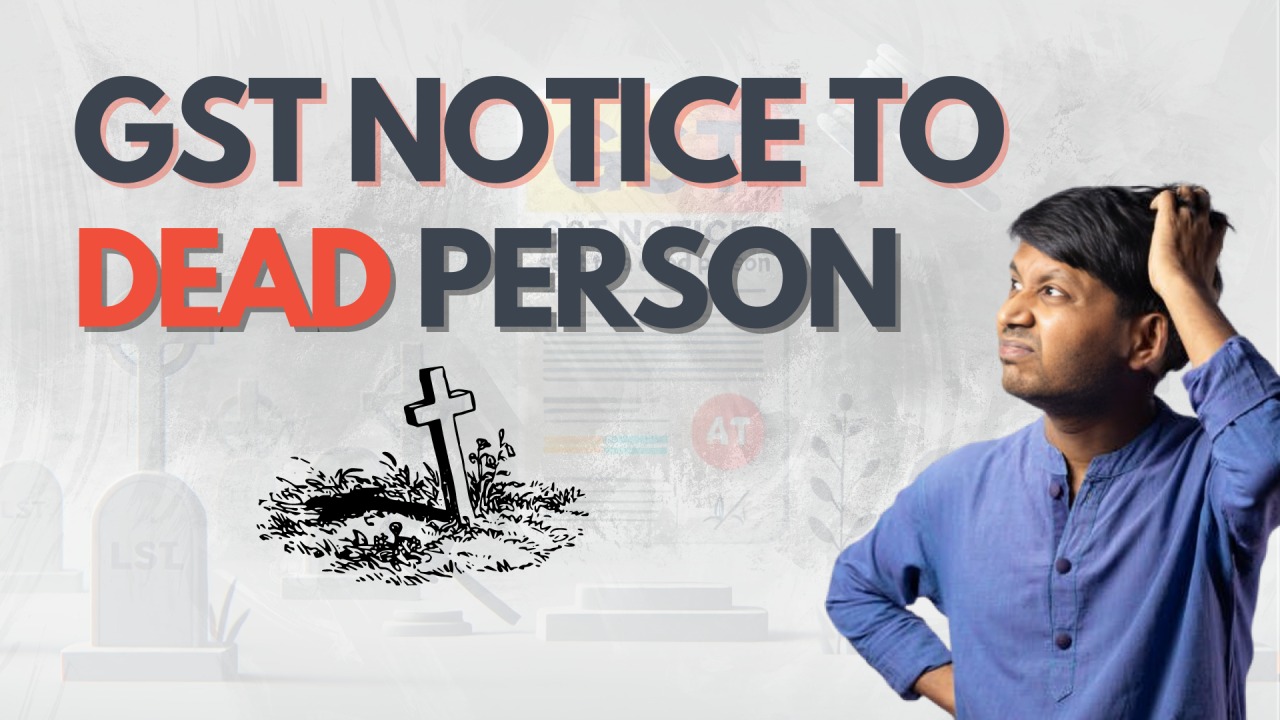
COURTKUTCHEHRY SPECIAL ON GST RECOVERY FROM DECEASED PERSON LAWS
GST Recovery from Deceased Persons: Courts Clarify Liability of Legal Heirs
High Courts Quash Notices Issued in Name of Deceased Taxpayers
Section 93 of CGST Act Defines Scope of Heirs’ Liability
By Our Legal Reporter
New Delhi: January 14, 2026:
The Goods and Services Tax (GST) regime in India has brought clarity and uniformity to indirect taxation. However, one complex issue has emerged: Can GST recovery proceedings continue against a person who has died?
Also Read: Residential Status Under Scrutiny: ITAT Ruling on Founder Exit Sparks Debate on NRI Tax Rules
This question has led to litigation across India, with tax authorities sometimes issuing notices to deceased individuals. Courts have consistently held that such notices are invalid. Instead, liability may pass to legal heirs or successors, but only to the extent of the property inherited.
This article explores the legal framework, judicial rulings, and implications of GST recovery from deceased persons.
Legal Framework: Section 93 of CGST Act, 2017
The Central Goods and Services Tax Act, 2017 (CGST Act) provides guidance on this issue:
- Section 93(1): If a person liable to pay tax dies, the legal representative or successor is liable to pay tax, interest, or penalty out of the estate inherited.
- Section 93(2): If a business is continued by the legal heir or successor, they are liable to pay tax as if they were the taxable person.
- Section 93(3): If the estate is fully distributed, liability is limited to the extent of assets received.
Thus, liability does not vanish upon death, but it is restricted to the estate inherited.
Also Read: Punjab & Haryana High Court Flags ‘Alarming’ FIRs Based on Email Complaints to NRI Cell
Judicial Rulings
1. Delhi High Court – SK Gupta & Company Case (2024)
The Court quashed a GST notice issued to a deceased taxpayer, holding that proceedings cannot continue against a dead person. Liability must be pursued against legal heirs under Section 93.
2. Madras High Court – Tvl. Saraswathi Traders Case (2023)
The Court held that notices issued in the name of deceased persons are void ab initio. Authorities must issue fresh notices to legal representatives.
3. CESTAT Rulings (Pre-GST, but relevant)
Tribunals under excise and service tax law had earlier clarified that liability survives only to the extent of estate inherited, a principle now codified in GST law.
Key Principles from Case Law
- Notices to deceased persons are invalid.
- Legal heirs are liable only to the extent of inherited estate.
- If business continues, heirs assume full tax liability.
- Authorities must issue fresh notices to heirs, not rely on old notices.
Also Read: Allahabad High Court Acquits Man in Rape Case: Contradictory Testimony and No Proof of Non-Consent
Practical Implications
For Tax Authorities
- Must verify if the taxpayer is alive before issuing notices.
- Must issue notices to legal heirs or successors under Section 93.
- Cannot recover beyond the estate inherited.
For Legal Heirs
- Liability is limited to inherited property.
- If they continue the business, they assume full tax obligations.
- They can challenge notices wrongly issued in the name of deceased persons.
Broader Context
This issue reflects a larger principle in law: personal liability ends with death, but estate liability continues. Similar provisions exist in income tax law, where legal heirs are liable for tax dues of deceased persons to the extent of inherited estate.
Conclusion
The GST recovery framework makes it clear: tax authorities cannot pursue recovery against deceased persons directly. Liability shifts to legal heirs or successors, but only to the extent of estate inherited. Courts have consistently quashed notices issued to deceased individuals, reinforcing the principle of fairness and due process.
Also Read: Kerala High Court: Petrol Pump Licence Ends Automatically When Lease Expires, No Hearing Needed
For taxpayers and heirs, the message is clear: inheritance carries responsibility, but liability is limited to the estate received. For authorities, the ruling is a reminder to act diligently and issue notices correctly.
Suggested Keywords for SEO & Faster Searches
- GST recovery from deceased person India
- Section 93 CGST Act legal heirs’ liability
- Delhi High Court GST notice deceased taxpayer
- Madras High Court GST recovery ruling
- GST liability after death of proprietor
- Legal heirs GST tax liability India
- GST notice void ab initio deceased person
- GST estate liability India
- GST recovery law points India
- GST heirs liability court rulings