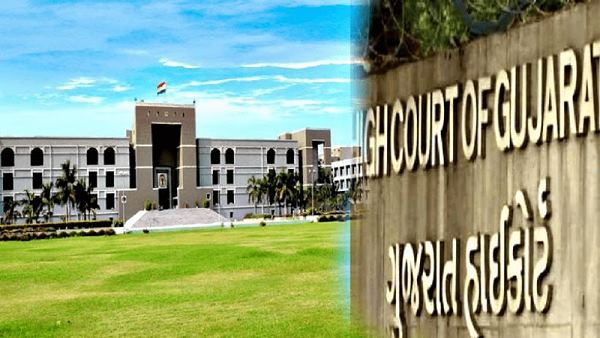
Gujarat High Court: Motor Accident Compensation Is Relief, Not Jackpot
Court Says Claimants Cannot Claim Charity-Borne Medical Expenses
Judgment Enhances Compensation but Stresses Fairness and Balance
By Our Legal Reporter
New Delhi: January 13, 2026:
On January 12, 2026, the Gujarat High Court delivered a significant ruling in a motor accident compensation case, emphasizing that awards under the Motor Vehicles Act, 1988 are not meant to be windfalls. Justice Hasmukh D. Suthar observed that compensation must balance fairness to victims with responsibility to insurers and society. The Court partly allowed an appeal, enhancing compensation while rejecting claims for medical expenses already covered by a charitable trust.
Also Read: Himachal Pradesh High Court Upholds Five-Year Term Rule for Panchayati Raj Elections
This ruling is expected to influence how tribunals and courts across India assess accident claims, ensuring that relief is just and proportionate rather than excessive.
Background of the Case
- Incident: The deceased, Nileshbhai Mahendrabhai Vasant, suffered serious injuries in a car accident near Siddhpur-Palanpur Highway in 2011.
- Medical Treatment: He was treated at Sterling Hospital, Ahmedabad, with expenses partly reimbursed by insurance and partly borne by the Shantaben Atmaramdas Patel Charitable Trust.
- Death: He succumbed to injuries in February 2012.
- Claim Petition: His legal heirs sought compensation before the Motor Accident Claims Tribunal (MACT).
- Tribunal Award: ₹41,05,240 with 7.5% interest.
- Appeal: The heirs appealed to the High Court seeking enhancement.
Key Legal Questions Raised
- Can claimants recover medical expenses paid by a charitable trust?
- The Court ruled no, as the expenses were already borne by the trust and not by the claimants.
- Is compensation under the Motor Vehicles Act unlimited?
- The Court stressed that compensation is not a bonanza or jackpot, but fair relief based on evidence.
- Should consortium and attendant charges be enhanced?
- Yes. The Court enhanced amounts for loss of consortium and attendant/transportation charges in line with Supreme Court precedents.
Also Read: Supreme Court Quashes Attempt-to-Murder Case to Save Marriage, Accepts Husband’s Undertaking
Court’s Observations
- On Charity Expenses: “Claimants are not entitled to receive the amount of ₹10,86,415/- paid by the charitable trust. Compensation under the MV Act is not a bonanza or jackpot.”
- On Medical Bills: Certain bills overlooked by the tribunal were considered, adding ₹2,52,899/- to compensation.
- On Consortium: Following the Supreme Court’s Pranay Shethi ruling (2017), the Court enhanced consortium compensation to ₹1,93,600 for four dependents.
- Final Award: Compensation enhanced to ₹45,57,739.
Implications of the Judgment
For Claimants
- Ensures fair compensation but prevents double recovery.
- Encourages transparency in presenting medical bills and expenses.
For Insurance Companies
- Reinforces limits on liability.
- Protects insurers from inflated claims.
For Judiciary
Also Read: Supreme Court Clarifies Equal Pay Rule: Contractual Workers Not Equal to Regular Staff
- Provides clear guidance on balancing relief with fairness.
- Strengthens consistency in accident compensation awards.
For Society
- Reinforces the principle that compensation is relief, not profit.
- Encourages charitable trusts to continue supporting victims without fear of duplication.
Wider Impact
- Legal Precedent: Strengthens jurisprudence on accident compensation.
- Public Awareness: Educates claimants about realistic expectations.
- Policy Influence: May inspire reforms to streamline compensation processes.
- Social Justice: Ensures victims’ families are supported without misuse of funds.
Criticisms and Challenges
- Victim Perspective: Some argue that families should benefit fully, regardless of who paid medical bills.
- Charity Role: Raises questions about whether trusts should be reimbursed directly.
- Complexity: Accident cases often involve multiple sources of support, complicating claims.
Also Read: Supreme Court Clarifies Equal Pay Rule: Contractual Workers Not Equal to Regular Staff
Conclusion
The Gujarat High Court’s ruling in LH of Deceased Nileshbhai Mahendrabhai Vasant vs Jigar Babubhai Shah & Anr. is a landmark in accident compensation law. By clarifying that awards are not jackpots, the Court has reinforced fairness and accountability. At the same time, it enhanced compensation for dependents, ensuring justice for victims’ families. This balanced approach is likely to guide future cases across India, shaping a more equitable compensation system.
Suggested Keywords (SEO + ChatGPT Optimization)
- Gujarat High Court motor accident compensation
- Motor Vehicles Act compensation ruling
- Compensation not bonanza Gujarat HC
- Accident claim charity medical expenses India
- Justice Hasmukh D Suthar motor accident case
- Pranay Shethi consortium compensation India
- Motor Accident Claims Tribunal Gujarat
- Accident compensation law India 2026
- Insurance liability motor accident India
- Gujarat HC accident compensation judgment
Also Read: Taj Hotels Secures India’s First Sound Mark in Hospitality and Digital Services