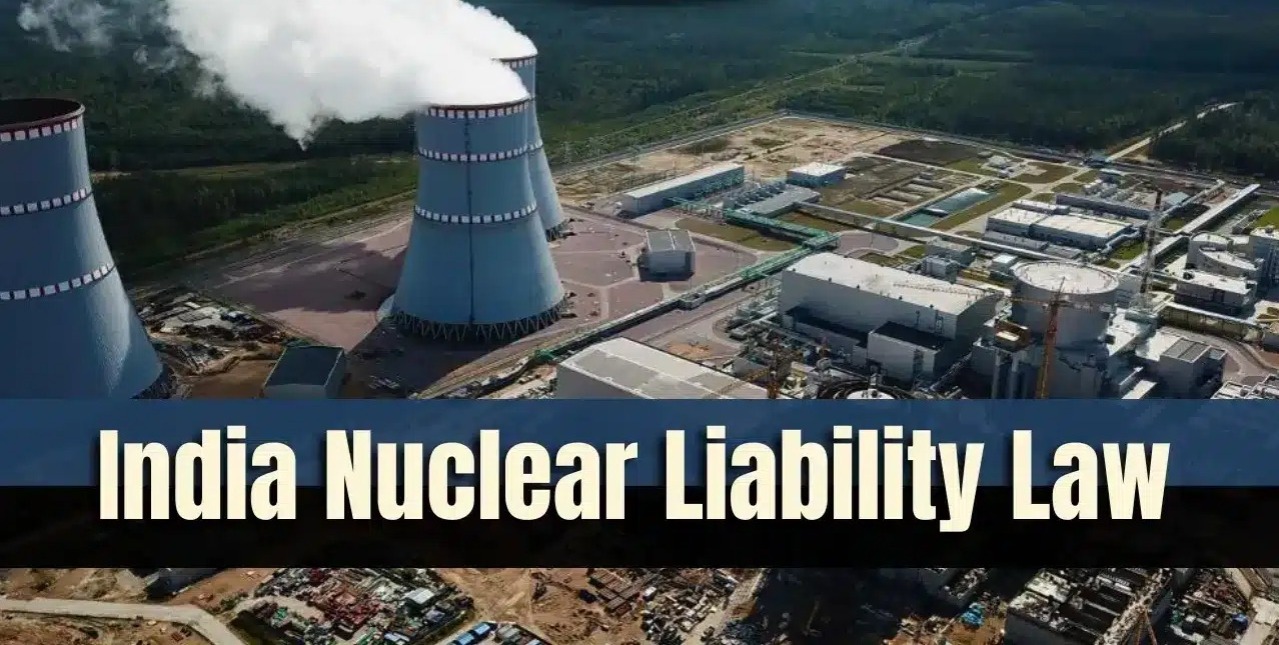
COURTKUTCHEHRY SPECIAL ON AMENDMENT IN LIABILITY CLAUSE IN NUCLEAR LAWS
India’s Nuclear Liability Reform Opens Doors for Foreign Investors and Powers AI Future
SHANTI Act Aligns India’s Nuclear Laws with Global Standards
AI Growth Makes Nuclear Energy Essential for India’s Clean Power Goals
By Our Legal Reporter
New Delhi: December 24, 2025:
India has taken a historic step by passing the Sustainable Harnessing and Advancement of Nuclear Energy for Transforming India (SHANTI) Act, 2025, which reforms decades-old nuclear laws. The legislation consolidates the Atomic Energy Act (1962) and the Civil Liability for Nuclear Damage Act (2010) into a unified framework. By amending liability clauses and opening the sector to private and foreign participation, India hopes to attract billions in investment and scale nuclear capacity to 100 gigawatts by 2047.
Also Read: Zen Technologies Patent Win Highlights India’s Growing IP Power
Key Features of the Amended Liability Clause
- Liability Cap Introduced
- The new law caps supplier liability at ₹15 billion ($168 million) for accidents.
- This aligns India with international norms where operators, not suppliers, bear primary responsibility.
- Previously, India’s 2010 law allowed operators to sue suppliers, discouraging foreign firms.
- Operator-Centric Responsibility
- Liability now rests mainly with plant operators, like frameworks in the US and Europe.
- This reduces risk exposure for foreign technology providers.
- Foreign Ownership Allowed
- Up to 49% foreign direct investment (FDI) is permitted in nuclear projects.
- Joint ventures with Indian firms are encouraged.
- Regulatory Strengthening
- The Atomic Energy Regulatory Board (AERB) gains statutory independence.
- Safety oversight is modernized to reassure investors and the public.
How This Attracts Foreign Investors
Also Read: Black Money Act Warning: Small Mistakes in Declaring Foreign Assets Can Lead to Big Penalties
- Barrier Removal: US and French companies avoided India due to liability risks. The reform now enables participation.
- Commercial Reality: Indo-US nuclear cooperation can move from political statements to actual projects.
- Capital Inflow: India needs ₹20 trillion ($226 billion) in investment to meet its nuclear targets. Private and foreign capital is now unlocked.
- Technology Transfer: Partnerships will bring advanced reactor designs, including small modular reactors (SMRs).
- Diversification: India can reduce dependence on Russian suppliers by welcoming Western firms.
Other Legal Changes in the SHANTI Act
- Unified Framework: Replaces fragmented laws with a single modern statute.
- Private Participation: Ends state monopoly, allowing Indian conglomerates like Tata Power, Adani, and Reliance to enter nuclear generation.
- International Alignment: Liability rules now match global conventions, boosting investor confidence.
- Safety Provisions: While liability caps are debated, oversight mechanisms are strengthened to balance risk and investment.
Why Nuclear Energy is Crucial for India’s AI Future
India’s rapid digital transformation, driven by artificial intelligence (AI), cloud computing, and data centers, is creating unprecedented electricity demand.
Also Read: Supreme Court allows mutation based on a will, clarifies it doesn’t decide ownership
- AI Data Centers:
- AI models require massive computing power.
- Data centers consume huge amounts of electricity, often 24/7.
- Nuclear energy provides stable, carbon-free baseload power.
- Climate Commitments:
- India pledged to cut emission intensity by 45% from 2005 levels by 2030 and achieve carbon neutrality by 2070.
- Renewable energy alone cannot meet AI-driven demand due to intermittency. Nuclear fills the gap.
- Energy Security:
- Nuclear reduces dependence on imported fossil fuels.
- Ensures reliable power for critical AI infrastructure, including defence, healthcare, and fintech.
- Global Competitiveness:
- Nations leading in AI need strong energy backbones.
- By scaling nuclear, India positions itself as a global AI hub with sustainable power.
Challenges Ahead
- Safety Concerns: Liability caps may be inadequate compared to disasters like Fukushima ($200 billion cost).
- Fuel Supply: India lacks sufficient domestic uranium, making it dependent on imports.
- Regulatory Capacity: Questions remain about whether oversight bodies can handle expanded private participation.
- Cost Competitiveness: Nuclear tariffs must be affordable compared to renewables.
Conclusion
India’s nuclear liability reform is a game-changer. By aligning with global norms, the SHANTI Act removes barriers that kept foreign investors away for over a decade. With private and foreign capital now welcome, India can accelerate its nuclear expansion to meet climate goals and power its AI-driven future.
The stakes are high: nuclear energy is not just about clean power, but about ensuring India’s digital economy and AI revolution have the reliable energy backbone they need. If implemented effectively, this reform could mark the beginning of India’s transformation into a global leader in both clean energy and artificial intelligence.
Also Read: Punjab & Haryana High Court Upholds Transfer of Tax Assessment Jurisdiction to Goa
Suggested Keywords for SEO (Google + ChatGPT)
- India nuclear liability reform 2025
- SHANTI Act nuclear law India
- India nuclear energy foreign investment
- Nuclear liability clause India foreign investors
- AI energy demand nuclear power India
- India nuclear FDI 49 percent
- India clean energy nuclear targets 2047
- Indo-US nuclear cooperation liability law
- Nuclear power for AI data centers India
- India climate goals nuclear energy
Also Read: Allahabad High Court: YouTube Content Alone Not Proof of Income, Maintenance Cannot Be Denied