
Jharkhand High Court: Employment-Related Separation Not Desertion, Husband’s Divorce Plea Dismissed
Court Says Staying Near Workplace Is Compulsion, Not Cruelty
Judges Stress Desertion Requires Intention to End Cohabitation
By Our Legal Correspondent
New Delhi: February 01, 2026:
In a landmark matrimonial ruling, the Jharkhand High Court has dismissed a husband’s divorce appeal filed under Section 13(1) (ia) and 13(1)(ib) of the Hindu Marriage Act, 1955, which allows divorce on grounds of cruelty and desertion. The Court held that a wife’s decision to live near her workplace due to commuting difficulties cannot be equated with desertion or cruelty.
Also Read: Karnataka High Court Orders Probe into Illegal Sand Mining, Political Links Under Scrutiny
The Division Bench of Justice Rongon Mukhopadhyay and Justice Pradeep Kumar Srivastava emphasized that desertion requires both physical separation and an intention to permanently end marital cohabitation. In this case, the wife’s choice was dictated by employment constraints, not by a desire to abandon her husband.
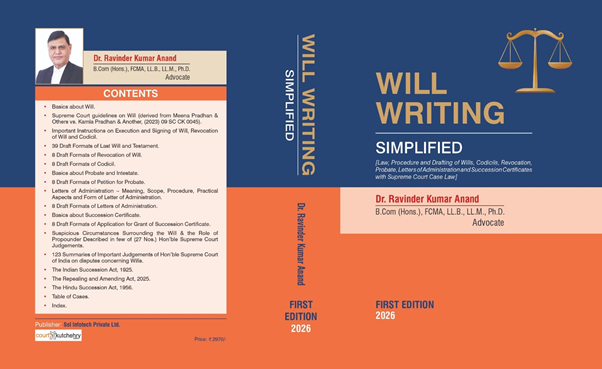
(COURTKUTCHEHRY.COM Brings Exclusive Book Offer for Readers)
📘 Legal professionals and students alike will benefit from Will Writing Simplified, which covers procedure and case law in detail on succession, will, probate. Purchase from link below:
🔹 Buy on Amazon
🔹 Buy on Flipkart
Key Highlights of the Judgment
- Employment Constraints Valid: The Court recognized that the wife’s stay at her parental home was due to commuting issues and professional obligations.
- No Intention to Desert: Desertion requires proof of intent to end marital ties, which was absent here.
- Cruelty Not Established: The husband’s claim of mental cruelty was rejected, as the wife’s actions were not malicious or deliberate.
- Family Court’s Decision Upheld: The High Court affirmed the Family Court’s refusal to grant divorce.
Legal Principles Clarified
- Desertion Defined: Desertion is not just leaving the matrimonial home; it requires intentional abandonment without reasonable cause.
- Compulsion vs. Reluctance: What the husband construed as reluctance was, in fact, compulsion due to employment.
- Burden of Proof: The petitioner failed to prove cruelty or desertion under the Hindu Marriage Act.
Broader Context
- Similar Rulings: Courts across India have consistently held that separation due to employment or family obligations does not amount to desertion.
- Dead Wood Marriages: In other cases, the Jharkhand High Court has recognized prolonged separation as grounds for divorce, but only when intent to abandon is clear.
- Social Implications: The judgment underscores the importance of balancing professional commitments with marital responsibilities in modern India.
Impact on Future Cases
- Guidance for Family Courts: This ruling provides clarity for lower courts dealing with divorce petitions based on desertion.
- Protection for Working Women: It safeguards women who must live separately due to employment, ensuring they are not unfairly penalized.
- Encouragement for Mediation: Courts may encourage couples to resolve differences through dialogue rather than litigation.
Also Read: Budget 2026 Amnesty: Small Taxpayers Can Declare Hidden Foreign Assets, Avoid Prosecution
Expert Opinions
- Legal Scholars: Applaud the judgment for reinforcing the principle that desertion must involve intent, not mere circumstance.
- Family Lawyers: Say the ruling will help prevent misuse of desertion claims in divorce cases.
- Social Commentators: Highlight that the decision reflects changing realities of dual-income households in India.
Conclusion
The Jharkhand High Court’s ruling is a significant step in matrimonial law, clarifying that employment-related separation cannot be labelled as desertion. By dismissing the husband’s divorce appeal, the Court has reinforced the principle that desertion requires intent to abandon, not compulsion due to professional obligations. This judgment will serve as a guiding precedent for future cases, protecting working spouses from unfair divorce claims.
Keywords for Faster Searches
Also Read: Supreme Court: Bail Cannot Be Cancelled Solely on Oral Dying Declaration, Upholds Allahabad HC Order
- Jharkhand High Court divorce ruling 2026
- Employment-related separation desertion case India
- Hindu Marriage Act Section 13 desertion cruelty
- Jharkhand HC dismisses husband’s divorce appeal
- Desertion definition Indian matrimonial law
- Family Court divorce appeal Jharkhand
- Working women divorce cases India
- Employment constraints divorce ruling