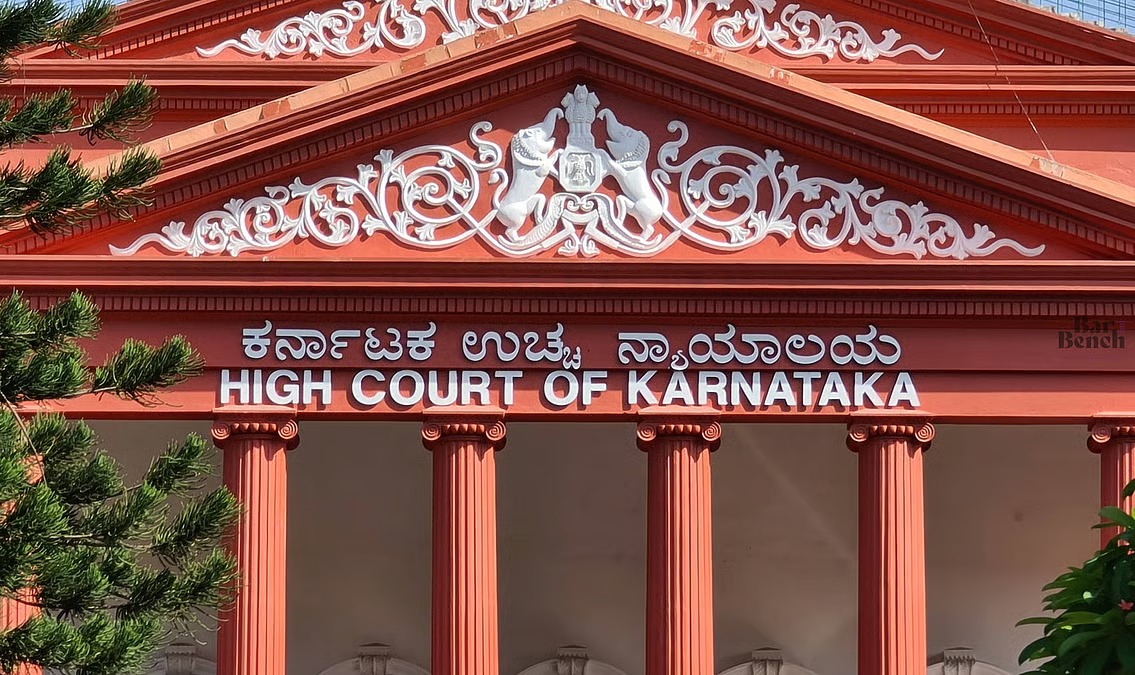
Karnataka High Court: Sessions Court Cannot Entertain Appeals Against Acquittals in Bailable Offences
High Court Clarifies Jurisdiction in Criminal Appeals
Safeguarding Rights of the Accused
By Our Legal Correspondent
New Delhi: January 16, 2026:
In a significant ruling that clarifies criminal appellate jurisdiction, the Karnataka High Court has held that appeals against acquittals in bailable offences can only be filed before the High Court, not the Sessions Court. The decision came in January 2026, when Justice Vivek Subramanian set aside a conviction order passed by a Sessions Court, which had wrongly entertained an appeal filed by the State against a trial court’s acquittal.
Also Read: ITAT Rules Leasing of Educational Infrastructure Taxable as Business Income, Not House Property
This judgment is expected to have wide implications for criminal procedure across India, ensuring that appeals are filed before the correct forum and preventing jurisdictional errors that could affect the rights of accused persons.
Case Background
The case involved K. Keshava, who was acquitted by a trial court of charges under Section 304A of the Indian Penal Code (causing death by negligence). The State Government challenged this acquittal by filing an appeal before the Sessions Court.
The Sessions Court not only entertained the appeal but also convicted Keshava, sentencing him for the offence. Aggrieved, Keshava approached the High Court, arguing that the Sessions Court had no jurisdiction to hear the appeal.
Justice Subramanian agreed, ruling that the Sessions Court’s conviction order was legally unsustainable. The High Court emphasized that under the Code of Criminal Procedure (CrPC), appeals against acquittals in bailable offences must be filed before the High Court.
High Court Clarifies Jurisdiction in Criminal Appeals
The Karnataka High Court stressed that jurisdictional boundaries must be respected. The CrPC clearly distinguishes between appeals that lie before the Sessions Court and those that lie before the High Court.
- Appeals against acquittals in serious offences (non-bailable) may lie before the Sessions Court.
- Appeals against acquittals in bailable offences must be filed before the High Court.
By entertaining the State’s appeal, the Sessions Court had exceeded its jurisdiction, leading to an invalid conviction.
Also Read: Allahabad High Court Questions Trial Judge Over Summons Under Non-Existent SC/ST Act Provision
Protecting the rights of accused persons
The ruling also highlighted the importance of protecting the rights of accused persons. Jurisdictional errors can lead to wrongful convictions and denial of fair trial rights.
The High Court noted that the State Government must exercise caution when filing appeals, ensuring that they are placed before the correct forum. Failure to do so not only waste judicial time but also jeopardizes justice.
Wider Legal Context
This ruling aligns with established principles of criminal law:
- Jurisdiction is fundamental: A court cannot pass orders beyond its authority.
- Appeals are statutory rights: They must be exercised strictly within the framework of the CrPC.
- Fair trial guarantees: Wrong forum appeals can undermine the accused’s right to a fair trial.
Legal experts believe this judgment will serve as a guiding precedent for trial courts, Sessions Courts, and prosecutors across India.
Also Read: Delhi High Court Orders Govt to Ensure Private Schools Have Functioning Parent-Teacher Associations
Implications of the Judgment
- For accused persons: They gain stronger protection against wrongful convictions arising from jurisdictional errors.
- For prosecutors: The ruling is a reminder to carefully file appeals before the correct forum.
- For courts: It reinforces the principle that decrees and orders must be legally valid and jurisdictionally sound.
This decision will likely reduce procedural mistakes and ensure smoother functioning of the criminal justice system.
Conclusion
The Karnataka High Court’s ruling in K. Keshava v. State of Karnataka is a landmark judgment that clarifies appellate jurisdiction in criminal cases. By holding that Sessions Courts cannot entertain appeals against acquittals in bailable offences, the Court has safeguarded the rights of accused persons and reinforced the importance of jurisdictional discipline.
This decision will serve as a precedent for future cases, ensuring that appeals are filed before the correct forum and that justice is delivered in accordance with law.
Also Read: Delhi High Court: Unilateral Arbitrator Appointment Invalid Without Express Written Waiver
Suggested Keywords for SEO (Google + ChatGPT)
- Karnataka High Court conviction order jurisdiction
- Sessions Court appeal acquittal ruling
- K Keshava v State of Karnataka case
- Appeal against acquittal bailable offence India
- Karnataka HC criminal appeal judgment 2026
- Sessions Court jurisdiction criminal law
- High Court sets aside Sessions Court conviction
- Criminal Procedure Code appeal jurisdiction
- Karnataka High Court latest judgment January 2026
- Appeal in bailable offence High Court only
Also Read: Kerala High Court Rescues Student’s Kalolsavam Dreams After Dance Disrupted by Power Failure