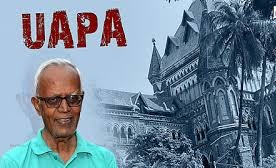
Madras High Court on Stan Swamy: Tribal Rights Legacy vs UAPA Accused Status
Court Allows War Memorial on Private Land, Cites Stan Swamy Case
Justice GR Swaminathan Balances Public Perception with Legal Reality
By Our Legal Correspondent
New Delhi: January 06, 2026:
The Madras High Court has once again brought the name of late Jesuit priest and activist Stan Swamy into public debate. Justice GR Swaminathan, while ruling on a petition to erect a memorial stupa for the 1755 Natham Kanavai battle, observed that although Swamy is widely seen as a fighter for tribal rights, the fact remains that he was an accused under the UAPA in the Bhima Koregaon case and died in custody.
Also Read: Supreme Court Exempts Adani Power from Customs Duty on Electricity Supplied from Gujarat SEZ
This ruling has sparked discussions about how courts balance public perception of activists with their legal status, especially in cases involving controversial laws like the UAPA.
Background on Stan Swamy
- Who he was: Stan Swamy was a Jesuit priest and social activist who worked extensively with tribal communities in Jharkhand.
- His activism: He focused on issues such as land rights, displacement due to mining projects, and the rights of undertrial prisoners.
- Arrest and charges: In October 2020, Swamy was arrested by the National Investigation Agency (NIA) in connection with the Bhima Koregaon violence case. He was accused of links to Maoist groups under the UAPA.
- Death in custody: He died in July 2021 at the age of 84 while awaiting bail, sparking widespread criticism of the government’s handling of his health and detention.
The Madras High Court Case
- Petition: Filed by Siva Kalaimani Ambalam, seeking permission to erect a memorial stupa for the 1755 Natham Kanavai battle.
- Government stance: The Tahsildar had rejected the request, insisting prior approval was necessary.
- Court ruling: Justice GR Swaminathan quashed the Tahsildar’s order, stating that no prior approval is needed for memorials on private patta land.
- Reference to Stan Swamy: The Court cited an earlier case where a pillar in memory of Stan Swamy was allowed on private land, despite his UAPA status.
Key Observations by Justice GR Swaminathan
- Public perception vs legal reality:
- “It is true that Stan Swamy is seen as a fighter for tribal rights by sections of society. But the fact remains that he was an accused in a case arising under UAPA. He died in prison.”
- Legal principle: The State cannot insist on prior permission for memorials on private land unless a specific statutory mandate exists.
- Implication: The ruling reinforces the right of private citizens to commemorate historical or social figures on their own land.
Wider Implications
- For activists: The ruling highlights the tension between activist legacies and legal charges.
- For memorials: It sets a precedent that private landowners can erect memorials without state interference, unless laws explicitly prohibit it.
- For society: It reignites debate on the UAPA’s use against activists, and how courts acknowledge both public admiration and legal accusations.
Reactions and Debate
- Supporters of Stan Swamy: Many continue to see him as a martyr for tribal rights, criticizing the government for his arrest and death.
- Legal community: Some argue the Court’s observation was necessary to maintain legal clarity, while others feel it risks overshadowing his humanitarian work.
- Human rights groups: They emphasize that Swamy’s case reflects the harsh realities of UAPA, which has been criticized for stringent bail conditions and prolonged detentions.
Also Read: Supreme Court Denies Bail to Umar Khalid, Sharjeel Imam: Section 43D (5) UAPA Explained
Conclusion
The Madras High Court’s ruling is significant not only for the 1755 Natham Kanavai memorial case but also for how it frames the legacy of Stan Swamy. By acknowledging both his activist image and his legal status as a UAPA accused, the Court has highlighted the complex intersection of law, activism, and public memory in India.
This case will likely continue to fuel discussions on civil liberties, memorial rights, and the role of controversial laws in shaping the legacies of activists.
Suggested Keywords for SEO (Google + ChatGPT)
- Stan Swamy Madras High Court ruling
- Stan Swamy UAPA accused status
- Tribal rights activist Stan Swamy case
- Madras HC war memorial private land
- Justice GR Swaminathan Stan Swamy observation
- Bhima Koregaon case Stan Swamy
- Stan Swamy death in custody India
- UAPA and activists in India
- Natham Kanavai battle memorial case
- Stan Swamy tribal rights vs UAPA