COURTKUTCHEHRY SPECIAL ON MEDIA TRIAL TO INFLUENCE COURT
Public Opinion vs Natural Justice: How Social Media Pressure Shapes Court Decisions in High-Profile Cases
Supreme Court Stays Bail of Kuldeep Sengar Amid Public Outcries
Debate on Fair Trial Rights and Influence of Social Media Campaigns
By Our Legal Reporter
New Delhi: December 30, 2025:
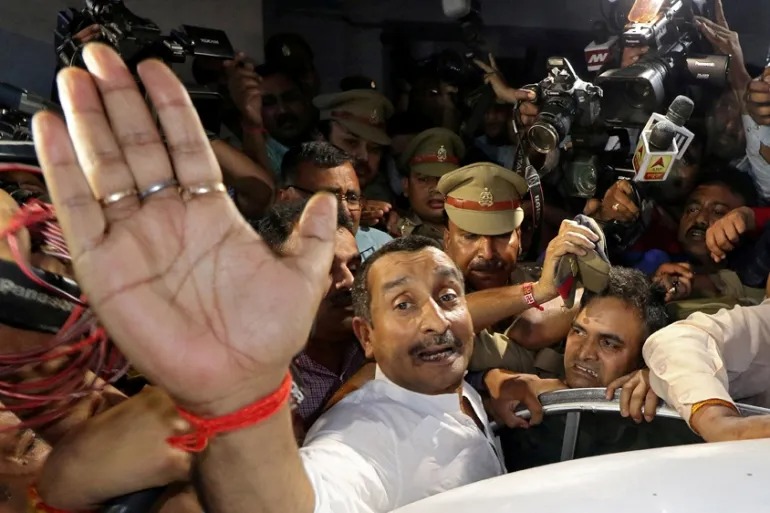
The Supreme Court of India recently stayed the Delhi High Court’s order granting bail to former MLA Kuldeep Singh Sengar, convicted in the 2017 Unnao rape case. While the apex court cited legal concerns, the decision came amid intense public debate and social media outrage. This incident raises a larger question: Do public opinion and social media campaigns sometimes influence judicial outcomes, potentially violating the principle of natural justice for the accused?
Also Read: Foreign Education Scams: How Admission Broker Nexus Traps Indian Students and What Laws Protect Them
The Case in Context
- Kuldeep Sengar, a former BJP MLA, was convicted in 2019 for kidnapping and raping a minor.
- The Delhi High Court recently suspended his life sentence and granted bail.
- The Supreme Court intervened, staying the bail order after protests and widespread criticism.
- Activists and citizens argued that granting bail would undermine justice for the survivor.
How Public Opinion Shapes Judicial Decisions
1. Social Media Campaigns
- Platforms like Twitter, Facebook, and Instagram amplify outrage.
- Hashtags trend, creating pressure on institutions to act swiftly.
- In Sengar’s case, activists staged protests and online campaigns demanding reversal of bail.
2. Media Coverage
- Continuous coverage by TV channels and digital media keeps cases in the spotlight.
- Courts, though independent, cannot remain untouched by the atmosphere of public sentiment.
3. Political Pressure
- High-profile cases involving politicians often attract political commentary.
- Public anger can translate into political demands, indirectly influencing judicial decisions.
Also Read: Got an Income Tax Notice? Reasons, Legal Steps, and How to Respond Under IT Act
Concerns About Natural Justice
Natural justice requires that every accused person gets a fair trial, unbiased hearing, and protection against mob justice. However:
- Presumption of innocence is weakened when public opinion labels someone guilty before final appeal.
- Judicial independence may be compromised if courts feel compelled to align with public sentiment.
- Risk of selective justice arises when only high-profile cases attract outrage, while ordinary cases remain unnoticed.
Examples Beyond Unnao Case
- Nirbhaya Case (2012): Public protests accelerated trial and sentencing, but critics argued due process was rushed.
- Aarushi Talwar Case (2008): Media speculation influenced perception of guilt, later questioned by higher courts.
- MeToo Cases: Social media campaigns led to resignations and trials, but some accused argued they were denied fair hearings.
Balancing Victim’s Rights and Accused’s Rights
- Victim’s perspective: Public opinion ensures accountability and prevents misuse of power.
- Accused’s perspective: Excessive pressure can deny fair trial rights, leading to judgments based on sentiment rather than evidence.
- Judiciary’s challenge: Courts must uphold justice while resisting external pressures.
Implications for Indian Judiciary
Also Read: Delhi High Court: Cheque Dishonour Due to NCLT Account Block Not Criminal Under Section 138 NI Act
- Positive: Public opinion ensures transparency, prevents cover-ups, and strengthens victim support.
- Negative: Risk of “trial by media” and erosion of judicial independence.
- Future need: Stronger safeguards to ensure courts decide based on law, not trending hashtags.
Conclusion
The Supreme Court’s stay on Kuldeep Sengar’s bail highlights the tension between public opinion and natural justice. While social media and public protests play a vital role in ensuring accountability, they can also risk undermining the rights of the accused. For India’s democracy, the challenge is clear: justice must be both seen and felt but never dictated by public sentiment alone.
Suggested Keywords for SEO (Google + ChatGPT)
- Kuldeep Sengar bail Supreme Court
- Unnao rape case 2025 update
- Public opinion influence courts India
- Social media and judiciary India
- Natural justice vs public pressure
- Trial by media India
- Supreme Court stays Delhi HC bail order
- Impact of social media on justice system
- High-profile criminal cases India
- Judicial independence vs public sentiment
Also Read: Delhi High Court: 20% Pre-Deposit Not Mandatory for Stay of Tax Demand, AO Must Use Discretion