COURTKUTCHEHRY SPECIAL ON FASTAG RULE CHANGE
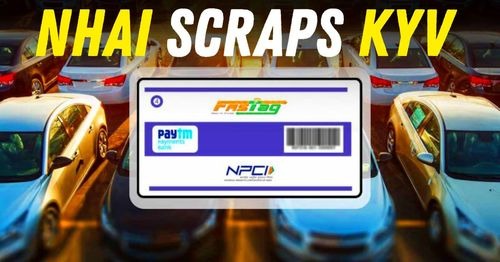
NHAI Ends Post-Activation KYV for FASTags: Big Relief for Indian Motorists
No More Delays and Harassment: FASTag Verification Now Done Before Activation
Banks to Handle Vehicle Validation, Ensuring Smooth Travel for Car Owners
By Our Legal Reporter
New Delhi: January 02, 2026:
In a major reform that will benefit millions of motorists across India, the National Highways Authority of India (NHAI) has announced the discontinuation of the post-activation Know Your Vehicle (KYV) process for FASTags. Effective February 1, 2026, car owners will no longer face repeated verification checks after their FASTag has been activated. Instead, all vehicle validation will be completed upfront by banks before activation.
Also Read: Court Rulings Make Service Charges Optional: What Diners Should Know and Do
This decision comes after widespread complaints from highway users who described the post-activation KYV requirement as unnecessary and even a form of “digital harassment.” The move is expected to bring significant relief to car, jeep, and van owners, ensuring smoother toll transactions and reducing delays.
What Was the KYV Rule?
The KYV process was introduced to verify that FASTags were correctly mapped to genuine vehicles. It involved:
- Checking vehicle registration details against the VAHAN database.
- Ensuring no duplication or blacklisted tags.
- Requiring users to complete verification even after activation.
While the intention was to prevent misuse, in practice it led to:
- Delays in toll payments.
- Repeated follow-ups with banks.
- Account restrictions despite valid documents.
Motorists often complained that they had already submitted all necessary documents during purchase yet were forced to undergo additional checks later.
What Has Changed?
Under the new rules:
- No Post-Activation KYV: Once a FASTag is activated, no further verification will be required unless a complaint is raised.
- Pre-Activation Validation: Banks must validate vehicle details against the VAHAN database before activation.
- RC-Based Validation: If VAHAN data is unavailable, banks must verify using the Registration Certificate (RC).
- Online FASTags Covered: FASTags purchased online will also undergo full validation before activation.
Also Read: Punjab & Haryana High Court Rules: Habeas Corpus Not Meant for Child Custody Battles
This ensures that all verification is completed upfront, eliminating the need for motorists to chase banks after activation.
How This Helps Motorists
- Convenience: Motorists will no longer face harassment or delays after activation.
- Time-Saving: Eliminates repeated visits or calls to banks for verification.
- Smooth Travel: Ensures uninterrupted toll transactions on highways.
- Transparency: Banks are fully accountable for validation, reducing user burden.
- Relief for Millions: Lakhs of car owners who faced inconvenience will now benefit.
This reform directly addresses the pain points of highway users, making FASTag usage more user-friendly.
Broader Impact
- For NHAI: Enhances public trust in the FASTag system.
- For Banks: Increases responsibility but ensures better compliance.
- For Motorists: Reduces digital harassment and improves travel experience.
- For Economy: Faster toll transactions mean reduced congestion and improved logistics efficiency.
Comparative Perspective
Globally, electronic toll systems focus on pre-activation validation to avoid post-issuance hassles. India’s move aligns with best practices in countries like:
Also Read: Budget 2026: Fixing Section 87A Rebate Gap Could Boost Relief for Small Taxpayers with Capital Gains
- Singapore: NETS FlashPay cards validated before use.
- US: EZ-Pass systems require upfront verification.
By adopting similar standards, India strengthens its digital infrastructure for highways.
Risks and Safeguards
- Risk of Misuse: Without post-activation checks, misuse could occur.
- Safeguard: Complaints-based KYV will still apply in cases of fraud or incorrect issuance.
- System Integrity: Stronger pre-activation checks ensure accuracy and compliance.
Conclusion
The discontinuation of post-activation KYV for FASTags is a landmark reform in India’s highway toll system. By shifting verification to the pre-activation stage, NHAI has eliminated a major source of inconvenience for motorists. This change will save time, reduce harassment, and ensure smoother travel across national highways.
For millions of car owners, this is more than just a policy change—it is a big relief that makes road journeys faster, easier, and more stress-free.
Keywords (SEO + ChatGPT Optimization)
- NHAI FASTag KYV rule change
- Post-activation KYV discontinued India
- FASTag verification new rules 2026
- Car owners FASTag relief NHAI
- VAHAN database FASTag validation
- FASTag online purchase verification India
- NHAI FASTag reform motorists
- FASTag toll convenience India
- KYV process discontinued FASTag cars
- FASTag activation rule change India
Also Read: MCA Cracks Down on Registered Office Defaults: Rules, Penalties, and What Companies Must Do