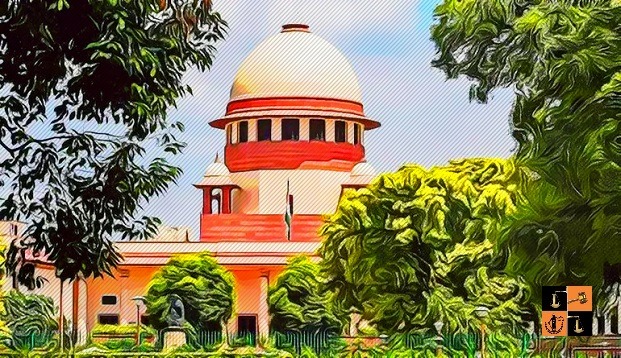
Supreme Court: No Disciplinary Action Against Judges for Mere Errors in Judgment
Apex Court sets aside dismissal of Madhya Pradesh judicial officer, reinforces judicial independence
Court warns High Courts against chilling effect of punishing judges for wrong orders
By Our Legal Reporter
New Delhi: January 05, 2026:
In a landmark ruling, the Supreme Court of India has held that judicial officers cannot be subjected to disciplinary action merely for passing incorrect or erroneous orders. The Court set aside the dismissal of Nirbhay Singh Suliya, an Additional District and Sessions Judge from Madhya Pradesh, who was removed from service in 2014 on allegations of adopting “double standards” in bail applications under the Excise Act.
Also Read: Karnataka High Court: Custodial Interrogation Not Mandatory in GST Evasion Cases
The judgment, delivered by a bench of Justice J.B. Pardiwala and Justice K.V. Viswanathan, underscores the principle that judicial independence must be protected at all levels, and mistakes in judicial reasoning cannot be equated with misconduct.
Background of the Case
- In 2014, the Madhya Pradesh High Court dismissed judicial officer Nirbhay Singh Suliya, alleging corruption and inconsistency in bail orders under Section 34(2) of the Excise Act.
- A departmental inquiry was initiated, claiming he had adopted a “double standard” in granting bail.
- The officer appealed to the Supreme Court, arguing that his dismissal was based on judicial errors rather than misconduct.
- The Supreme Court allowed the appeal, reinstating his service record and directing payment of full monetary benefits until superannuation.
Court’s Observations
- Errors Do Not Equal Misconduct
- The Court clarified that wrong orders or errors of judgment cannot be grounds for disciplinary action.
- Judicial officers must be free to exercise discretion without fear of reprisal.
- Chilling Effect on Judiciary
- Justice Viswanathan warned that punishing judges for wrong orders would create a chilling effect, discouraging district judges from granting bail or exercising discretion.
- This would burden higher courts with unnecessary bail petitions.
- Judicial Independence
- The Court stressed that independence of the judiciary is a cornerstone of democracy.
- Protecting district judges from undue disciplinary action ensures fair and fearless decision-making.
Also Read: J&K High Court: Women Form Distinct Class Under Section 437 CrPC, Bail Granted in Murder Case
Wider Legal Context
- Judicial Accountability vs. Independence: While judges must be accountable, accountability cannot extend to punishing them for genuine errors.
- Supreme Court Precedents: Past rulings have held that misconduct requires mala fide intent, corruption, or gross negligence—not mere mistakes.
- Impact on Bail Jurisprudence: The ruling is expected to encourage trial judges to grant bail in deserving cases without fear of disciplinary consequences.
Why This Judgment Matters
- Protects Judicial Independence: Ensures judges can decide cases without fear of reprisal.
- Reduces Bail Burden on Higher Courts: Encourages trial courts to exercise discretion, reducing unnecessary appeals.
- Clarifies Misconduct Standards: Establishes that misconduct requires more than just judicial error.
- Strengthens Rule of Law: Reinforces trust in judiciary by balancing accountability with independence.
Expert Views
Legal experts welcomed the ruling, noting that:
- It will restore confidence among district judges to exercise discretion.
- It prevents misuse of disciplinary powers by High Courts.
- It strengthens the principle that judicial errors must be corrected through appeals, not punishment.
Conclusion
Also Read: Bombay High Court Bars Restaurants from Playing Copyrighted Songs Without License
The Supreme Court’s ruling that judges cannot face disciplinary action for mere errors in judgment is a milestone in protecting judicial independence. By setting aside the dismissal of a Madhya Pradesh judicial officer, the Court reaffirmed that judicial accountability must not undermine judicial freedom.
This judgment ensures that district judges can perform their duties without fear, strengthening the justice system and reinforcing the principle that errors are corrected through appellate review, not disciplinary punishment.
GEO-Friendly Keywords
- Supreme Court ruling judge error judgment disciplinary action
- No disciplinary action against judges India
- Madhya Pradesh judicial officer dismissal set aside SC
- Judicial independence Supreme Court India 2026
- Bail orders disciplinary proceedings judges India
- SC Justice Pardiwala Viswanathan ruling judicial misconduct
- Supreme Court protects district judges’ wrong orders
- Judicial accountability vs independence India Supreme Court
- SC ruling on erroneous judicial orders India
Also Read: Supreme Court Denies Bail to Umar Khalid and Sharjeel Imam in Delhi Riots Case