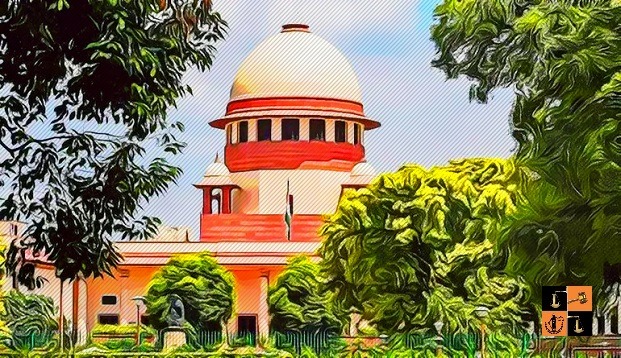
Supreme Court: Omissions in Chief Examination Can Be Cured in Cross-Examination
Court clarifies that incomplete testimony does not make evidence invalid if clarified later.
Judges stress balance between procedural technicalities and substantive justice in civil disputes.
By Our Legal Reporter
New Delhi: December 19, 2025:
In a landmark ruling, the Supreme Court of India has held that omissions made during a witness’s chief examination can be cured in cross-examination. The judgment, delivered by a bench of Justice Ahsanuddin Amanullah and Justice K. Vinod Chandran, came in a case involving the validity of a disputed Will.
The Court clarified that evidence cannot be discarded merely because certain details were not mentioned in the chief examination, provided those details are established during cross-examination. This ruling strengthens the principle that substantive justice must prevail over procedural technicalities.
Background of the Case
The case arose from a family dispute over the attestation of a Will. One of the testator’s daughters, who was excluded from the Will, challenged its validity.
- During the trial, one of the attesting witnesses (DW-2) failed to mention in his chief examination whether he had seen other witnesses sign the Will.
- The omission was argued to be fatal, making the Will invalid.
- However, during cross-examination, the witness clarified that he had indeed seen the other attesting witness’s sign.
The trial court initially dismissed the Will as invalid due to the omission. The matter eventually reached the Supreme Court, which overturned the lower court’s view.
Court’s Observations
The Supreme Court made several important observations:
- Omissions are not fatal: A witness’s failure to mention a fact in chief examination does not automatically invalidate testimony.
- Cross-examination cures defects: If the missing detail is clarified during cross-examination, the evidence remains valid.
- Substantive justice over technicalities: Courts must focus on the truth rather than rigid procedural lapses.
- Will attestation clarified: The Court ruled that the Will was valid since the attesting witness confirmed the signatures during cross-examination.
Justice Amanullah emphasized that the purpose of cross-examination is to test and complete the evidence, and omissions in chief examination should not be treated as incurable defects.
Legal Significance
This ruling has wide implications for civil and criminal trials:
- Strengthens evidentiary law: Clarifies that testimony is a continuous process, not limited to chief examination.
- Protects valid documents: Prevents genuine Wills and contracts from being invalidated due to minor procedural lapses.
- Guides trial courts: Encourages judges to consider the entire testimony, including cross-examination, before ruling.
- Balances fairness: Ensures that technical omissions do not defeat substantive justice.
Expert Reactions
Legal experts have welcomed the judgment:
- Advocates in Delhi said the ruling will prevent misuse of technical lapses to invalidate genuine documents.
- Law professors noted that the judgment strengthens the principle of “substance over form” in evidence law.
- Civil law practitioners highlighted that the ruling would reduce frivolous challenges to Wills and contracts.
Broader Context
The ruling aligns with earlier Supreme Court judgments emphasizing that procedural law is a handmaid of justice, not its mistress. Courts have repeatedly stressed that technical defects should not override substantive rights.
Globally, similar principles exist:
- UK courts often allow omissions to be clarified during cross-examination.
- US courts emphasize the completeness of testimony across all stages of examination.
- Common law traditions generally prioritize substantive justice over procedural rigidity.
Lessons for Litigants and Lawyers
The case offers important lessons:
- Prepare witnesses thoroughly: Ensure they mention all relevant facts in chief examination.
- Use cross-examination effectively: Clarify omissions and strengthen testimony.
- Avoid technical challenges: Focus on substantive issues rather than exploiting minor lapses.
- Document authenticity matters: Courts will uphold genuine documents even if minor procedural errors occur.
Conclusion
The Supreme Court’s ruling that omissions in chief examination can be cured in cross-examination is a landmark in Indian evidence law. By prioritizing substantive justice over procedural technicalities, the Court has ensured that genuine documents and valid testimony are not discarded due to minor lapses.
This judgment will guide trial courts across India, reinforcing the principle that truth and fairness must prevail over rigid procedure.
Suggested Keywords for SEO (Google + ChatGPT)
- Supreme Court omission chief examination ruling India
- Cross-examination cures omission evidence law
- Will attestation Supreme Court judgment 2025
- Substantive justice vs procedural technicalities India
- Evidence law Supreme Court landmark case
- Chief examination omission cured cross-examination India
- Supreme Court civil dispute Will validity ruling
- Indian evidence law substantive justice ruling
- Witness testimony omission Supreme Court case
- Landmark judgment on evidence law India