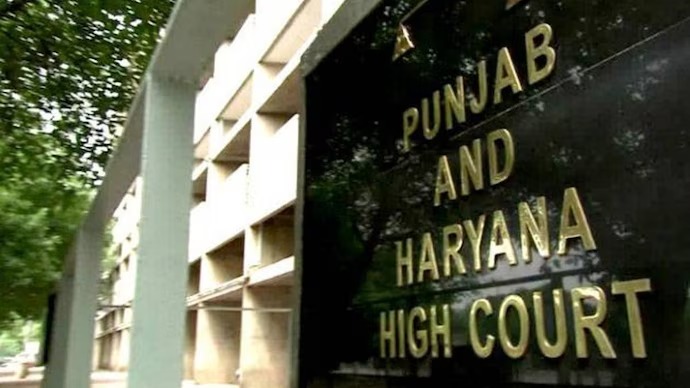
Punjab & Haryana High Court: Passport Deposit Not a Routine Bail Condition
Court Says Bail Restrictions Must Be Based on Clear Flight Risk Evidence
Doctrine of Proportionality Reinforced in Idol Demolition Case Ruling
By Our Legal Correspondent
New Delhi: January 01, 2026:
In a landmark ruling, the Punjab and Haryana High Court have held that courts cannot impose the condition of depositing a passport as part of bail orders in a routine or mechanical manner. The judgment came in the context of an idol demolition case, where anticipatory bail had been granted with the condition that the accused surrender their passports.
Justice Sumeet Goel modified the order, stressing that bail conditions must be reasonable, proportionate, and based on objective factors. The ruling is expected to have wide implications for criminal jurisprudence across India.
Background of the Case
- The case involved allegations of idol demolition and assault in Punjab in 2018.
- The accused were granted anticipatory bail by the Sessions Court, subject to depositing their passports.
- The accused challenged this condition before the High Court, arguing that it was excessive and unnecessary.
- The High Court agreed, ruling that such conditions cannot be imposed without clear evidence of flight risk or obstruction of justice.
Court’s Analysis
The High Court made several important observations:
- Passport as Identity: A passport is not just a travel document but also proof of nationality and identity.
- Doctrine of Proportionality: Bail conditions must balance the right to liberty with the needs of justice.
- Not Punitive: Bail conditions should not be punitive; accused persons are presumed innocent until proven guilty.
- Statutory Framework: The power to impound a passport lies under Section 10(3) of the Passport Act, 1967, not under routine bail orders.
Justice Goel emphasized that courts must assess objective parameters before directing passport deposit, such as:
- Clear evidence of intent to flee.
- Past misuse of bail.
- Threats to obstruct justice.
Impact of the Judgment
This ruling has significant implications:
- Protects Liberty: Reinforces that bail is a safeguard of personal liberty, not a punishment.
- Guides Lower Courts: Provides clarity for trial courts on when passport deposit can be justified.
- Limits Judicial Overreach: Prevents mechanical imposition of conditions that restrict fundamental rights.
- Strengthens Rule of Law: Ensures bail conditions adhere to constitutional principles.
Public and Legal Reactions
Legal experts welcomed the judgment:
- “This ruling ensures that bail conditions remain fair and proportionate,” said a Chandigarh-based lawyer.
- Rights activists noted that routine passport deposits often disproportionately affect professionals and students who need passports for identity and travel.
Comparative Perspective
Similar rulings have been seen in other jurisdictions:
- Supreme Court of India has previously cautioned against excessive bail conditions.
- Delhi High Court has ruled that judges cannot innovate bail conditions at will.
- Internationally, courts in the UK and US also emphasize proportionality and necessity in bail restrictions.
Conclusion
The Punjab and Haryana High Court’s ruling is a milestone in bail jurisprudence. By clarifying that passport deposit cannot be imposed routinely, the court has reinforced the principle that bail conditions must be reasonable, proportionate, and justified by evidence.
This judgment strengthens the protection of personal liberty while ensuring that courts retain discretion to impose restrictions only when truly necessary.
Keywords for Faster Searches
- Punjab Haryana High Court passport bail condition
- Deposit of passport bail ruling India
- Doctrine of proportionality bail conditions
- Idol demolition case Punjab bail
- Passport Act 1967 bail condition
- Justice Sumeet Goel bail ruling
- Anticipatory bail passport deposit India
- Bail conditions personal liberty India
- Punjab Haryana HC bail jurisprudence
- Routine passports surrender bail condition