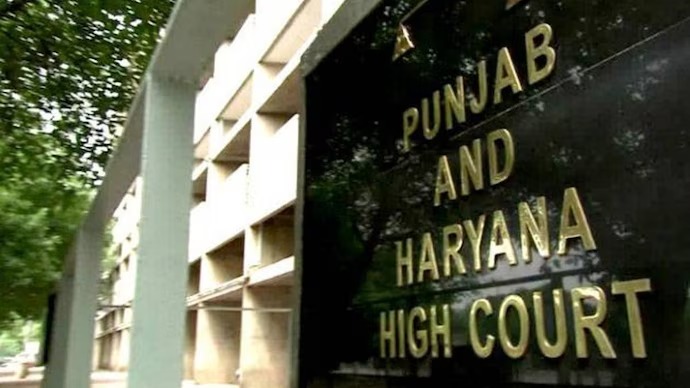
Punjab & Haryana High Court Refuses to Quash FIR Against Lawyer Accused of Posing as Judge
Court Says Serious Allegations Must Be Tested in Trial, Not Dismissed Early
Lawyer Allegedly Claimed to Be Magistrate During Traffic Check in Chandigarh
By Our Legal Correspondent
New Delhi: December 24, 2025:
The Punjab and Haryana High Court have refused to quash a criminal case against a lawyer accused of impersonating a judge during a traffic check in Chandigarh. The court observed that the allegations were serious and needed to be examined during trial, not dismissed at the preliminary stage.
Also Read: Calcutta High Court Upholds ED’s Power to Attach Assets in Prima Facie PMLA Violation Case
Justice Surya Pratap Singh, who heard the matter, noted that the FIR contained specific and categorical allegations against the lawyer, making it inappropriate for the court to interfere at this stage. The ruling has sparked debate in legal circles about professional ethics, misuse of authority, and the importance of maintaining public trust in the judiciary.
Background of the Case
The incident occurred in May 2024, when traffic police officers stopped a vehicle at the busy intersection of Sectors 45/46/49/50 in Chandigarh. The driver, identified as a practicing lawyer, was allegedly driving a Scorpio SUV with a number plate that was not clearly visible.
When asked to produce his driving licence, the lawyer allegedly introduced himself as a Judicial Magistrate. According to police reports, he attempted to intimidate the officers by projecting himself as a member of the judiciary. When the officers insisted on compliance, he allegedly fled the spot.
An FIR was registered at Sector 49 Police Station, charging him with offences including impersonation, obstruction of public servants, and violation of traffic rules.
Court’s Observations
The High Court emphasized that quashing of FIRs should only happen in the rarest of rare cases. Justice Singh stated that the allegations were not vague but “very specific, categorical and prominent”, and therefore required a full trial.
Also Read: Supreme Court Quashes Dowry Case Against In-Laws, Warns Against Vague Allegations Under Section 498A
The court rejected the lawyer’s argument that the FIR was fabricated because he had earlier complained against senior police officers. Justice Singh noted that the lawyer’s presence at the traffic checkpoint was an admitted fact, and the trial would determine whether the police version or the lawyer’s version was true.
Allegations Against the Lawyer
The FIR alleges that:
- The lawyer violated traffic rules by driving with an improper number plate.
- He refused to produce his driving licence when asked.
- He claimed to be a Judicial Magistrate to avoid legal action.
- A “Judge” sticker was allegedly affixed to his car’s windshield.
- He obstructed police officers from performing their duty.
- He fled the scene when officers insisted on compliance.
These allegations, if proven, could amount to serious misconduct and criminal liability.
Legal Context
Under Indian law, impersonating a public servant is a punishable offence under Section 170 of the Indian Penal Code (IPC). Obstructing police officers in the discharge of their duty is also a criminal offence.
The court highlighted that impersonating a judge is particularly serious because it undermines the integrity of the judiciary and erodes public confidence in the justice system.
By refusing to quash the FIR, the High Court reinforced the principle that serious allegations must be tested in trial rather than dismissed prematurely.
Also Read: ITAT Rules Rental Income from Trailers and Exhibition Space is Business Income, Not House Property
Reaction from Legal Experts
Legal experts have welcomed the ruling, noting that it sends a strong message about professional ethics. According to senior advocates, the case highlights:
- The need for lawyers to uphold the dignity of the profession.
- The importance of protecting the judiciary’s reputation.
- The dangers of misusing legal knowledge or status for personal gain.
Some experts also pointed out that impersonation of judges could have wider consequences, including loss of public trust and erosion of rule of law.
Public Concerns
The case has attracted public attention, with many citizens expressing concern about the misuse of authority. For ordinary people, the idea of someone pretending to be a judge to escape traffic rules is troubling.
The ruling reassures the public that the judiciary takes such matters seriously and will not allow professionals to misuse their position.
Broader Implications
This case has broader implications for:
- Law enforcement: Police officers must be empowered to act against individuals who misuse authority.
- Legal profession: Lawyers must maintain high ethical standards and avoid conduct that damages the profession’s reputation.
- Judiciary: Courts must protect their integrity by ensuring that impersonation is dealt with firmly.
The ruling also underscores the importance of accountability in a democratic society.
Conclusion
The Punjab and Haryana High Court’s refusal to quash the FIR against a lawyer accused of posing as a judge is a significant ruling. It reinforces the principle that serious allegations must be examined in trial and cannot be dismissed lightly.
By taking a firm stance, the court has sent a clear message: misuse of authority, especially impersonation of judicial officers, will not be tolerated. The case now proceeds to trial, where the truth will be determined.
For the legal profession, the ruling is a reminder of the importance of ethics, accountability, and respect for the rule of law.
Keywords for Faster Searches
- Punjab Haryana High Court lawyer impersonation case
- FIR against lawyer posing as judge Chandigarh
- Justice Surya Pratap Singh ruling impersonation
- Lawyer claimed to be Judicial Magistrate traffic check
- High Court refuses to quash FIR impersonation
- Section 170 IPC impersonation of public servant
- Chandigarh traffic police lawyer case
- Professional ethics lawyer impersonation India
- Judiciary integrity impersonation case Punjab Haryana
- FIR quashing rarest of rare cases India
Also Read: Indian Copyright Law Shields Scriptwriters and Creators Amid Rising Web Series Releases