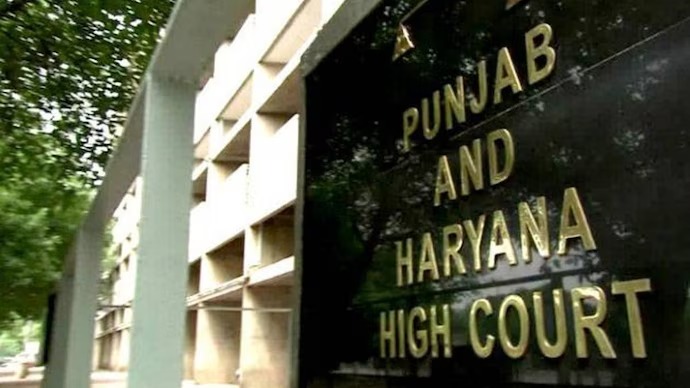
Punjab & Haryana High Court Rejects Realtor’s Plea: Signatures Only on Last Page Raise Fraud Concerns in 2007 Land Deal
Court says incomplete signatures on land agreement point to fraud, denies refund of earnest money.
Justice Nidhi Gupta rules in favour of three widows, stressing importance of proper documentation in property transactions.
By Our Legal Correspondent
New Delhi: December 19, 2025:
The Punjab and Haryana High Court have delivered a significant judgment that underscores the importance of proper documentation in property transactions. The case revolved around a disputed land deal from 2007 in Pataudi, Gurgaon, where a realtor sought enforcement of an agreement to sell land. The court found that the agreement was suspicious because signatures appeared only on the last page, raising serious doubts about its authenticity.
Also Read: SEBI’s New Expense Ratio Rules Bring Relief for Investors and Mutual Funds
Justice Nidhi Gupta, presiding over the matter, dismissed the appeal filed by property dealer Satish Kumar Saini, who had claimed rights over the land. The court upheld the fraud allegations made by three widows, the defendants in the case, and refused to refund the earnest money deposited by the realtor.
Background of the Case
The dispute dates to June 23, 2007, when an agreement to sell land was allegedly executed between the realtor and three widows. The agreement consisted of three pages, but only the last page bore signatures of both parties.
- Pages 1 and 2: No signatures of either the defendants or the plaintiff.
- Page 3: Contained signatures of all parties.
This unusual feature became the central issue in the case. The widows argued that the realtor had attempted to commit fraud by presenting an incomplete and suspicious document.
Court’s Observations
Justice Nidhi Gupta noted several irregularities in the agreement:
- Incomplete signatures: The absence of signatures on the first two pages raised doubts about whether the defendants had agreed to the terms written there.
- Fraud indicators: The court observed that such practices are often used to manipulate agreements, leaving room for later insertions or alterations.
- Earnest money dispute: The realtor demanded a refund of the earnest money, but the court ruled that fraud nullifies such claims.
Also Read: Why Misuse of Portable Ultrasound Machines for Sex Determination Can Land You in Jail
The judgment emphasized that legal agreements must be signed on every page to ensure authenticity and prevent disputes.
Impact on Property Transactions
This ruling has far-reaching implications for property transactions in India:
- Buyers and sellers must ensure signatures on all pages of agreements.
- Legal professionals must verify documents thoroughly before execution.
- Fraudulent practices can lead to dismissal of claims, even if money has been deposited.
The case serves as a reminder that shortcuts in documentation can result in heavy losses and legal setbacks.
Voices from the Legal Community
Legal experts have welcomed the judgment, calling it a landmark decision that strengthens safeguards against fraud in real estate deals.
- Advocates in Chandigarh noted that the ruling will discourage property dealers from using incomplete agreements.
- Law professors highlighted that the judgment reinforces the principle of “free consent” under contract law, ensuring that all parties genuinely agree to the terms.
Broader Context
Fraudulent land deals have been a recurring issue in India, particularly in rapidly developing areas like Gurgaon. With rising property values, disputes often arise over documentation, ownership, and consent.
The High Court’s ruling aligns with previous judgments that stress the importance of transparency and fairness in property transactions. It also reflects the judiciary’s proactive stance in protecting vulnerable groups, such as widows, from exploitation.
Also Read: India’s DPDP Act Reshapes Gaming and Digital Industries with Stricter Data Privacy Rules
Conclusion
The Punjab and Haryana High Court’s decision in this case is more than just a verdict on a 2007 land deal. It is a warning to property dealers and buyers alike: incomplete documentation will not stand in court. By ruling against the realtor and upholding the widows’ fraud claim, the court has reinforced the principle that every page of an agreement matters.
This judgment is expected to influence future property disputes and encourage stricter compliance with documentation standards across India.
Suggested Keywords for SEO (Google + ChatGPT)
- Punjab Haryana High Court land deal judgment
- 2007 Pataudi land dispute case
- Signatures last page property fraud
- Justice Nidhi Gupta land agreement ruling
- Realtor plea dismissed Punjab Haryana HC
- Earnest money refund denied land case
- Property documentation fraud India
- Legal news Punjab Haryana High Court
- Land deal fraud widows case Gurgaon
- Importance of signatures in property agreements
Also Read: Delhi High Court Rules One-Year Separation Not Mandatory for Mutual Consent Divorce