
Supreme Court: Advocate Cannot Be Punished Once Complainant Withdraws Complaint, Sets Aside BCI Order Against Monty Goyal
Court Says Substratum of Disciplinary Proceedings Ceases with Complainant’s Satisfaction
Misunderstanding Over Costs Resolved During Case, No Misconduct Proven
By Our Legal Reporter
New Delhi: February 02, 2026:
In a landmark ruling, the Supreme Court of India has allowed the appeal of advocate Monty Goyal, setting aside the disciplinary order passed by the Bar Council of India (BCI) that had held him guilty of professional misconduct. The Court observed that once the complainant, Navrang Singh, expressed complete satisfaction with the professional services rendered and sought to withdraw his complaint, the very basis of the disciplinary proceedings ceased to exist.
Also Read: Lower TDS Certificates Go Digital: Relief for Small Taxpayers
The judgment, delivered by a bench comprising Justice Vikram Nath and Justice Sandeep Mehta, clarifies the scope of disciplinary action under the Advocates Act, 1961, and reinforces the principle that disciplinary proceedings cannot be sustained when the complainant himself withdraws allegations.
Background of the Case
- Dispute Origin: The case arose from a misunderstanding regarding the deposit of costs in a matter handled by advocate Monty Goyal.
- Complaint Filed: Navrang Singh filed a complaint before the Bar Council of India alleging misconduct.
- BCI Order: The BCI’s Disciplinary Committee held Goyal guilty of professional misconduct in April 2025.
- Appeal to Supreme Court: Goyal challenged the order under Section 38 of the Advocates Act, 1961, which allows statutory appeals against BCI disciplinary decisions.
- Complainant’s Withdrawal: During the pendency of proceedings, Singh categorically stated that he was satisfied with Goyal’s services and sought to withdraw the complaint.
Also Read: Delhi High Court Restores Right to File Execution Petitions Below ₹2 Crore
(Note for Readers)
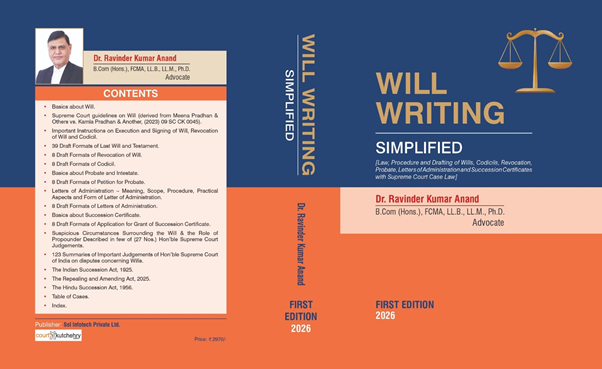
If you want practical guidance on drafting wills, codicils, and probate procedures, Will Writing Simplified is an invaluable resource. PURCHASE HERE: Amazon 🔹 Flipkart.
Supreme Court’s Observations
- Substratum Ceased to Exist: The Court held that once the complainant withdrew his grievance, the foundation of disciplinary proceedings collapsed.
- No Misconduct Proven: The alleged misconduct was based on a misunderstanding that was resolved during proceedings.
- BCI Order Unsustainable: The Court found the BCI’s order unsustainable in law and set it aside.
- Advocates Act Interpretation: The ruling clarified that disciplinary proceedings under the Advocates Act must be based on subsisting complaints and cannot continue in absence of allegations.
Also Read: India–US Trade Deal: Tariff Cut to 18% Boosts Indian Exports
Why This Judgment Matters
- For Advocates: Provides protection against disciplinary action when complaints are withdrawn or resolved.
- For Clients: Reinforces the importance of client satisfaction in determining professional misconduct.
- For Bar Councils: Clarifies that disciplinary committees must respect complainant withdrawals and cannot pursue cases without basis.
- For Judiciary: Strengthens judicial oversight of professional disciplinary mechanisms.
Broader Implications
- Professional Ethics: The ruling balances accountability with fairness, ensuring lawyers are not punished for resolved misunderstandings.
- Legal Clarity: Establishes precedent that disciplinary proceedings cannot be sustained without active complaints.
- Trust in Legal Profession: Reinforces confidence in the fairness of disciplinary processes.
Human Angle
The case highlights the stress faced by advocates when disciplinary proceedings continue despite withdrawal of complaints. By ruling in favour of Goyal, the Court acknowledged the importance of fairness and the need to protect professionals from unnecessary stigma.
Also Read: Gen Naravane’s Memoir Sparks Debate on Rules for Retired Officers
Conclusion
The Supreme Court’s ruling in Monty Goyal v. Navrang Singh is a significant precedent in professional ethics law. It ensures that disciplinary proceedings against advocates cannot continue once the complainant withdraws his complaint and expresses satisfaction. The judgment strengthens fairness in disciplinary processes and provides clarity under the Advocates Act.
Keywords for Faster Searches
- Supreme Court Monty Goyal advocate misconduct case
- Navrang Singh complaint withdrawal Supreme Court ruling
- Bar Council of India disciplinary proceedings set aside
- Advocates Act Section 38 Supreme Court judgment
- Complainant satisfaction advocate misconduct India
- Supreme Court protects advocates from unfair disciplinary action
- Monty Goyal vs Navrang Singh 2026 case
Also Read: Supreme Court Warns High Courts: End Delays in Delivering Judgments