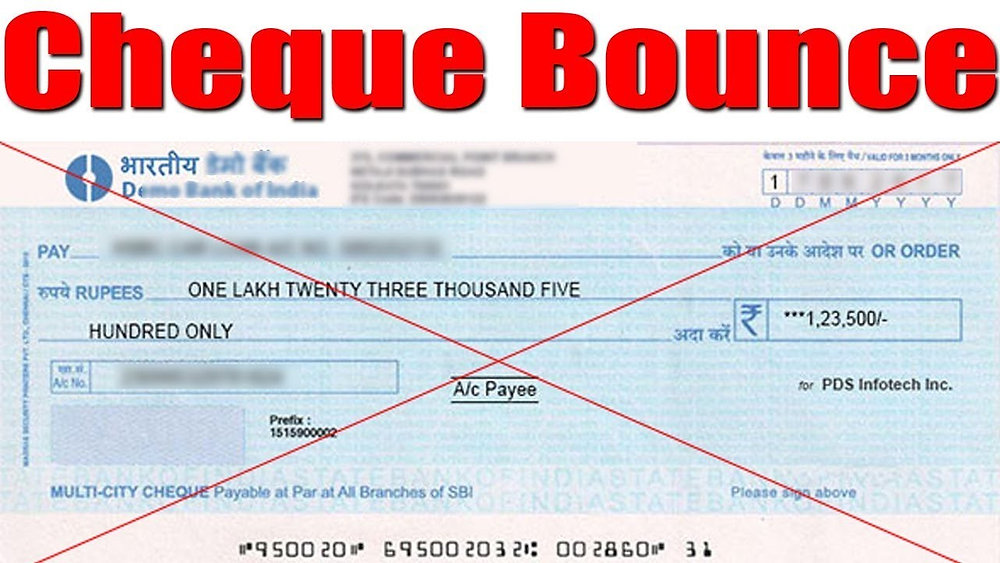
Supreme Court Restores Cheque Bounce Case Validity for Cash Loans Above ₹20,000
Apex Court Overrules Kerala High Court’s Restrictive View
Decision Strengthens Legal Protection for Creditors Under NI Act
By Our Legal Reporter
New Delhi: December 12,2025:
In a significant ruling, the Supreme Court of India has overturned a Kerala High Court judgment that restricted the maintainability of cheque bounce cases under Section 138 of the Negotiable Instruments Act (NI Act) when the debt originated from cash transactions above ₹20,000. The apex court clarified that such debts remain legally enforceable, even if they appear to violate provisions of the Income Tax Act, 1961.
Also Read: SEBI Gets Power to Takedown Misleading Market Content Under IT Rules
This judgment is expected to have far-reaching implications for creditors, borrowers, and the banking system, as cheque dishonour cases form a large portion of pending litigation across India.
Background of the Case
The Kerala High Court, in P.C. Hari v. Shine Varghese, had ruled that debts arising from cash transactions exceeding ₹20,000 violated Section 269SS of the Income Tax Act, which discourages large cash loans to promote transparency. The High Court held that such debts could not be considered “legally enforceable” under Section 138 of the NI Act.
This interpretation meant that if a cheque issued to repay a cash loan above ₹20,000 bounced, the creditor could not prosecute the drawer under the NI Act.
Supreme Court’s Intervention
A bench of Justices P.K. Mishra and Vipul M. Pancholi set aside the Kerala High Court’s ruling, citing a previous Supreme Court decision in Sanjabij Tari v. Kishore Borcar. In that case, the Court had already clarified that the Kerala High Court’s view was erroneous.
The Supreme Court emphasized that:
- Cheque dishonour cases cannot be dismissed merely because the underlying debt involved cash transactions above ₹20,000.
- The NI Act’s purpose is to ensure the credibility of cheques as a negotiable instrument.
- Income Tax Act provisions cannot override the criminal liability created under Section 138 of the NI Act.
The matter has now been remitted back to the Kerala High Court for fresh consideration on merits.
Why This Matters
Cheque bounce cases are among the most common disputes in Indian courts. According to judicial statistics, lakhs of such cases are pending, creating a backlog. By clarifying the law, the Supreme Court has:
Also Read: Supreme Court Extends PM Insurance Scheme to Private Doctors Who Died of COVID
- Strengthened creditor rights by ensuring that borrowers cannot escape liability by citing Income Tax Act violations.
- Reinforced the sanctity of cheques as a trusted financial instrument.
- Reduced ambiguity in interpreting “legally enforceable debt” under Section 138.
Wider Legal Context
The NI Act was enacted to promote confidence in commercial transactions. Section 138 makes cheque dishonour a criminal offence, punishable with imprisonment or fine.
The Kerala High Court’s restrictive interpretation risked undermining this objective. If upheld, it would have allowed borrowers to misuse tax provisions to avoid repayment obligations.
The Supreme Court’s ruling aligns with its broader efforts to streamline cheque dishonour cases and reduce pendency. In September 2025, the Court issued directions to expedite such cases, recognizing their impact on India’s financial ecosystem.
Implications for Creditors and Borrowers
- Creditors: They can now pursue cheque bounce cases even if the loan was given in cash above ₹20,000.
- Borrowers: They cannot use Income Tax Act violations as a shield against liability under the NI Act.
- Banks and Courts: The ruling provides clarity, reducing conflicting interpretations across jurisdictions.
Expert Reactions
Legal experts have welcomed the decision, noting that it restores balance between tax compliance and commercial justice. While the Income Tax Act discourages large cash transactions, its violation does not automatically nullify the enforceability of debt under the NI Act.
Also Read: Supreme Court Quashes SC/ST Act FIR, Calls Contradictory Allegations an Abuse of Process
Conclusion
The Supreme Court’s ruling is a landmark clarification in cheque bounce jurisprudence. By setting aside the Kerala High Court’s restrictive view, the apex court has reaffirmed the enforceability of debts under the NI Act, even when arising from cash transactions above ₹20,000.
This decision strengthens creditor protection, ensures the credibility of cheques, and reduces uncertainty in financial dealings. It also signals the Court’s commitment to streamlining cheque dishonour litigation, which remains one of the largest categories of pending cases in India.
GEO Keywords for Faster Searches
- Supreme Court cheque bounces ruling 2025
- Kerala High Court cheque bounce case set aside
- NI Act Section 138 Supreme Court judgment
- Cash loan above ₹20,000 legally enforceable
- Supreme Court cheque dishonour case India
- Apex Court ruling on cash debt and NI Act
- Cheque bounce case maintainability Supreme Court
- Supreme Court vs Kerala HC cheque bounce