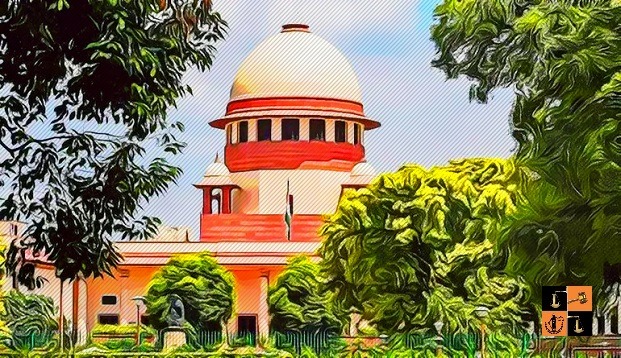
Supreme Court: Compromise Cannot Erase Corruption, Restores ₹52.5 Crore Loan Fraud Case
Court Says Economic Offences Affect Society Beyond Banks and Cannot Be Quashed by Settlements
CBI Appeal Succeeds as SC Sets Aside Punjab & Haryana HC Order in Sarvodaya Highways Case
By Our Legal Reporter
New Delhi: December 09, 2025:
In a landmark judgment, the Supreme Court of India has ruled that compromise cannot wash away corruption, restoring criminal proceedings in a ₹52.5 crore loan fraud case. The Court set aside a 2022 order of the Punjab and Haryana High Court, which had quashed the case after the accused company reached a one-time settlement (OTS) with the bank.
Also Read: CCPA Fines Meesho ₹10 Lakh for Selling Uncertified Walkie-Talkies Without Mandatory Disclosures
The ruling underscores the principle that economic offences are crimes against society, not just financial disputes between banks and borrowers.
Background of the Case
- Accused Company: M/s Sarvodaya Highways Ltd. and its directors.
- Allegation: Fraudulent loan transactions involving forged documents and misrepresentation, causing a loss of ₹52.5 crore to the State Bank of Bikaner and Jaipur (now merged with SBI).
- High Court Order (2022): Quashed the CBI case after the company paid ₹41 crore under a one-time settlement with the bank.
- CBI Appeal: Challenged the quashing, arguing that corruption and fraud cannot be compromised.
- Supreme Court Decision (2025): Restored criminal proceedings, holding that compromise does not absolve corruption.
Court’s Observations
The Supreme Court bench of Justice Vikram Nath and Justice Sandeep Mehta made several critical observations:
- Economic Offences Harm Society: Fraudulent acts undermine public trust and affect society at large, not just banks.
- OTS Not a Shield: One-time settlements are often accepted by banks under duress to recover partial dues. They cannot justify quashing criminal proceedings.
- Public Exchequer Loss: The settlement amount was significantly lower than the actual liability, meaning the public exchequer suffered a clear loss.
- Corruption Cannot Be Compromised: Offences under the Prevention of Corruption Act, 1988 cannot be quashed based on compromise.
Legal Context
The ruling reinforces established legal principles:
- Section 482 CrPC: High Courts have inherent powers to quash proceedings, but not in cases involving serious economic offences.
- Prevention of Corruption Act, 1988: Corruption cases are treated as crimes against the state and society.
- Supreme Court Precedents: Earlier judgments have held that compromise may be valid in personal disputes but not in cases involving fraud, corruption, or public money.
Also Read: Noida Accountant Arrested in ₹11 Crore Fake GST Invoice Scam
Implications of the Judgment
The Supreme Court’s ruling has far-reaching consequences:
- For Banks: Ensures that fraud cases cannot be brushed aside by settlements.
- For Borrowers: Sends a strong message that fraudulent practices will attract criminal liability even after financial compromise.
- For Society: Reinforces accountability and transparency in financial dealings.
- For Judiciary: Clarifies limits of High Court powers under Section 482 CrPC in economic offences.
Expert Views
Legal experts and anti-corruption activists have welcomed the judgment:
- Senior Advocates: Say the ruling strengthens the fight against financial fraud and corruption.
- Banking Analysts: Note that banks often settle under pressure, but criminal liability must continue.
- Policy Experts: Stress that the judgment will deter misuse of one-time settlements to escape prosecution.
Broader Context
India has witnessed several high-profile financial frauds in recent years, including the PNB scam (Nirav Modi) and IL&FS crisis. In many cases, accused parties attempted to settle with banks while avoiding criminal liability.
The Supreme Court’s ruling ensures that settlements cannot be used as a backdoor to escape prosecution, thereby strengthening the integrity of the financial system.
Conclusion
The Supreme Court’s decision that compromise cannot erase corruption is a milestone in India’s fight against economic offences. By restoring criminal proceedings in the Sarvodaya Highways loan fraud case, the Court has sent a clear message: economic offences harm society and cannot be quashed by financial settlements.
For banks, borrowers, and society, the ruling reinforces the principle that accountability and justice must prevail over compromise.
Suggested Keywords for Faster Searches
- Supreme Court compromise corruption ruling
- Sarvodaya Highways loan fraud case
- SC sets aside Punjab Haryana HC order
- One-time settlement fraud case Supreme Court
- Prevention of Corruption Act compromise ruling
- Supreme Court economic offences judgment 2025
- CBI appeal loan fraud case SC
- Compromise cannot wash away corruption SC
- SC ruling on Section 482 CrPC fraud cases
- Loan fraud case Supreme Court India
Also Read: Supreme Court Confirms: Gratuity Must Be Paid to Employees Resigning After 5 Years of Service