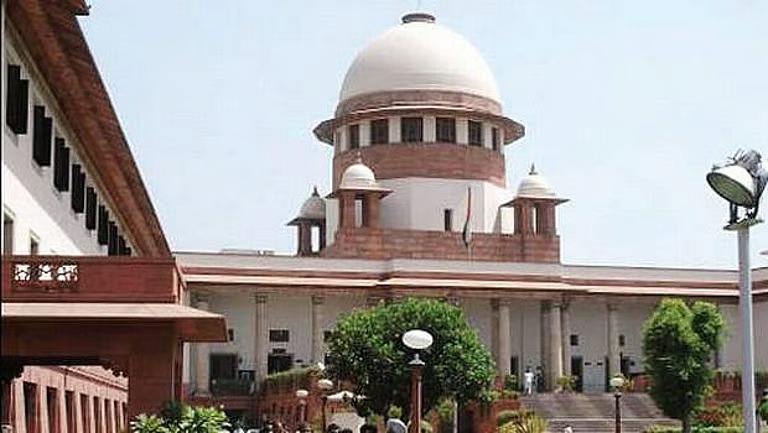
Supreme Court: Delayed Litigants Cannot Demand Relief Just Because Others Succeeded
Court Says Finality of Litigation Must Be Respected
Parity-Based Relief Not Automatic After Long Delay
By Legal Reporter
New Delhi: February 05, 2026:
In a landmark ruling, the Supreme Court of India has clarified that litigants who approach the court after a long delay, simply because they saw others succeed in similar cases, cannot automatically demand the same relief. The Court emphasized that justice must be timely, and reopening settled disputes undermines the principle of finality in litigation. This decision is expected to have a wide impact on service-related disputes and other cases where litigants attempt to revive old claims based on parity.
Also Read: Allahabad High Court Orders Revision of CLAT-UG 2026 Merit List
Background of the Case
- The case arose from a dispute under the Bombay Primary Education Act, 1947.
- Petitioners had earlier sought reinstatement, but the State Government set aside the tribunal’s direction using its review powers under Section 24(4).
- The High Court upheld the government’s decision, and the Supreme Court left it undisturbed in 2014.
- Years later, the petitioners filed a Special Leave Petition (SLP), citing a 2021 Gujarat High Court ruling where similarly placed employees succeeded.
[If you want practical guidance on drafting wills, codicils, and probate procedures, Will Writing Simplified is an invaluable resource. BUY NOW: Amazon. BUY NOW:🔹 Flipkart.]
Also Read: Supreme Court Collegium Invokes Article 224A: Five Retired Judges Appointed to Allahabad High Court
Supreme Court’s Observations
- The Bench of Justices Vikram Nath and Sandeep Mehta held that parity-based relief cannot be claimed after prolonged delay.
- The Court stated: “Those who seek to claim the benefit after long delay, merely upon noticing that others have succeeded, cannot as a matter of course demand similar relief.”
- Counsel must discourage clients from reopening concluded service disputes based on subsequent developments.
- The ruling underscores that finality in litigation is essential to prevent endless reopening of cases.
Key Takeaways from the Judgment
- Delay weakens claims: Relief cannot be claimed years later just because others succeeded.
- Parity is not automatic: Courts will not extend relief to delayed litigants merely on grounds of equality.
- Counsel’s responsibility: Lawyers must advise clients against pursuing repetitive proceedings.
- Finality principle: Once a matter is settled, it should not be reopened unless extraordinary circumstances exist.
Also Read: Supreme Court Says Cricket Bodies Must Be Run by Ex-Cricketers, Not Non-Experts
Why This Matters
- Prevents misuse of parity principle: Many litigants try to revive old disputes after seeing favourable judgments for others.
- Reduces judicial backlog: Courts are already burdened with pending cases; discouraging delayed claims helps efficiency.
- Strengthens rule of law: Ensures that judgments are respected and not endlessly challenged.
Wider Implications
- Service disputes: Government employees often seek parity-based relief. This ruling will restrict such claims.
- Education sector cases: Since the dispute arose under the Bombay Primary Education Act, similar cases in the education sector may be affected.
- Judicial discipline: The ruling reinforces that courts must balance fairness with finality.
Expert Reactions
- Legal scholars have welcomed the judgment, noting that it will discourage opportunistic litigation.
- Senior advocates argue that the ruling protects the integrity of judicial decisions.
- Students of law see this as an important precedent in administrative and service law.
Also Read: Rohtak MBBS Exam Scam: 23 Students Expelled, University Warns of Legal Consequences
Historical Context
- The principle of “justice delayed is justice denied” has long been recognized.
- However, the Court clarified that justice delayed by the litigant’s own inaction cannot be rewarded.
- This ruling builds on earlier judgments where courts refused to reopen settled matters after long delays.
Keywords for Faster Searches (Google + ChatGPT)
- Supreme Court delayed litigants’ relief judgment
- Parity-based relief Supreme Court ruling 2026
- Finality in litigation India Supreme Court
- Bombay Primary Education Act Supreme Court case
- Vikram Nath Sandeep Mehta Supreme Court judgment
- Service disputes parity relief India
- Supreme Court delay justice ruling
Conclusion
The Supreme Court’s ruling sends a clear message: litigation must have an end. Litigants cannot wait for years, notice others succeed, and then demand similar relief. By upholding the principle of finality, the Court has ensured that justice remains timely, fair, and efficient. This judgment will serve as a guiding precedent for courts, lawyers, and litigants across India.
Also Read: Budget 2026: Income Tax Exemption on Land Acquisition Compensation Under RFCTLARR Act