COURTKUTCHEHRY SPECIAL ON SC LANDMARK VERDICT LINKING CSR WITH DIASBILITY RIGHTS
Supreme Court: Disability Rights Must Be Core Part of CSR for True Workplace Equality
Apex Court Orders Coal India to Create Post for Disabled Candidate
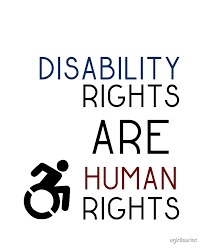
Disability Rights Recognized as Human Rights Under CSR Framework
By Our Legal Reporter
New Delhi: January 17, 2026:
In a landmark judgment, the Supreme Court of India has declared that true equality at the workplace can only be achieved when disability rights are treated as a core component of Corporate Social Responsibility (CSR). The ruling came in the case of Sujata Bora v. Coal India Limited, where a visually disabled woman was denied employment despite qualifying for the post of management trainee.
Also Read: NFRA Tightens Rules: Auditors Must Hold Structured Meetings with Audit Committees
The Court, comprising Justice J.B. Pardiwala and Justice K.V. Viswanathan, directed Coal India to create a supernumerary post and appoint the candidate, emphasizing that CSR is not just about philanthropy but about protecting human rights, including the rights of persons with disabilities.
Apex Court Orders Coal India to Create Post for Disabled Candidate
The case involved Sujata Bora, a visually disabled candidate who had cleared the written examination for the post of management trainee at Coal India Limited (CIL). However, she was denied appointment on the grounds of disability.
- The Supreme Court held that such denial violated the Rights of Persons with Disabilities Act, 2016, which mandates equal opportunity in employment.
- The Court directed CIL to create a supernumerary post and appoint Bora, ensuring she is not deprived of her rightful opportunity.
- The bench observed that corporate entities must integrate disability rights into their CSR policies, making them part of workplace equality rather than optional welfare measures.
This ruling sets a precedent for other public and private sector companies, making it clear that CSR obligations extend to ensuring inclusivity in employment practices.
Disability Rights Recognized as Human Rights Under CSR Framework
The Supreme Court emphasized that disability rights must be viewed through the prism of CSR, as they are integral to human rights.
Key observations:
Also Read: Delhi Police EOW Books Suraksha Realty for Alleged ₹230 Crore Funds Diversion
- CSR is not limited to external community projects but extends to internal workplace equality.
- Companies must ensure that persons with disabilities are not discriminated against in recruitment, promotion, or workplace facilities.
- True equality requires structural changes in corporate policies, including accessibility, reasonable accommodation, and inclusive hiring practices.
The Court’s ruling aligns with global standards, including the UN Convention on the Rights of Persons with Disabilities (UNCRPD), which India ratified in 2007.
Wider Legal Context
The judgment builds on India’s evolving disability rights framework:
- Rights of Persons with Disabilities Act, 2016: Mandates 4% reservation in government jobs and equal opportunity in private employment.
- Companies Act, 2013 (CSR provisions): Requires large companies to spend at least 2% of their net profits on CSR activities.
- Supreme Court precedents: Earlier rulings have emphasized accessibility in public spaces and equal opportunity in education and employment.
By linking CSR with disability rights, the Court has expanded the scope of corporate responsibility beyond charity, making it a legal and ethical obligation.
Implications of the Judgment
- For companies: CSR policies must now explicitly include disability rights, requiring structural changes in recruitment and workplace practices.
- For employees with disabilities: Greater assurance of equal opportunity and protection against discrimination.
- For society: Reinforcement of inclusivity as a core value in corporate governance.
- For regulators: Stronger monitoring of CSR compliance, ensuring disability rights are not sidelined.
Also Read: Tax Benefits on Multiple Home Loans: Self-Occupied vs Let-Out Properties Explained
This ruling is expected to influence corporate India, pushing companies to adopt inclusive hiring, accessible infrastructure, and disability-friendly policies.
Conclusion
The Supreme Court’s directive that disability rights must be a core part of CSR marks a milestone in India’s journey toward workplace equality. By ordering Coal India to appoint a visually disabled candidate, the Court has sent a strong message that inclusivity is not optional but a legal and moral duty.
This judgment will reshape CSR practices across industries, ensuring that corporate responsibility includes protecting the rights of persons with disabilities. It sets a precedent for integrating human rights into business practices, making India’s workplaces more inclusive and equitable.
Also Read: Delhi High Court Clears NHAI to Cancel Pune Firm’s Contract Over Delhi-Mumbai Expressway Delays
Suggested Keywords for SEO (Google + ChatGPT)
- Supreme Court disability rights CSR India
- Coal India disabled candidate Supreme Court ruling
- Workplace equality disability rights India
- Rights of Persons with Disabilities Act 2016 Supreme Court
- CSR obligations disability inclusion India
- Justice JB Pardiwala Justice KV Viswanathan judgment
- Sujata Bora Coal India Supreme Court case
- Disability rights corporate responsibility India 2026
- Supreme Court latest judgment January 2026
- Inclusive hiring CSR policies India
Also Read: How to Save Over ₹2 Lakh in Tax Beyond Section 80C