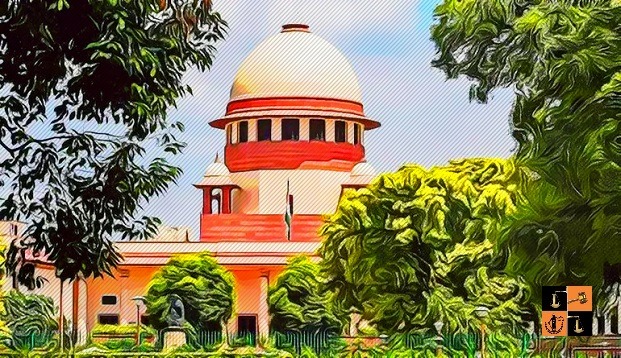
Supreme Court: Motive Becomes Irrelevant When Dying Declaration Provides Direct Evidence
Apex Court Restores Conviction in Himachal Murder Case
Dying Declaration Holds Greater Weight Than Motive in Criminal Trials
By Our Legal Reporter
New Delhi: January 17, 2026:
In a landmark judgment, the Supreme Court of India has clarified that the absence of motive cannot weaken a prosecution case when direct evidence exists in the form of a credible dying declaration. The ruling came on January 15, 2026, in the case of State of Himachal Pradesh v. Chaman Lal, where the Court restored the conviction of a man accused of murdering his wife.
Also Read: How to Save Over ₹2 Lakh in Tax Beyond Section 80C
A bench comprising Justice B.V. Nagarathna and Justice R. Mahadevan observed that motive assumes importance primarily in cases based on circumstantial evidence. However, when there is direct evidence, such as a trustworthy dying declaration, motive becomes insignificant.
Apex Court Restores Conviction in Himachal Murder Case
The case involved Chaman Lal, who was accused of murdering his wife. The trial court had convicted him based on the wife’s dying declaration, but the Himachal Pradesh High Court acquitted him in 2014, citing lack of motive.
The Supreme Court overturned the acquittal, ruling that:
- Dying declarations are admissible evidence under Section 32(1) of the Indian Evidence Act.
- The wife’s statement was consistent, credible, and clearly pointed to the accused.
- The absence of motive cannot override direct evidence of guilt.
The Court emphasized that justice cannot be denied merely because motive is not established, especially when the victim’s own words provide clear proof.
Dying Declaration Holds Greater Weight Than Motive in Criminal Trials
The judgment reaffirmed the principle that dying declarations carry significant evidentiary value in criminal trials.
Key observations by the Court:
- Motive is secondary when direct evidence exists.
- Dying declarations must be scrutinized, but once found credible, they can form the sole basis of conviction.
- Courts must avoid acquitting accused persons merely because motive is not proven.
This ruling strengthens the role of dying declarations in criminal jurisprudence, ensuring that victims’ last words are given due weight in delivering justice.
Wider Legal Context
Also Read: Jharkhand High Court Calls Ranchi ED Office Raid “Pre-Planned”, Orders Extra Security
The Supreme Court’s ruling aligns with earlier precedents:
- In Khushal Rao v. State of Bombay (1958), the Court held that a dying declaration can be the sole basis of conviction if found reliable.
- In P.V. Radhakrishna v. State of Karnataka (2003), the Court reiterated that motive is not essential when direct evidence exists.
- The present judgment adds clarity by explicitly stating that absence of motive is insignificant when dying declarations are credible.
Legal experts note that this ruling will guide lower courts in handling cases where dying declarations are central to prosecution.
Implications of the Judgment
- For prosecution: Strengthens reliance on dying declarations, reducing the need to prove motive in direct evidence cases.
- For defence: Limits the scope of arguing acquittal solely on absence of motive.
- For judiciary: Provides clarity on balancing motive and direct evidence.
- For society: Reinforces faith in the justice system by ensuring victims’ voices are heard even after death.
Conclusion
Also Read: Supreme Court’s Tiger Global Ruling Shakes Foreign Funds in India’s F&O Market
The Supreme Court’s ruling in State of Himachal Pradesh v. Chaman Lal is a milestone in criminal law, reaffirming that motive is insignificant when direct evidence exists in the form of a dying declaration. By restoring the conviction, the Court has ensured that justice is not denied due to technicalities.
This judgment strengthens the evidentiary value of dying declarations and sets a precedent for future cases, ensuring that victims’ last words are respected and upheld in courts of law.
Suggested Keywords for SEO (Google + ChatGPT)
- Supreme Court dying declaration ruling India
- Motive insignificant direct evidence SC judgment
- State of Himachal Pradesh v Chaman Lal case
- SC restores conviction Himachal murder case 2026
- Dying declaration evidentiary value Supreme Court
- Justice BV Nagarathna Justice R Mahadevan ruling
- Indian Evidence Act Section 32(1) dying declaration
- Supreme Court criminal law latest judgment January 2026
- Motive vs direct evidence criminal trials India
- SC ruling dying declaration murder conviction
Also Read: Madhya Pradesh High Court Slams Trial Court for Ignoring Deadline in Civil Case