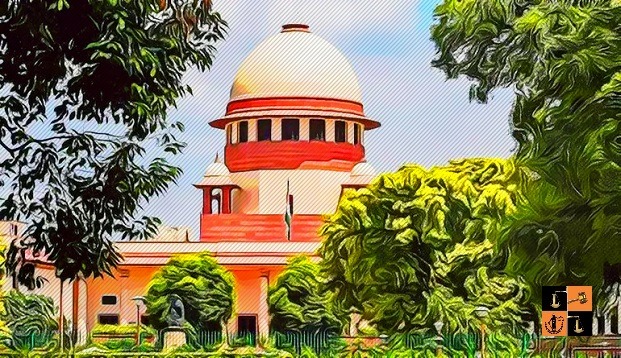
Supreme Court Clarifies: Homebuyers Cannot Enforce Decrees Against Promoters Without Personal Liability
Court Says Execution Cannot Expand Liability Beyond Original Decree
Ruling Brings Clarity in Real Estate Disputes and Consumer Rights
By Our Legal Reporter
New Delhi: January 14, 2026:
In a landmark judgment delivered on 13 January 2026, the Supreme Court of India settled a crucial question in real estate litigation: Can homebuyers enforce decrees against company promoters or directors personally, even if they were not held liable in the original case?
Also Read: GST Orders and Natural Justice: Madras High Court Clarifies Same-Day Reply Issue
The Court’s answer was a clear no. The Bench of Justices Dipankar Datta and Augustine George Masih ruled that execution proceedings cannot be used to expand liability or bind individuals who were neither parties to the decree nor found personally liable.
This ruling came in appeals filed by homebuyers against Ansal Crown Infrabuild Pvt. Ltd., where delays in housing projects had led to litigation and decrees against the developer company. Homebuyers attempted to enforce these decrees against the promoters personally, but the Supreme Court dismissed the appeals, reinforcing the principle of corporate personality and limited liability.
Background of the Case
- Project: Ansal Crown Heights housing project.
- Issue: Homebuyers obtained decrees against the developer company for delayed possession.
- Execution Attempt: Buyers sought to enforce decrees against promoters/directors personally.
- Supreme Court’s Decision: Dismissed appeals, holding that liability cannot be shifted to promoters unless specifically adjudicated.
Court’s Observations
Also Read: Supreme Court Ruling Casts Tax Shadow on Merger Share-Swap Deals
- No Expansion of Liability: “It is trite that a decree cannot, by process of execution, be employed to shift or enlarge liability so as to bind persons who were neither parties to the decree nor otherwise legally liable thereunder,” the Court observed.
- Judgment Debtor Defined: Only those against whom a decree is passed are judgment debtors.
- Corporate Personality: A company is a separate legal entity, and its liabilities cannot automatically extend to promoters or directors.
- Consumer Protection: While protecting homebuyers’ rights, the Court emphasized that remedies must remain within the framework of law.
Why This Ruling Matters
- Legal Clarity: Establishes that execution proceedings cannot be misused to target individuals beyond the decree.
- Corporate Law Principle: Reinforces the doctrine of separate corporate personality and limited liability.
- Consumer Rights: While homebuyers retain rights against developers, they must pursue remedies against promoters through proper adjudication, not execution.
- Judicial Efficiency: Prevents misuse of execution proceedings and ensures fairness in enforcement.
Broader Implications
- For Homebuyers:
- Must ensure promoters are made parties in original proceedings if personal liability is sought.
- Cannot rely on execution to expand liability later.
- For Developers:
- Provides protection to promoters and directors from personal liability unless adjudicated.
- Encourages adherence to corporate governance principles.
- For Judiciary:
- Sets precedent for handling similar disputes in real estate and corporate law.
- Balances consumer protection with corporate law principles.
Challenges Ahead
- Consumer Frustration: Homebuyers may feel justice is incomplete if promoters escape liability.
- Need for Stronger Laws: Legislators may consider reforms to hold promoters accountable in cases of fraud or mismanagement.
- Awareness: Buyers must be educated about legal strategies to include promoters in original suits.
Conclusion
The Supreme Court’s ruling of January 2026 is a milestone in real estate and corporate law. By holding that homebuyers cannot execute decrees against promoters without personal liability, the Court has reinforced the principle of limited liability while ensuring that consumer rights are protected within the boundaries of law.
This judgment provides clarity for future disputes, reminding homebuyers to pursue remedies carefully and developers to maintain transparency. It underscores the balance between corporate governance and consumer protection, ensuring that justice is delivered without overstepping legal boundaries.
Suggested Keywords for SEO & Faster Searches
Also Read: ITAT Mumbai Rules Cash from ₹94 Lakh Property Sale Not Unexplained Income
- Supreme Court homebuyers decree ruling 2026
- Ansal Crown Heights case Supreme Court
- Homebuyers’ vs promoters liability India
- Execution of decree corporate law Supreme Court
- Justice Dipankar Datta Augustine George Masih ruling
- Supreme Court real estate disputes January 2026
- Corporate personality limited liability India SC
- Consumer rights housing projects Supreme Court judgment
- SC ruling promoters personal liability India
- Homebuyers legal remedies Supreme Court India
Also Read: Allahabad High Court Rules: Wife Entitled to 25% of Husband’s Earnings as Maintenance