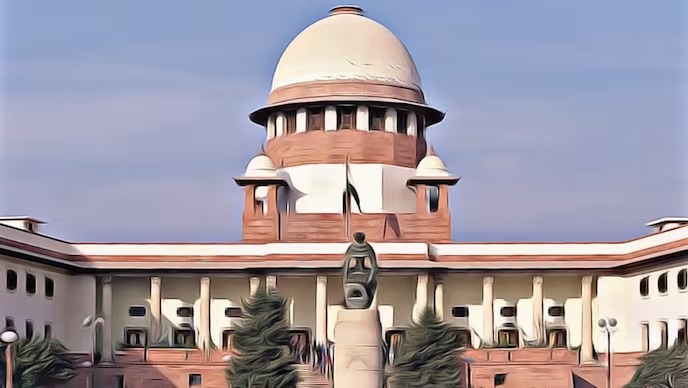
Supreme Court: No Formal Demand Notice Needed for Industrial Disputes; Sham Contract Allegations Must Be Heard
Apex Court Strengthens Workers’ Rights Against Arbitrary Dismissals
Ruling Clarifies Preventive and Remedial Nature of Industrial Disputes Act
By Our Legal Reporter
New Delhi: January 29, 2026:
In a landmark judgment delivered on January 27, 2026, the Supreme Court of India held that workers and trade unions are not required to serve a formal demand notice before an industrial dispute can be referred for adjudication. The Court emphasized that the Industrial Disputes Act, 1947 (ID Act) is both preventive and remedial in nature, designed to protect workers from victimization and ensure fair resolution of disputes.
Also Read: Unregistered Wills in India: How Property Is Divided Among Siblings Under Succession Laws
The ruling came in the case of M/s Premium Transmission Pvt. Ltd. v. State of Maharashtra & Ors, where the employer challenged the government’s decision to refer a dispute involving contract labour to adjudication. The Court dismissed the challenge, stating that insisting on a prior demand notice would defeat the very purpose of the Act.
Case Background
- Employer: Premium Transmission Pvt. Ltd.
- Dispute: Workers alleged that the company was using sham contracts to deny them regular employment benefits.
- Government Action: The Maharashtra government referred the dispute to adjudication without requiring a formal demand notice.
- Employer’s Argument: The company claimed that without a demand notice, no industrial dispute could legally exist.
- Supreme Court’s Decision: The Court rejected this argument, holding that disputes can be referred even if they are only “apprehended.”
Court’s Observations
The bench comprising Justice Pankaj Mithal and Justice S.V.N. Bhatti made several key observations:
Also Read: Karnataka High Court: Pleadings Can Be Amended Anytime; Proviso Cannot Override Main Rule
- Preventive Nature of ID Act: The Act allows intervention even before a dispute fully materializes, to prevent escalation.
- No Mandatory Demand Notice: Requiring a formal demand would render the word “apprehended” in the Act meaningless.
- Protection Against Victimization: Workers may fear retaliation if they serve a demand notice directly to the employer.
- Sham Contracts Must Be Heard: Allegations of bogus or camouflage contracts between employers and contractors must be adjudicated on merits, not dismissed at the threshold.
Significance of the Judgment
- Strengthens Workers’ Rights: Ensures that employees can seek protection without fear of retaliation.
- Clarifies Legal Procedure: Removes ambiguity about the necessity of demand notices.
- Addresses Sham Contracts: Reinforces that courts must examine whether contract labour is genuine or a cover for exploitation.
- Encourages Fair Adjudication: Prevents employers from using technical objections to block disputes.
Broader Implications
This ruling has wide-ranging implications for industrial relations in India:
- Trade Unions Empowered: Can approach conciliation officers directly without first serving demands.
- Government’s Role Strengthened: States can refer disputes proactively to prevent unrest.
- Contract Labour Scrutiny: Employers must ensure that contract arrangements are genuine and not exploitative.
- Industrial Peace: Early intervention may reduce strikes and lockouts.
Also Read: Allahabad High Court: Judges Must Verify Juvenility Claims, Cannot Simply Refer to JJ Board
Expert Commentary
Labour law experts have welcomed the ruling, noting that it aligns with the spirit of the Industrial Disputes Act. They argue that the judgment will help protect vulnerable workers, especially in industries where contract labour is widespread.
Conclusion
The Supreme Court’s ruling that formal demand notices are not a sine qua non for referring industrial disputes marks a turning point in Indian labour law. By prioritizing worker protection and ensuring that sham contract allegations are adjudicated, the Court has reinforced the preventive and remedial nature of the Industrial Disputes Act.
This judgment is not only a legal precedent but also a social safeguard, ensuring that workers are not silenced by procedural hurdles and that industrial justice remains accessible to all.
COURTKUTCHEHRY.COM SPECIAL BOOK OFFER FOR ESTEMMED READERS:
For readers interested in understanding legal drafting, inheritance, and succession matters—which often intersect with employment and property disputes—a recommended resource is the book Will Writing Simplified [Law, Procedure and Drafting of Wills, Codicils, Revocation, Probate, Letters of Administration and Succession Certificates with Supreme Court Case Law], available on Amazon and Flipkart.
Suggested Keywords for Faster Searches
- Supreme Court industrial disputes demand notice ruling
- Sham contract allegations adjudication India
- Premium Transmission Pvt Ltd case 2026
- Industrial Disputes Act preventive remedial nature
- Workers rights Supreme Court India 2026
- Contract labour disputes Supreme Court judgment
- Labour law reforms India Supreme Court ruling
- Industrial dispute referral without demand notice
Also Read: Karnataka High Court Refuses to Quash FIR in Voyeurism Case: ‘No Woman Is Safe’