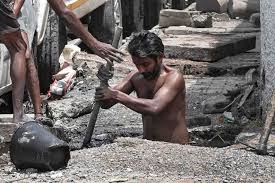
Supreme Court Orders Higher Compensation for Families of Manual Scavenging Victims
Court says unpaid cases before 2023 must get enhanced relief
Ruling strengthens fight against inhuman practice and ensures dignity for affected families
By Our Legal Reporter
New Delhi: January 28, 2026:
In a landmark judgment, the Supreme Court of India has ordered that families of manual scavengers who died before 2023 must be given higher compensation if they have not yet received relief. The Court’s directive comes as part of its continuing effort to eradicate manual scavenging, a practice long declared illegal but still prevalent in parts of India.
The ruling is significant because it not only addresses past injustices but also sets a precedent for ensuring dignity, justice, and accountability for victims and their families.
Background of the Case
- Manual scavenging, the practice of cleaning human waste by hand, was banned under the Prohibition of Employment as Manual Scavengers and their Rehabilitation Act, 2013.
- Despite the ban, deaths continue to be reported, especially during hazardous sewer cleaning operations.
- In 2014, the Supreme Court had directed that families of victims be paid ₹10 lakh compensation.
- In 2023, the Court enhanced the compensation to ₹30 lakh, acknowledging inflation and the need for stronger deterrence.
- The latest ruling clarifies that even deaths before 2023 must be compensated at the higher rate if families have not yet been paid.
Court’s Key Observations
- Compensation Must Reflect Dignity: The Court emphasized that compensation is not charity but recognition of the dignity of victims.
- Uniform Relief: Families should not be discriminated against based on the year of death; unpaid cases must get enhanced compensation.
- Accountability of Authorities: State governments and local bodies must ensure timely payment and rehabilitation.
- Eradication of Practice: The Court reiterated that manual scavenging is inhuman and must be eliminated completely.
Also Read: Delhi High Court Upholds 10-Year Sentence in Digital Rape Case Involving Mother and Son
Why This Ruling Matters
- For Families: Provides justice and financial relief to those who lost loved ones in hazardous conditions.
- For Judiciary: Reinforces the Court’s role in protecting fundamental rights and dignity.
- For Governments: Increases pressure on states to implement rehabilitation schemes effectively.
- For Society: Strengthens the fight against caste-based discrimination and unsafe labour practices.
Wider Implications
- Financial Relief: Enhanced compensation will provide greater support to affected families.
- Policy Enforcement: Governments must now ensure stricter monitoring of sewer cleaning practices.
- Social Justice: Recognizes the historical injustice faced by marginalized communities engaged in manual scavenging.
- Public Awareness: The ruling draws attention to the need for mechanization of sewer cleaning and safe working conditions.
Expert Opinions
- Legal Experts: Applaud the ruling as a progressive step toward justice and deterrence.
- Human Rights Activists: Stress that compensation must be accompanied by rehabilitation and alternative employment.
- Sociologists: Note that manual scavenging is deeply linked to caste discrimination and requires systemic change.
Government Response
- Several state governments have announced plans to mechanize sewer cleaning.
- The Ministry of Social Justice and Empowerment has been tasked with monitoring compliance.
- Rehabilitation schemes, including skill training and financial aid, are being expanded.
Conclusion
The Supreme Court’s directive to provide higher compensation for manual scavenging deaths before 2023 is a landmark ruling that strengthens the fight against this inhuman practice. By ensuring justice for families who have long awaited relief, the Court has reaffirmed its commitment to dignity, equality, and social justice.
This judgment is not just about compensation — it is about recognizing the humanity of those who lost their lives in unsafe conditions and ensuring that future generations are spared from such exploitation.
Also Read: Madras High Court: Non-Citizens Cannot Be Fired Solely for Nationality, Relief to Sri Lankan Refugee
Suggested Keywords for Faster Searches
- Supreme Court manual scavenging compensation ruling
- Manual scavenging deaths higher compensation India
- Supreme Court ₹30 lakh compensation scavenger deaths
- Manual scavenging ban rehabilitation India
- Supreme Court ruling dignity of scavengers
- Manual scavenging deaths Supreme Court 2026 judgment
- Compensation for sewer deaths India Supreme Court
- Supreme Court social justice manual scavenging
Also Read: WhatsApp Rolls Out Strict Account Settings: New Privacy Shield Against Cyber Threats