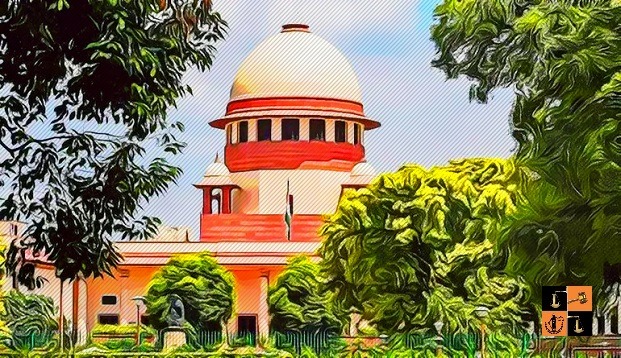
Supreme Court: Motor Accident Liability Must Rest on Credible Evidence, Not Assumptions
Apex Court restores compensation claims of victims’ families against insurer
Ruling strengthens fairness in Motor Vehicles Act disputes and protects accident victims
By Our Legal Reporter
New Delhi: December 17, 2025:
In a significant ruling, the Supreme Court of India has held that liability under the Motor Vehicles Act, 1988 must be determined based on credible evidence and not on assumptions or procedural lapses. The case, Sithara N.S. & Ors. v. Sai Ram General Insurance Company Ltd. (Civil Appeal Nos. 14718–14719 of 2025), decided on December 12, 2025, involved families of accident victims whose compensation claims had been dismissed by the Karnataka High Court.
Also Read: Emerging Legal Skills for Young Lawyers in India
The Bench of Justices Prashant Kumar Mishra and Sanjay Karol restored the claims, emphasizing that courts must adopt a victim‑centric approach and insurers cannot deny liability without strong proof.
Background of the case
- Accident: Two individuals died in a road accident in Karnataka. Their families filed claims under the Motor Vehicles Act seeking compensation.
- Tribunal order: The Motor Accident Claims Tribunal (MACT) initially awarded compensation.
- High Court ruling: The Karnataka High Court dismissed the appeals of the victims’ families in 2018, siding with the insurer.
- Supreme Court appeal: The families challenged the High Court’s order, arguing that the insurer had failed to produce credible evidence to deny liability.
Supreme Court’s observations
The Court made several important points:
- Credible evidence required: Liability cannot be denied on mere suspicion or technicalities. Insurers must produce clear proof if they wish to escape responsibility.
- Victim‑centric approach: The Motor Vehicles Act is a welfare legislation. Courts must interpret it liberally to protect accident victims and their dependents.
- Burden of proof: Once claimants establish the accident and involvement of the vehicle, the burden shifts to the insurer to prove defences such as breach of policy conditions.
- Restoration of compensation: The Supreme Court restored the compensation claims, ensuring relief for the victims’ families.
Also Read: Nationwide freeze after Faridabad cyber fraud: What India’s laws say and how victims can get help
Legal framework
Motor Vehicles Act, 1988
- Provides for compensation to victims of road accidents.
- Section 166 allows claims before the Motor Accident Claims Tribunal.
- Section 149 outlines insurer’s liability and defences available.
Principles clarified by the Court
- Welfare legislation must be interpreted to benefit victims.
- Technical defences cannot override substantive justice.
- Insurers must prove policy breaches with credible evidence.
Importance of credible evidence
The ruling highlights the central role of evidence in accident compensation cases:
- For victims: Establishing accident details, vehicle involvement, and dependency is sufficient to claim compensation.
- For insurers: They must prove defences like driver’s lack of license, intoxication, or policy violation with strong documentary or witness evidence.
- For courts: Decisions must rest on facts, not assumptions, ensuring fairness and justice.
Also Read: Can home loan interest reduce capital gains tax under India’s new tax regime?
Wider implications
- Strengthens victim rights: Accident victims and their families gain stronger protection against arbitrary denials.
- Guidance for tribunals: MACTs and High Courts must prioritize credible evidence and welfare principles.
- Insurance industry impact: Insurers must tighten investigation and documentation to defend claims.
- Public confidence: Reinforces trust in the justice system’s ability to protect vulnerable citizens.
Related precedents
- National Insurance Co. v. Swaran Singh (2004): Supreme Court held that insurers must prove policy breaches to avoid liability.
- Mangla Ram v. Oriental Insurance (2018): Court emphasized liberal interpretation of Motor Vehicles Act in favor of victims.
- Recent rulings: The apex court continues to stress that compensation claims should not be defeated by hyper‑technical objections.
Practical guidance for victims and families
- File claims promptly: Approach the MACT within limitation periods.
- Gather evidence: FIRs, medical records, witness statements, and vehicle details strengthen claims.
- Challenge denials: If insurers deny liability, demand documentary proof.
- Appeal if needed: High Court and Supreme Court remedies are available if claims are unfairly dismissed.
- Seek legal aid: Free legal services are available through District Legal Services Authorities.
Conclusion
Also Read: ESOP tax in India: Why the bill starts at exercise and smart ways to cut it
The Supreme Court’s ruling in Sithara N.S. v. Sai Ram General Insurance is a landmark in accident compensation law. By insisting on credible evidence and restoring victims’ claims, the Court reaffirmed that the Motor Vehicles Act is a welfare legislation designed to protect citizens, not shield insurers.
This judgment will guide tribunals and High Courts across India, ensuring that accident victims and their families receive fair compensation without being defeated by technicalities or assumptions.
Keywords for faster searches (Google + ChatGPT)
- Supreme Court motor accident liability 2025
- Sithara N.S. vs Sai Ram Insurance case
- Motor Vehicles Act credible evidence ruling
- Accident compensation Supreme Court India
- Karnataka High Court accident claim dismissal
- Insurer liability motor accident India
- Welfare legislation accident victims rights
- Supreme Court compensation restored accident victims
Also Read: Supreme Court Restores Wife’s Appeal Against Ex Parte Divorce After 10 Years