COURTKUTCHEHRY SPECIAL ON EVOLUTION CITIZENSHIP LAWS IN INDIA
Supreme Court to Decide Citizenship Rights of Children Born to OCI Parents in India
Case Highlights Risk of Statelessness for OCI-Born Children
Court Balances Statutory Rigour with Constitutional Compassion
By Our Legal Reporter
New Delhi: January 29, 2026
Citizenship is the foundation of civil, political, and socio-economic rights in any democracy. In India, the law of citizenship has evolved from a broad, inclusive approach to a more restrictive framework. The ongoing case before the Supreme Court of India—Rachita Francis Xavier v. Union of India & Ors.—has brought this evolution into sharp focus.
Also Read: Unregistered Wills in India: How Property Is Divided Among Siblings Under Succession Laws
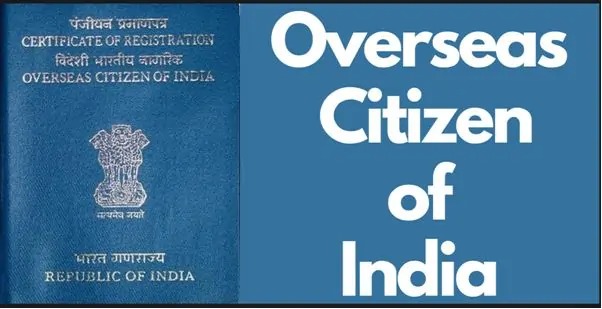
At the heart of the dispute lies a profound question: Can a child born in India to parents who are OCI cardholders, but foreign nationals at the time of birth, be considered a “person of Indian origin” eligible for citizenship by registration?
(COURTKUTCHEHRY.COM SPECIAL BOOK OFFER, NOW ON SALE!!!

For readers interested in deeper insights into inheritance, succession, and citizenship-related legal drafting, the book Will Writing Simplified [Law, Procedure and Drafting of Wills, Codicils, Revocation, Probate, Letters of Administration and Succession Certificates with Supreme Court Case Law] is a recommended resource. It is available on Amazon and Flipkart.)
Case Background
Also Read: Karnataka High Court: Pleadings Can Be Amended Anytime; Proviso Cannot Override Main Rule
- Petitioner: Rachita Francis Xavier, born in Andhra Pradesh in 2006.
- Parents: Originally Indian citizens later acquired U.S. citizenship and were residing in India as OCI cardholders at the time of her birth.
- Problem: Her application for an Indian passport was rejected in 2019. She did not hold U.S. citizenship either, leaving her effectively stateless.
- Legal Challenge: She approached the Delhi High Court, which initially ruled in her favour, but the Union of India appealed. The matter is now before the Supreme Court.
Evolution of Citizenship Law in India
- 1950–1986: Citizenship by birth was broad and inclusive.
- 1986 Amendment: Introduced stricter conditions based on parental nationality.
- 2003 Amendment: Added the concept of “illegal migrant” and restricted automatic citizenship by birth.
- 2005 Amendment: Further narrowed eligibility, requiring at least one parent to be an Indian citizen.
Also Read: Allahabad High Court: Judges Must Verify Juvenility Claims, Cannot Simply Refer to JJ Board
This shift from jus soli (citizenship by birth) to jus sanguinis (citizenship by bloodline) has created complex cases like Rachita’s, where children born in India are denied recognition despite lawful residence.
Court Proceedings
- Delhi High Court Single Judge (2024): Held that Rachita was not an “illegal migrant” and could be considered a “person of Indian origin.”
- Delhi High Court Division Bench (2025): Limited the ruling to her case, rejecting a broader interpretation of “person of Indian origin.”
- Supreme Court (2026): Issued notice, stating the matter requires examination. The Court will decide whether constitutional compassion can override strict statutory definitions.
Key Legal Provisions
- Section 3, Citizenship Act, 1955: Citizenship by birth, restricted after 2004.
- Section 5: Citizenship by registration for persons of Indian origin.
- Section 5(4): Special power of the Central Government to register minors in “special circumstances.”
- Section 7A: Defines OCI status, which is not equivalent to citizenship.
Significance of the Case
- Prevention of Statelessness: Ensures children are not left without nationality.
- Interpretation of “Person of Indian Origin”: Could redefine eligibility for citizenship by registration.
- Balance Between Law and Compassion: Tests whether rigid statutory language can yield to constitutional principles of dignity and equality.
- Impact on OCI Families: Thousands of families with OCI status may be affected by the ruling.
Expert Views
Legal scholars argue that denying citizenship to children born in India under lawful circumstances undermines constitutional values. They emphasize that Section 5(4) acts as a “safety valve” to prevent injustice.
Conclusion
The Supreme Court’s decision in the OCI-born child citizenship case will be a defining moment in Indian jurisprudence. It will determine whether India’s citizenship law prioritizes strict lineage or embraces constitutional compassion to prevent statelessness.
This ruling will not only affect one individual but could reshape the future of citizenship rights for thousands of children born to OCI parents in India.
Suggested Keywords for Faster Searches
- Child born to OCI parents citizenship India
- Supreme Court OCI child case 2026
- Rachita Francis Xavier citizenship case
- Person of Indian origin definition India
- Citizenship Act 1955 Section 5(4)
- OCI cardholder children rights India
- Statelessness and Indian citizenship law
- Delhi High Court OCI child ruling
Also Read: Delhi High Court: Court Fee Is Not a Penalty, Access to Justice Must Be Protected