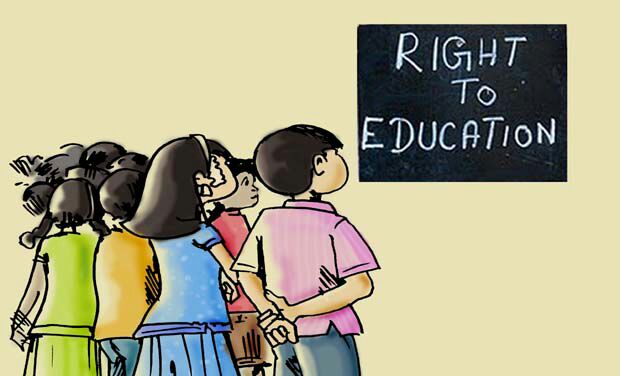
Supreme Court Orders States to Enforce 25% RTE Quota in Private Schools
Bench Says RTE Mandate Cannot Remain on Paper
States Directed to Frame Rules for Transparent Admissions
By Our Legal Reporter
New Delhi: January 14, 2026:
In a landmark ruling on 13 January 2026, the Supreme Court of India issued strong directions to ensure the effective implementation of the 25% Right to Education (RTE) quota in private schools. The Court stressed that the constitutional promise of free and compulsory education for children aged 6–14 years must be translated into reality, especially for those from economically weaker sections (EWS) and disadvantaged groups.
Also Read: GST Orders and Natural Justice: Madras High Court Clarifies Same-Day Reply Issue
A bench of justices PS Narasimha and Atul S Chandurkar observed that despite the RTE Act being in force since 2010, many States have failed to properly enforce the 25% reservation in private schools. The Court directed all States and Union Territories to frame rules, set up monitoring mechanisms, and ensure transparency in admissions.
Background of the Case
- RTE Act, 2009: Mandates 25% reservation for children from EWS and disadvantaged groups in private unaided schools.
- Problem: Several States have not fully implemented the quota, leading to denial of admissions.
- Petition: Filed by child rights activists seeking enforcement of the quota nationwide.
- Supreme Court’s Intervention: The Court took note of widespread non-compliance and issued binding directions.
Court’s Observations
Also Read: Supreme Court Ruling Casts Tax Shadow on Merger Share-Swap Deals
- Mandate Cannot Be Ignored: “The 25% quota under the RTE Act is not optional. It is a statutory mandate that must be enforced,” the Bench said.
- States Must Frame Rules: The Court directed States to notify clear rules for admission, reimbursement, and monitoring.
- Transparency in Admissions: Schools must publish details of available seats and admit eligible children without discrimination.
- Monitoring Mechanism: States must set up grievance redressal systems to address complaints of denial of admission.
Why This Ruling Matters
- Access to Education: Ensures that children from poor families can study in private schools.
- Legal Clarity: Removes ambiguity about States’ obligations under the RTE Act.
- Social Justice: Strengthens inclusivity in education by integrating children from diverse backgrounds.
- Accountability: Forces States to act rather than leaving the quota unimplemented.
Broader Implications
- For Parents: Greater opportunities for children from EWS families to access quality education.
- For Schools: Private institutions must comply with the quota and cannot deny admissions.
- For States: Governments must allocate funds for reimbursement and set up monitoring systems.
- For Judiciary: Reinforces the Court’s role in ensuring social welfare legislation is implemented.
Challenges Ahead
- Funding Issues: States must reimburse private schools for admitting EWS students.
- Resistance from Schools: Some institutions may resist compliance citing financial burden.
- Monitoring: Effective grievance redressal mechanisms are needed to prevent misuse.
- Awareness: Parents must be informed about their rights under the RTE Act.
Conclusion
The Supreme Court’s ruling of January 2026 is a milestone in education law. By directing States to frame rules and enforce the 25% RTE quota in private schools, the Court has reaffirmed the constitutional vision of inclusive education.
This judgment ensures that the promise of the RTE Act is not confined to legislation but becomes a living reality for millions of children across India. It strengthens the foundation of social justice by guaranteeing that economic disadvantage does not deny a child the right to quality education.
Also Read: ITAT Mumbai Rules Cash from ₹94 Lakh Property Sale Not Unexplained Income
Suggested Keywords for SEO & Faster Searches
- Supreme Court RTE quota ruling 2026
- 25% reservation private schools India
- RTE Act 2009 Supreme Court directions
- Chief Justice D.Y. Chandrachud RTE case
- Economically weaker sections education India
- Supreme Court education rights ruling January 2026
- Private schools RTE quota enforcement India
- RTE Act implementation Supreme Court judgment
- Justice J.B. Pardiwala Manoj Misra RTE ruling
- Inclusive education Supreme Court India
Also Read: Allahabad High Court Rules: Wife Entitled to 25% of Husband’s Earnings as Maintenance