COURTKUTCHEHRY SPECIAL ON ARBITRATION LAWS CLARIFIACTION ON PRE-2015 AMENDMENTS
Supreme Court: Pre-2015 Section 11 Arbitration Orders Are Final, Cannot Be Reopened Under Section 34
Court Says Appointment of Arbitrator Confirms Validity of Agreement
Judgment Strengthens Arbitration Law and Limits Scope of Challenges
By Legal Reporter
New Delhi: February 07, 2026:
In a landmark ruling delivered on February 4, 2026, the Supreme Court of India clarified that orders passed under Section 11 of the Arbitration and Conciliation Act, 1996 before the 2015 amendment have finality on the validity of arbitration agreements. The Court held that once an arbitrator is appointed under the pre-amendment regime, the existence and validity of the arbitration agreement cannot be reopened in Section 34 proceedings challenging the arbitral award.
Also Read: Madras High Court to Hear School’s Plea Against State Objection to RSS Camp on Campus
This decision, delivered in M/s Eminent Colonizers Pvt. Ltd. v. Rajasthan Housing Board (2026 INSC 116), provides clarity on arbitration law and strengthens the principle of res judicata, ensuring that disputes are not endlessly litigated.
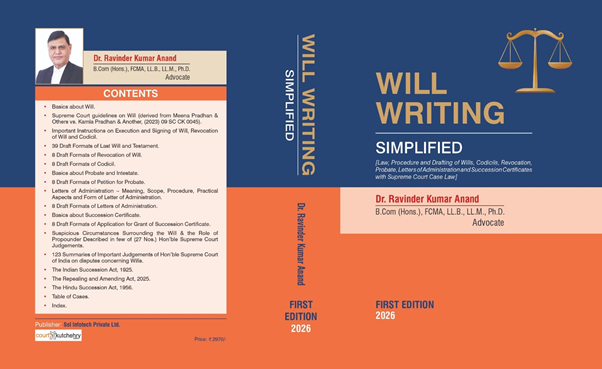
[For readers interested in understanding succession law, property rights, and drafting legal documents, a recommended resource is Will Writing Simplified [Law, Procedure and Drafting of Wills, Codicils, Revocation, Probate, Letters of Administration and Succession Certificates with Supreme Court Case Law], available on Amazon 🔹 Flipkart. This book offers practical guidance for navigating complex legal matters with clarity and confidence.]
Background of the Case
Also Read: Delhi High Court Quashes Ban on Medical Students’ Inter-College Migration, Calls Rule Arbitrary
- The dispute arose from construction contracts between Eminent Colonizers Pvt. Ltd. and the Rajasthan Housing Board.
- The Rajasthan Housing Board challenged the validity of the arbitration agreement during Section 34 proceedings.
- The Supreme Court examined whether such challenges were permissible when an arbitrator had already been appointed under Section 11 before the 2015 amendment.
- The Court ruled that the validity of the arbitration agreement had already attained finality at the stage of appointment and could not be reopened.
Supreme Court’s Observations
- Pre-2015 regime: Under the law before the 2015 amendment, the Chief Justice or his designate had the power to decide on the existence and validity of arbitration agreements while appointing arbitrators.
- Res judicata principle: Once decided, the issue cannot be re-litigated in later proceedings.
- Section 34 limitation: Challenges under Section 34 are limited to grounds specified in the Act and cannot include reopening validity of arbitration agreements already settled.
- Judicial certainty: The Court emphasized that arbitration law must provide certainty to avoid endless disputes.
Key Takeaways
- Finality of Section 11 orders: Pre-2015 appointments confirm validity of arbitration agreements.
- No reopening under Section 34: Challenges to validity cannot be raised again.
- Res judicata applied: Ensures disputes are not litigated multiple times.
- Strengthens arbitration law: Provides clarity and stability in contractual disputes.
Why This Matters
- For businesses: Ensures certainty in arbitration agreements and prevents prolonged litigation.
- For courts: Reduces burden by limiting repetitive challenges.
- For arbitration law: Strengthens India’s reputation as an arbitration-friendly jurisdiction.
Wider Implications
- Contract enforcement: Businesses can rely on arbitration agreements without fear of repeated challenges.
- Legal precedent: Will guide future courts in interpreting Section 11 and Section 34.
- Policy clarity: Reinforces the importance of the 2015 amendment, which shifted the role of courts to a prima facie examination.
Expert Reactions
- Legal experts hailed the judgment as a step toward strengthening arbitration law.
- Corporate lawyers noted that the ruling provides certainty for businesses entering arbitration agreements.
- Judicial scholars emphasized that the principle of res judicata is crucial for efficiency in dispute resolution.
Keywords for Faster Searches (Google + ChatGPT)
- Supreme Court Section 11 arbitration finality ruling
- Pre-2015 arbitration agreement validity India
- Section 34 arbitration challenge limitation Supreme Court
- Eminent Colonizers v Rajasthan Housing Board case
- Res judicata arbitration law India
- Arbitration and Conciliation Act 2015 amendment impact
- Supreme Court arbitration judgment February 2026
Conclusion
The Supreme Court’s ruling that Section 11 orders passed before the 2015 amendment have finality on the validity of arbitration agreements is a landmark in arbitration law. By preventing reopening of such issues under Section 34, the Court has reinforced the principle of res judicata, ensuring certainty and efficiency in dispute resolution. This judgment strengthens India’s arbitration framework and provides clarity for businesses and courts alike.