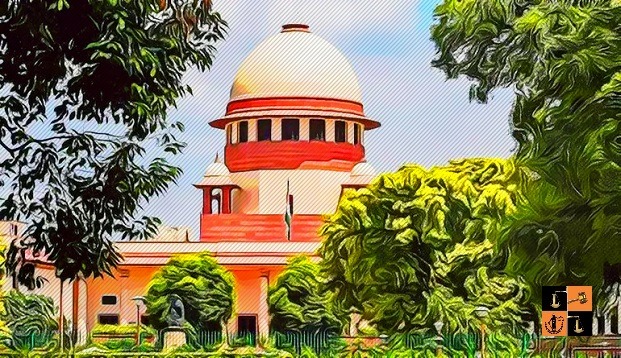
COURTKUTCHEHRY SPECIAL SC ON FINANCIAL GUARANTEES vs UNDERTAKINGS
Supreme Court Clarifies Guarantee Law in UV Asset v. Electrosteel Castings: Promoter Undertaking Not a Guarantee
Court Distinguishes Fund Undertakings from Legal Guarantees
Third-Party Security Liability Survives Insolvency Resolution
By Our Legal Reporter
New Delhi: January 10, 2026:
In a significant ruling, the Supreme Court of India has settled a long-standing dispute in insolvency and contract law. The case, UV Asset Reconstruction Company Limited v. Electrosteel Castings Limited, revolved around whether a promoter’s undertaking to arrange funds for a borrower could be treated as a guarantee under Section 126 of the Indian Contract Act, 1872.
The Court held that such undertakings are not guarantees unless there is clear contractual intent to assume repayment liability. Additionally, the Court clarified that third-party security providers remain liable even after the corporate debtor is rescued through an insolvency resolution plan, unless the plan explicitly extinguishes their obligations.
This judgment is expected to reshape how lenders, borrowers, and promoters’ structure financial undertakings in India.
Background of the Case
- Electrosteel Steels Limited (ESL) had availed financial assistance from SREI Infrastructure Finance Limited.
- Electrosteel Castings Limited (ECL), as promoter of ESL, executed a Deed of Undertaking (Clause 2.2, dated 27 July 2011), promising to arrange funds for ESL.
- SREI later assigned its rights to UV Asset Reconstruction Company Limited (UVARCL).
- When ESL defaulted, UVARCL sought to enforce the undertaking against ECL, treating it as a guarantee.
- The NCLT and NCLAT rejected this claim, holding that the undertaking was not a guarantee.
- UVARCL appealed to the Supreme Court under Section 62 of the Insolvency and Bankruptcy Code (IBC), 2016.
Supreme Court’s Key Findings
- Promoter Undertaking ≠ Guarantee
- The Court ruled that an undertaking to arrange funds is not the same as a guarantee to repay debt.
- A guarantee requires three parties: creditor, principal debtor, and surety, with clear intent to assume liability.
- ECL’s undertaking lacked this intent and therefore could not be enforced as a guarantee.
- Third-Party Security Liability Survives Insolvency
- The Court emphasized that insolvency resolution of a corporate debtor does not automatically discharge third-party security providers.
- Their liability continues unless the resolution plan explicitly extinguishes it.
- This ensures lenders retain recourse against collateral providers.
- Contractual Clarity is Essential
- The Court urged lenders and promoters to draft undertakings with precision.
- Ambiguity in contracts can lead to disputes and weaken enforcement rights.
Also Read: Gifting Mutual Fund Units: How Parents Can Build Wealth and Inheritance for Children in India
Wider Legal Implications
- For lenders: The ruling strengthens their ability to pursue third-party security providers even after insolvency resolution.
- For promoters: They must be cautious in drafting undertakings, as vague promises will not be treated as guarantees.
- For insolvency law: The judgment reinforces the principle that resolution plans cannot arbitrarily extinguish third-party liabilities.
Expert Views
Legal experts have hailed the judgment as a “clarification of commercial certainty”. According to insolvency practitioners, the ruling will prevent misuse of vague undertakings and ensure that lenders are not left without remedies.
Comparative Perspective
- UK Law: Similar principles apply, where fund undertakings are not treated as guarantees unless explicitly worded.
- US Law: Courts distinguish between “comfort letters” and enforceable guarantees, requiring clear contractual language.
- India: This ruling aligns Indian jurisprudence with global standards, promoting clarity in financial contracts.
Conclusion
The Supreme Court’s decision in UV Asset Reconstruction Company Limited v. Electrosteel Castings Limited is a landmark in insolvency and contract law. By distinguishing fund undertakings from guarantees and preserving third-party liability, the Court has ensured greater clarity and fairness in financial transactions.
This ruling will likely influence future drafting of promoter undertakings, guarantee agreements, and resolution plans under the IBC.
Suggested Keywords for SEO & Faster Searches
- Supreme Court UV Asset Reconstruction judgment
- Electrosteel Castings Limited case 2026 INSC 14
- Promoter undertaking vs guarantee India
- Section 126 Indian Contract Act guarantee ruling
- Insolvency resolution third-party liability Supreme Court
- UV Asset v Electrosteel Castings Supreme Court case
- IBC Section 62 Supreme Court ruling
- Guarantee law clarification India 2026
- Supreme Court insolvency and guarantee judgment
- UVARCL vs Electrosteel Castings case analysis