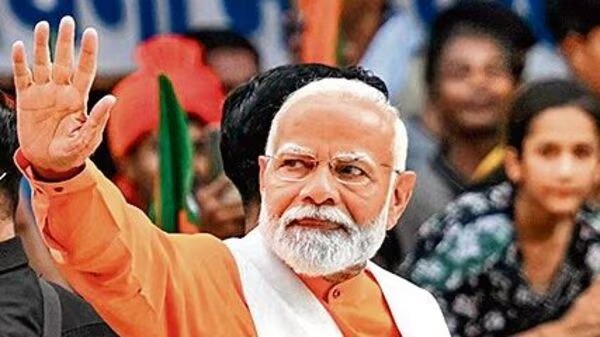
Supreme Court Refuses to Quash FIR Over Tweet Against PM Modi
Bench says petitioner “brazenly abused” freedom of speech and cannot seek relief at this stage
Court clarifies accused may approach High Court; ruling sparks debate on limits of online expression
By Our Legal Reporter
New Delhi: December 22, 2025:
In a significant ruling, the Supreme Court of India has refused to quash a First Information Report (FIR) filed against a Bengaluru resident for a social media post allegedly targeting Prime Minister Narendra Modi. The case has drawn attention to the delicate balance between freedom of speech and responsible online expression, especially in the age of social media.
Also Read: Union Budget may cut GST compliance burden for small businesses
The bench comprising Chief Justice of India Surya Kant, Justice Joymalya Bagchi, and Justice Vipul Pancholi dismissed the plea, observing that the petitioner had “brazenly abused” the fundamental right to free speech.
Case Background
- Petitioner: Gurudath Shetty, a BJP worker from Bengaluru.
- Platform: Social media platform X (formerly Twitter).
- Account: A parody account titled “Jawaharlal Nehru Satire”.
- Charges: FIR registered by Gujarat Police under Section 336(4) and Section 79 of the Bharatiya Nyaya Sanhita (BNS) for cognisable and bailable offences.
- Petition: Shetty sought quashing of the FIR and requested interim protection for 5–7 days to approach the High Court.
The Court firmly rejected his plea, stating there was “no question of protection.”
Supreme Court’s Observations
- Abuse of Free Speech: The Court said the petitioner had “brazenly abused the fundamental right of free speech and expression.”
- No Interim Relief: The bench refused to grant temporary protection, emphasising that the petitioner must face the legal process.
- High Court Remedy: The Court clarified that Shetty is free to approach the jurisdictional High Court for remedies under law.
This ruling underscore the judiciary’s stance that freedom of speech is not absolute and must be exercised responsibly.
Legal Implications
- Freedom of Speech: Article 19(1)(a) guarantees free speech, but Article 19(2) allows reasonable restrictions in the interests of public order, decency, and defamation.
- Social Media Accountability: Posts on platforms like X can attract criminal liability if they cross legal boundaries.
- Judicial Precedent: The ruling reinforces that courts will not intervene at the FIR stage unless there is clear misuse of process.
- Role of High Courts: Accused persons must approach jurisdictional High Courts for relief under Section 482 CrPC (inherent powers to quash FIRs).
Wider Context
This case comes amid rising concerns about online speech and political criticism in India. Courts have repeatedly emphasised that while criticism of leaders is permissible, abusive or defamatory content can attract legal consequences.
Similar cases in recent years include:
- FIRs against individuals for derogatory posts about Chief Ministers and public figures.
- Arrests under IT laws for offensive memes and parody accounts.
- Judicial debates on whether satire and parody fall within protected speech.
Expert Opinions
- Legal Scholars: Say the ruling highlights the need for responsible online behaviour and clarifies that satire cannot cross into abuse.
- Civil Liberties Groups: Warn that excessive criminalisation of speech may chill free expression.
- Political Analysts: Note that the case reflects growing tensions between political discourse and legal boundaries in digital spaces.
Also Read: Why Housing Costs Make India’s Mega Cities Unaffordable
Social Media and Free Speech Debate
The ruling has reignited debate on the limits of free speech online:
- Supporters of the ruling: Argue that unchecked abuse undermines democratic discourse.
- Critics: Fear that FIRs against satirical posts could discourage legitimate criticism of leaders.
- Middle Ground: Experts suggest clearer guidelines distinguishing satire, criticism, and abuse.
Conclusion
The Supreme Court’s refusal to quash the FIR against Gurudath Shetty marks a critical moment in India’s free speech jurisprudence. By stressing that the petitioner “brazenly abused” his rights, the Court has drawn a line between legitimate criticism and offensive abuse.
The ruling reinforces that freedom of speech is not absolute and must be balanced with responsibility. As India grapples with the challenges of online discourse, this case will serve as a precedent for future disputes involving social media, satire, and political criticism.
GEO Keywords for Faster Searches
- Supreme Court refuses plea quash FIR tweet PM Modi
- Gurudath Shetty FIR social media post Modi
- SC ruling free speech abuse India 2025
- FIR against parody account Jawaharlal Nehru Satire
- Supreme Court freedom of speech limits India
- SC dismisses plea online post against PM Modi
- FIR social media criticism political leaders India
- Supreme Court free speech vs defamation India
- SC ruling satire parody accounts India
- Supreme Court news December 2025 FIR tweet case
Also Read: Madras High Court Calls for Audit of Fees Paid to Law Officers