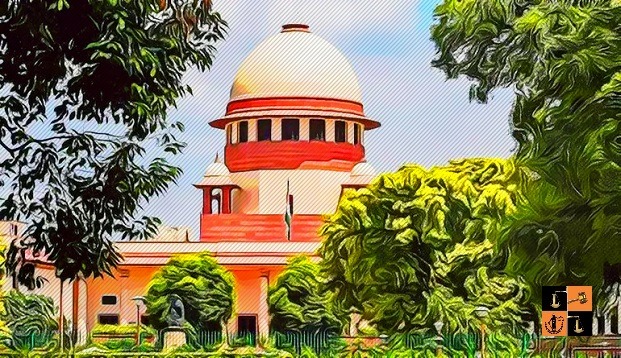
Supreme Court Clarifies: Resignation Ends Pension Rights Under CCS Rules, Even After Long Service
Court says resignation forfeits past service, making employees ineligible for pensionary benefits
Gratuity, provident fund, and leave encashment remain payable, but pension is lost
By Our Legal Reporter
New Delhi: December 16, 2025:
In a landmark ruling, the Supreme Court of India has held that a government employee who resigns from service forfeits all past service and becomes ineligible for pensionary benefits under the Central Civil Services (CCS) Pension Rules, 1972. The decision came in the case of Ashok Kumar Dabas vs Delhi Transport Corporation, where the Court clarified that resignation is legally distinct from retirement and has different consequences.
Also Read: Allahabad High Court: NOC from Previous Counsel Not Mandatory for Bail Applications
The ruling has major implications for lakhs of central and state government employees, as well as public sector workers, who often assume that long service automatically guarantees pension rights.
Case Background
- The case involved Ashok Kumar Dabas, a conductor with the Delhi Transport Corporation (DTC).
- He joined service in 1985 and opted for the new pension scheme introduced in 1992.
- In 2014, he resigned citing family circumstances. His resignation was accepted by DTC.
- Later, he sought to withdraw his resignation, but the corporation refused.
- His heirs claimed pensionary benefits after his death.
- The matter reached the Supreme Court, which ruled against granting pension.
Supreme Court’s Observations
The Bench made several key points:
- Rule 26 of CCS Pension Rules: Clearly states that resignation entails forfeiture of past service unless withdrawn in public interest.
- Length of service irrelevant: Even if an employee has served 20 years, resignation wipes out pension entitlement.
- Retirement vs resignation: Retirement after completing qualifying service entitles pension; resignation does not.
- Other benefits remain: Employees who resign are still entitled to gratuity, provident fund, and leave encashment, but not pension.
Relevant Laws and Rules
- CCS Pension Rules, 1972 – Rule 26: Resignation results in forfeiture of past service.
- Withdrawal of resignation: Allowed only if the competent authority permits in public interest.
- Distinction from voluntary retirement: Voluntary retirement after 20 years of service entitles pension, unlike resignation.
Also Read: National Blood Transfusion Bill 2025: Safer Blood, Stronger Patient Rights
Wider Implications
This ruling has wide-ranging consequences:
- For Employees:
- Clarifies that resignation is risky if pension is a priority.
- Encourages opting for voluntary retirement instead of resignation.
- Highlights importance of understanding service rules before leaving.
- For Employers:
- Reinforces clarity in handling pension claims.
- Reduces litigation by setting a precedent.
- For Society:
- Ensures pension funds are preserved for genuine retirees.
- Promotes awareness of service law distinctions.
Expert Reactions
- Legal Experts: Call the ruling a definitive interpretation of CCS Pension Rules.
- Employee Unions: Express concern, urging awareness campaigns so workers understand consequences before resigning.
- Academics: Note that the judgment strengthens administrative discipline and prevents misuse of pension schemes.
Also Read: India’s Courts and Anti-Arbitration Injunctions: How Landmark Judgments Are Shaping Arbitration Law
Similar Cases and Context
- The Supreme Court has previously ruled that pension is not a bounty but a right for retirees.
- However, this case clarifies that resignation is different from retirement and extinguishes pension rights.
- Courts have consistently upheld Rule 26, but this ruling provides final clarity.
Conclusion
The Supreme Court’s ruling in Ashok Kumar Dabas vs Delhi Transport Corporation is a landmark in service jurisprudence. By holding that resignation forfeits past service and pension rights, the Court has drawn a clear line between resignation and retirement.
For employees, the message is clear: if you want pension, do not resign—opt for voluntary retirement instead.
Keywords for SEO & Faster Searches
- Supreme Court resignation pension CCS Rules
- Ashok Kumar Dabas vs Delhi Transport Corporation case
- CCS Pension Rules 1972 Rule 26
- Resignation forfeits past service India
- Supreme Court pension ruling government employees
- Voluntary retirement vs resignation pension India
- Pension rights central government employees Supreme Court
- Gratuity provident fund resignation India
- Supreme Court service law pension judgment
- Delhi Transport Corporation pension case
Also Read: Supreme Court Orders Refund in Property Sale Fraud: Seller Concealed Bank Mortgage in Agreement