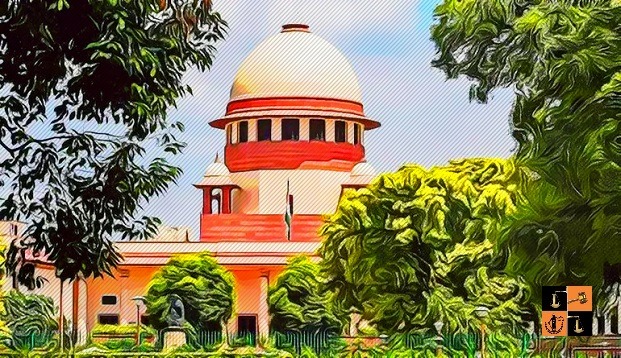
Supreme Court Bars RWAs and Homebuyers’ Societies from Intervening in Builder Insolvency Cases
Insolvency Proceedings Are Bipartite Between Creditors and Debtors
Homebuyers Must Act Through Authorized Representatives Under IBC
By Our Legal Reporter
New Delhi: January 17, 2026:
In a landmark ruling that reshapes the role of homebuyers’ associations in insolvency proceedings, the Supreme Court of India has held that Residents Welfare Associations (RWAs) and homebuyers’ societies cannot intervene in insolvency petitions filed against real estate developers.
Also Read: NFRA Tightens Rules: Auditors Must Hold Structured Meetings with Audit Committees
The judgment, delivered on January 15, 2026, by a bench of Justices J.B. Pardiwala and R. Mahadevan, came in the case of Elegana Co-op Housing and Commercial Society vs Edelweiss Asset Reconstruction Company Limited. The Court clarified that insolvency petitions under Section 7 of the Insolvency and Bankruptcy Code (IBC), 2016 are essentially bipartite proceedings between the financial creditor and the corporate debtor.
Insolvency Proceedings Are Bipartite Between Creditors and Debtors
The Court observed that RWAs and homebuyers’ societies are ordinarily constituted for maintenance and management of common facilities in housing projects. They do not qualify as financial creditors under the IBC.
Key points from the ruling:
- No locus standi: RWAs and societies cannot intervene in insolvency petitions as they are not creditors in their own right.
- IBC framework: Section 7 petitions are strictly between financial creditors (such as banks or asset reconstruction companies) and the corporate debtor (the builder).
- Hardships not a ground: The Court acknowledged the hardships faced by homebuyers but clarified that these cannot be used to block insolvency proceedings once financial default is established.
- Revival objective: Insolvency proceedings must aim at revival of the corporate debtor, not at protecting maintenance societies’ interests.
This ruling reinforces the principle that insolvency law is designed to protect creditors and ensure revival of companies, not to address grievances of societies formed for maintenance.
Homebuyers Must Act Through Authorized Representatives Under IBC
The Supreme Court emphasized that homebuyers are recognized as financial creditors under the IBC, but they must act through authorized representatives in insolvency proceedings.
Also Read: Delhi Police EOW Books Suraksha Realty for Alleged ₹230 Crore Funds Diversion
- Individual homebuyers: They can file claims directly as financial creditors.
- Collective representation: Homebuyers must appoint an authorized representative to participate in the Committee of Creditors (CoC).
- Societies excluded: RWAs and housing societies cannot substitute for authorized representatives, as they are not recognized under the IBC framework.
The Court clarified that while homebuyers’ interests are important, they must be safeguarded through proper legal channels, not through societies that lack statutory recognition.
Wider Legal Context
This ruling builds on earlier Supreme Court judgments:
- In Pioneer Urban Land and Infrastructure Ltd. v. Union of India (2019), the Court recognized homebuyers as financial creditors under the IBC.
- In Jaypee Infratech insolvency cases, the Court emphasized the need to protect homebuyers’ rights while respecting the IBC framework.
- The present judgment adds clarity by explicitly excluding RWAs and societies from insolvency proceedings.
Legal experts note that this ruling will streamline insolvency processes, preventing unnecessary interventions and delays caused by societies seeking to represent homebuyers.
Implications of the Judgment
Also Read: Tax Benefits on Multiple Home Loans: Self-Occupied vs Let-Out Properties Explained
- For RWAs and societies: They cannot intervene in insolvency petitions against builders. Their role remains limited to maintenance and management of housing projects.
- For homebuyers: They must act individually or through authorized representatives to protect their interests in insolvency cases.
- For creditors: Greater clarity and fewer procedural delays in insolvency proceedings.
- For judiciary: Reinforcement of the principle that insolvency law is creditor-driven and revival-focused.
This ruling is expected to reduce litigation complexity in real estate insolvencies, ensuring faster resolution and revival of stalled projects.
Conclusion
The Supreme Court’s ruling that Residents Welfare Associations and homebuyers’ societies cannot intervene in insolvency petitions against builders is a milestone in insolvency jurisprudence. By clarifying that insolvency proceedings are strictly between creditors and debtors, the Court has streamlined the process and reinforced the role of authorized representatives for homebuyers.
This judgment balances the need to protect homebuyers with the objective of ensuring corporate revival, setting a precedent for future real estate insolvency cases across India.
Also Read: Delhi High Court Clears NHAI to Cancel Pune Firm’s Contract Over Delhi-Mumbai Expressway Delays
Suggested Keywords for SEO (Google + ChatGPT)
- Supreme Court RWAs insolvency petition ruling
- Homebuyers’ societies insolvency case India
- IBC Section 7 Supreme Court judgment 2026
- Residents Welfare Association locus standi insolvency
- Elegana Co-op Housing vs Edelweiss ARC case
- Supreme Court Justices Pardiwala Mahadevan insolvency ruling
- Homebuyers authorized representatives IBC India
- Real estate insolvency Supreme Court latest judgment
- RWAs barred from insolvency petitions India
- Supreme Court ruling January 2026 insolvency builders
Also Read: How to Save Over ₹2 Lakh in Tax Beyond Section 80C