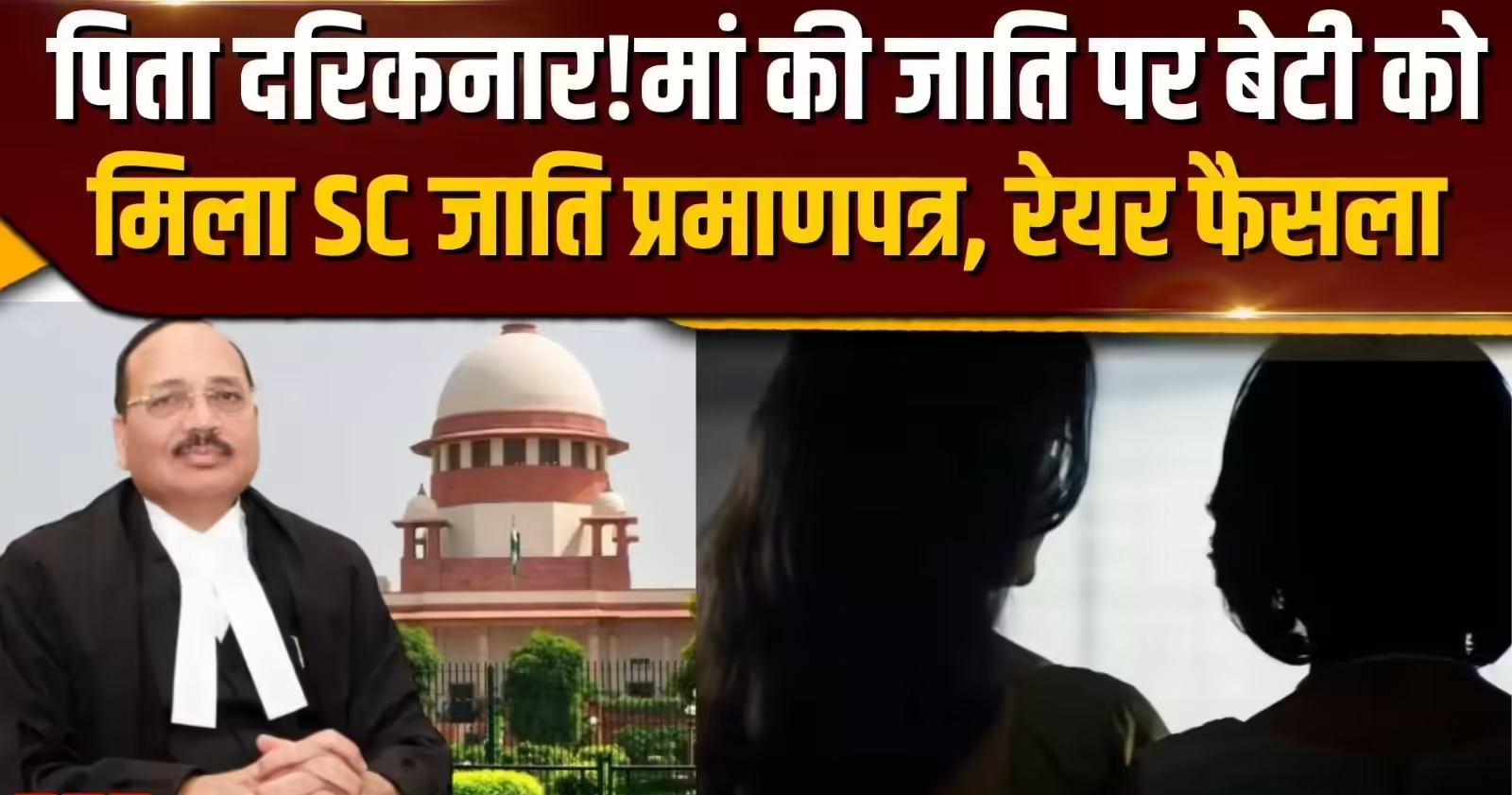
Supreme Court: SC Certificate Can Be Issued Based on Mother’s Caste, Not Non-SC Father
Judgment Secures Rights of Children from Inter-Caste Marriages
Court Says Maternal Lineage Valid for Scheduled Caste Benefits
By Our Legal Reporter
New Delhi: December 09, 2025:
In a landmark ruling, the Supreme Court of India has held that a girl born to a Scheduled Caste (SC) mother and a non-SC father is entitled to an SC certificate. The judgment marks a significant step in protecting the rights of children from inter-caste marriages, ensuring they are not deprived of constitutional benefits such as reservations in education, employment, and political representation.
The case arose after authorities denied a girl an SC certificate on the ground that her father did not belong to a Scheduled Caste. The Supreme Court rejected this reasoning, emphasizing that maternal lineage can be the basis for caste identity when the child is brought up in the mother’s community and faces the same social disadvantages.
Background of the Case
- Petitioner: A girl whose mother belonged to a Scheduled Caste community.
- Father: Belonged to a non-SC community.
- Issue: Authorities refused to issue an SC certificate, arguing that caste is determined by the father’s lineage.
- Supreme Court’s Decision: Overturned the denial, ruling that caste can be determined by the mother’s community if the child is raised within it.
Court’s Observations
The Supreme Court made several important observations:
- Caste Identity: Caste is a social reality, not merely a matter of paternal lineage.
- Maternal Lineage Valid: If a child is brought up in the mother’s community and suffers the same social stigma, she is entitled to recognition.
- Equality Principle: Denying SC status based on the father’s caste violates the constitutional guarantee of equality.
- Protection of Rights: Children of inter-caste marriages must not be penalized for their parentage.
Also Read: Karnataka High Court Quashes Income Tax Notices Against Actor Yash, Declares Him a ‘Searched Person’
Legal Context
The ruling draws upon constitutional and statutory provisions:
- Article 15 & 16 of the Constitution: Guarantee equality and prohibit discrimination based on caste.
- Scheduled Castes Order, 1950: Lists communities recognized as Scheduled Castes.
- Previous Judgments: Courts have earlier recognized caste identity through maternal lineage in specific circumstances, especially when the child faces social discrimination.
This judgment consolidates those precedents and provides clarity for future cases.
Implications of the Judgment
The ruling has wide-ranging implications:
- For Children of Inter-Caste Marriages: Ensures they are not denied SC certificates due to paternal lineage.
- For Women: Strengthens the recognition of maternal lineage in determining caste identity.
- For Society: Promotes inclusivity and acknowledges the lived realities of caste discrimination.
- For Government Authorities: Provides clear guidance on issuing caste certificates in similar cases.
Also Read: Supreme Court Rules EPF Dues Take Priority Over Secured Creditors Under SARFAESI Act
Expert Views
Legal experts and social activists have welcomed the judgment:
- Constitutional Lawyers: Say the ruling aligns with the principles of equality and social justice.
- Women’s Rights Advocates: Call it a progressive step that recognizes the role of mothers in shaping caste identity.
- Policy Analysts: Stress that the judgment will reduce disputes over caste certificates and benefit thousands of students and job seekers.
Social Impact
The judgment is expected to have a positive impact on:
- Education: Children from inter-caste marriages can now access reserved seats in schools and colleges.
- Employment: They can benefit from reservations in government jobs.
- Political Representation: They can contest elections from constituencies reserved for Scheduled Castes.
- Social Justice: The ruling strengthens efforts to dismantle patriarchal norms that prioritize paternal lineage.
Conclusion
The Supreme Court’s ruling that a girl can be granted an SC certificate based on her mother’s caste, even if her father is non-SC, is a milestone in Indian jurisprudence. It reinforces the principle that caste is a social reality shaped by lived experiences, not just paternal lineage.
For children of inter-caste marriages, the message is clear: your rights to constitutional benefits will be protected, and maternal lineage is valid for determining caste identity.
Suggested Keywords for Faster Searches
- Supreme Court SC certificate mother’s caste
- Inter-caste marriage caste certificate ruling
- SC certificate maternal lineage India
- Supreme Court caste identity judgment 2025
- Scheduled Caste certificate Supreme Court ruling
- Father non-SC mother SC certificate case
- Equality rights caste certificate India
- Supreme Court caste certificate inter-caste children
- Maternal caste recognition Supreme Court India
- Reservation benefits inter-caste marriage children
Also Read: ED Attaches ₹4,190 Crore in Crypto Fraud Cases; One Accused Declared Fugitive Economic Offender