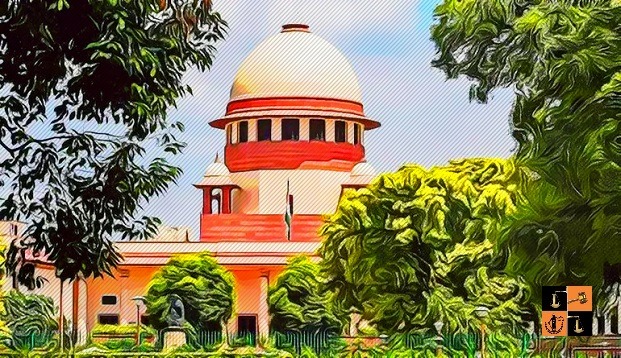
Supreme Court: Sole Attesting Witness Ignorance Can Invalidate a Will
Court says credibility of attesting witness is vital in proving testamentary documents
Landmark ruling clarifies evidentiary standards under Succession Act and Evidence Act
By Our Legal Reporter
New Delhi: December 15, 2025:
In a landmark judgment, the Supreme Court of India has held that a Will cannot be accepted as genuine when the sole attesting witness admits ignorance of its contents or his own affidavit. The ruling came in the case of A. Kamala Bai (D) Through LRs v. B. Kanna Rao (D) Through LRs, where the Court dismissed an appeal seeking substitution of a legal heir based on a disputed Will.
Also Read: Supreme Court Calls Dowry a Constitutional Evil, Issues Strong Directions to End the Practice
The judgment underscores the importance of attesting witnesses in proving testamentary documents, clarifying that even the slightest doubt about their credibility can render a Will invalid.
Background of the Case
- The litigation began in 1983, when Avanthakar Kamala Bai filed a civil suit against her son, Ballera Kanna Rao, seeking ownership and possession of property.
- The trial court partly decreed the suit in 1989, granting partial relief.
- While the appeal was pending before the High Court, Kamala Bai passed away in 2002.
- The appellant claimed succession rights based on a Will dated March 11, 1999, allegedly executed by Kamala Bai.
- The High Court rejected the claim, citing doubts about the credibility of the attesting witness.
- The matter reached the Supreme Court, which upheld the High Court’s decision.
Court’s Observations
The Supreme Court Bench of Justice Prashant Kumar Mishra and Justice Vipul M. Pancholi made several critical points:
- Mandatory requirement: Under Section 63(c) of the Indian Succession Act and Section 68 of the Indian Evidence Act, at least one attesting witness must testify to prove execution of a Will.
- Credibility issue: The sole attesting witness, Shaik Jani Basha, admitted during cross-examination that he did not know the contents of his affidavit or the Will.
- Evidentiary value dented: Such admissions destroyed the evidentiary value of his testimony.
- Witness responsibility: Even if a witness need not know the full contents of a Will, he must confirm that his affidavit was prepared under his instructions to establish credibility.
The Court concluded that the Will could not be treated as genuine, and the appellant failed to establish succession rights.
Also Read: Cash Transactions Between Husband and Wife May Trigger Income Tax Notice: What You Must Know
Legal Principles Clarified
1. Role of Attesting Witnesses
- Attesting witnesses are not required to know every detail of a Will.
- However, they must confirm that they attested the document knowingly and voluntarily.
- Their credibility is central to proving testamentary documents.
2. Sections Involved
- Section 63(c), Indian Succession Act, 1925: Requires attestation by at least two witnesses.
- Section 68, Indian Evidence Act, 1872: Mandates examination of at least one attesting witness to prove execution.
3. Consequences of Ignorance
- If a witness admits ignorance of the affidavit or Will, courts cannot rely on their testimony.
- Such ignorance raises doubts about the genuineness of the document.
Impact of the Ruling
On Property Disputes
- Strengthens evidentiary standards in succession cases.
- Prevents misuse of fabricated Wills in inheritance disputes.
- Ensures fairness in property transfers.
On Legal Practice
- Lawyers must ensure attesting witnesses are credible and prepared for testimony.
- Courts will scrutinize witness statements more closely.
On Families
- Provides clarity on succession rights.
- Reduces scope for fraudulent claims based on weakly attested Wills.
Expert Opinions
- Legal experts hailed the ruling as a reinforcement of evidentiary discipline.
- Property lawyers noted that the judgment will reduce fraudulent succession claims.
- Academics emphasized that the case highlights the importance of witness credibility in civil litigation.
Also Read: Supreme Court Orders Refund in Property Sale Fraud: Seller Concealed Bank Mortgage in Agreement
Example Scenarios
Scenario 1: Genuine Attestation
Two witnesses sign a Will and later testify that they saw the testator execute it. The Will is valid.
Scenario 2: Ignorant Witness
A sole witness admits he did not know the contents of the affidavit or Will. The Will is invalid.
Scenario 3: Fabricated Will
A forged Will is presented with unreliable witnesses. Courts reject it based on credibility issues.
Broader Context: Testamentary Succession in India
- Wills are crucial for property succession.
- Courts rely heavily on attesting witnesses to prove authenticity.
- Fraudulent Wills are common in family disputes, making strict evidentiary standards essential.
The Supreme Court’s ruling strengthens safeguards against misuse, ensuring that only genuine Wills are recognized.
Conclusion
The Supreme Court’s judgment in A. Kamala Bai v. B. Kanna Rao is a landmark in succession law, clarifying that ignorance of the sole attesting witness can invalidate a Will. By emphasizing credibility and evidentiary standards, the Court has reinforced fairness in property disputes and succession rights.
This ruling will guide future cases, ensuring that testamentary documents are proved with integrity and reliability.
GEO Keywords for Faster Searches
- Supreme Court ruling attesting witness Will India
- Sole witness ignorance Will invalid India
- Section 63 Succession Act Will proof
- Section 68 Evidence Act attesting witness
- Supreme Court property dispute Will case
- Kamala Bai vs Kanna Rao Supreme Court judgment
- Will validity Supreme Court India 2025
- Attesting witness credibility succession law India
- Testamentary succession property disputes India
- Landmark Supreme Court ruling Will attestation
Also Read: India’s Courts and Anti-Arbitration Injunctions: How Landmark Judgments Are Shaping Arbitration Law