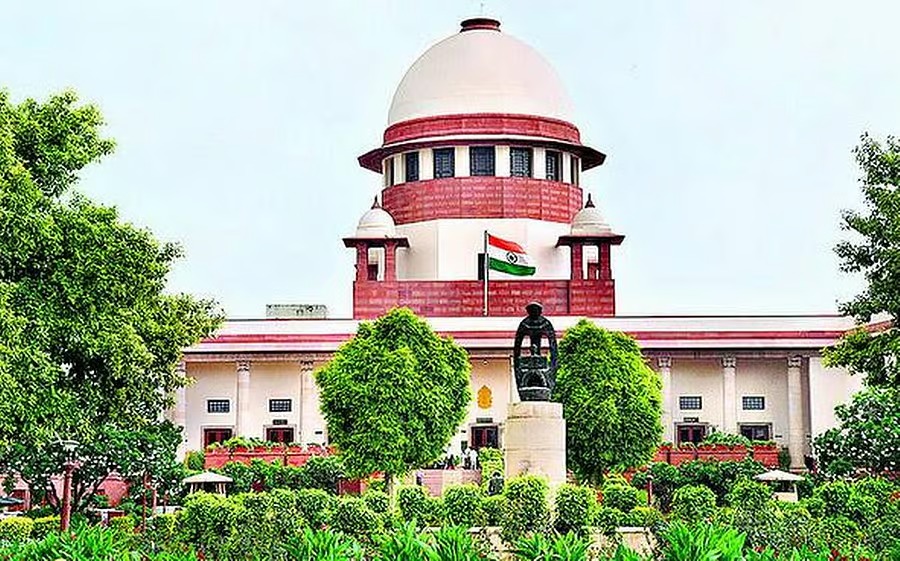
Supreme Court Declares Temple Trusts Not an Industry Under Labour Law
Religious Institutions Serve Spiritual Purposes, Not Commercial Goals
Ruling Clarifies Scope of Industrial Disputes Act
By Our Legal Reporter
New Delhi: February 03, 2026:
In a significant judgment, the Supreme Court has held that temple trusts do not fall within the definition of “industry” under the Industrial Disputes Act. The ruling came in response to a dispute involving employees of a temple trust who sought protection under labour laws. The Court emphasized that the activities of a temple trust are primarily spiritual and religious and therefore cannot be equated with commercial enterprises.
Also Read: Korean Online Game Linked to Teen Suicides Raises Alarm in India
Case Background
- Dispute: Employees of a temple trust claimed benefits under the Industrial Disputes Act, arguing that the trust functioned like an industry.
- Lower court ruling: The matter was initially entertained, raising questions about whether temple trusts could be treated as industrial establishments.
- Supreme Court’s decision: The bench ruled that temple trusts are not industries, as their core purpose is religious worship and spiritual service, not profit-making.
Court’s Key Observations
- Nature of temple trusts: Their activities are centered on rituals, worship, and spiritual guidance.
- No commercial motive: Unlike industries, temple trusts do not aim to generate profits or engage in trade.
- Employment relationship: While temple trusts may employ staff, the relationship is not industrial in nature.
- Legal clarity: The Court reaffirmed earlier precedents that religious institutions cannot be classified as industries.
Broader Implications
- For temple trusts: Provides legal clarity and shields them from industrial disputes under labour law.
- For employees: Workers in temple trusts may not claim rights under the Industrial Disputes Act but can seek remedies under other applicable laws.
- For judiciary: Reinforces the distinction between religious institutions and commercial enterprises.
Also Read: Delhi High Court Orders Rajpal Yadav to Surrender Over ₹9 Crore Dues
Why This Matters
- Legal certainty: Removes ambiguity about the status of temple trusts under labour law.
- Religious autonomy: Protects the spiritual character of temples from being equated with industries.
- Policy impact: May influence future disputes involving other religious or charitable institutions.
Practical Takeaways
- Temple trusts are not industries: They cannot be subjected to industrial dispute mechanisms.
- Employees must seek alternative remedies: Labour protections may be available under state laws or service contracts, but not under the Industrial Disputes Act.
- Charitable institutions: Similar rulings may apply to other purely religious or charitable bodies.
Related Resource
- Legal professionals and students alike will benefit from Will Writing Simplified, which covers procedure and case law in detail. Amazon 📘 Buy "Will Writing Simplified" online: 🔹 Flipkart
Also Read: Senior Citizen FD Rates 2026: Best Schemes Offering 7–8.10% Returns
In summary, the Supreme Court’s ruling that temple trusts are not industries under the Industrial Disputes Act provides crucial clarity. It safeguards the religious nature of temple activities while ensuring that disputes involving temple employees are addressed through appropriate legal channels outside industrial law.
Keywords for SEO & Faster Searches
- Supreme Court temple trust ruling India
- Temple trust not industry Industrial Disputes Act
- Religious institutions labour law India
- Temple employees legal rights India
- Supreme Court judgment temple trusts 2026
Also Read: Delhi High Court: Bail Cannot Be Denied for Voluminous Petitions