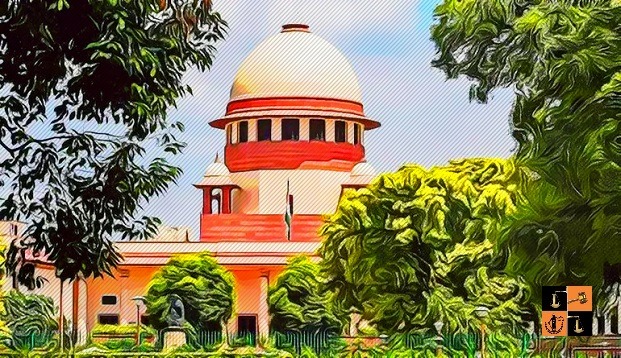
Supreme Court: Time-Bound Investigations Only in Cases of Undue Delay
Court says deadlines for probes must remain exception, not the norm
Ruling balances speedy trial rights with investigative autonomy under Article 21
By Our Legal Reporter
New Delhi: December 21, 2025:
In a landmark ruling, the Supreme Court of India has clarified that time-bound investigations should not be ordered as a matter of routine. The Court stressed that such directions must be issued only when there is clear evidence of undue delay or stagnation in the investigative process.
Also Read: Delhi High Court: Customs Orders Must Bear Officer’s Name and Designation, Staff Shortage No Excuse
The judgment came in the case of State of Uttar Pradesh vs Mohd Arshad Khan, where the Court examined whether judicial directions imposing strict timelines on investigations were justified.
Background of the Case
- The matter arose from a petition challenging delay in investigation.
- The petitioner argued that courts should impose strict deadlines to ensure speedy justice.
- The Supreme Court, however, observed that investigations are complex and cannot always be forced into rigid timelines.
Supreme Court’s Observations
- Bench: Justices Sanjay Karol and N. Kotiswar Singh.
- Key Principle: Time-bound investigations are an exception, not the rule.
- Reasoning: Investigations may be straightforward, but often involve twists, recalibrations, and complexities. Courts must allow agencies a reasonable degree of latitude.
- Article 21 Link: Speedy trial, including timely investigation, is part of the constitutional right to life and liberty. However, investigations cannot remain open-ended indefinitely.
- Judicial Restraint: Courts must avoid stepping into executive functions by imposing arbitrary timelines.
Also Read: Delhi High Court: Customs Orders Must Bear Officer’s Name and Designation, Staff Shortage No Excuse
Legal Significance
This ruling reinforces the principle of separation of powers. While courts safeguard fundamental rights, they must not interfere excessively with investigative processes.
- For Investigative Agencies: Provides flexibility to conduct thorough probes without undue judicial pressure.
- For Citizens: Ensures that investigations are not left open-ended, protecting the right to speedy justice.
- For Judiciary: Clarifies when courts can intervene—only in cases of undue delay or stagnation.
Implications of the Judgment
- Criminal Justice System: Balances fairness with efficiency.
- Cybercrime & Financial Frauds: Highlights the need for swift investigations in fast-moving fraud cases, but without compromising thoroughness.
- Public Confidence: Reinforces trust in the judiciary’s role as a guardian of rights while respecting investigative autonomy.
Expert Reactions
Legal experts have welcomed the ruling as a pragmatic balance between judicial oversight and investigative independence. Some caution that victims of crimes, especially cyber frauds, may still feel frustrated by delays, underscoring the need for better resources and training for investigative agencies.
Broader Context
Globally, courts grapple with similar issues:
- In the US and UK, judicial oversight ensures investigations are fair but rarely imposes strict timelines.
- India’s ruling aligns with international practice, emphasizing flexibility with accountability.
Conclusion
The Supreme Court’s ruling that time-bound investigations must be ordered only in cases of undue delay is a significant development in India’s criminal justice system. By balancing speedy trial rights under Article 21 with the practical realities of investigation, the Court has reinforced both fairness and autonomy.
This judgment will guide future cases where courts are asked to impose deadlines, ensuring that justice is delivered without compromising investigative integrity.
GEO Keywords for Faster Searches
- Supreme Court time-bound investigation ruling India
- Time-bound probe exception does not rule Supreme Court
- State of UP vs Mohd Arshad Khan case
- Supreme Court speedy trial Article 21
- Supreme Court undue delay investigation ruling
- Supreme Court criminal justice investigation timelines
- Judicial restraint in investigations India
- Supreme Court December 2025 investigation ruling