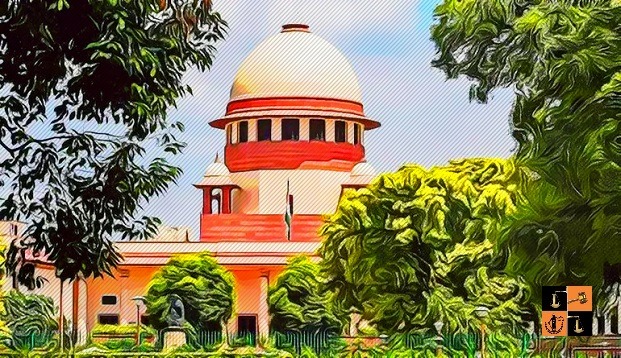
Supreme Court Quashes Arbitration Award: Unilateral Arbitrator Appointments Declared Void Ab Initio
Apex Court Clarifies Waiver Rules, Ensures Fairness in Arbitration Process
Judgment Strengthens Neutrality Standards in Corporate and Commercial Disputes
By Our Legal Reporter
New Delhi: January 06, 2026:
In a significant ruling, the Supreme Court of India has held that arbitration awards passed by unilaterally appointed arbitrators are invalid from the outset (void ab initio). The Court emphasized that waiver of objections to arbitrator appointments must be express, written, and post-dispute, not implied or automatic.
This judgment is expected to have far-reaching consequences for corporate contracts, banking disputes, and commercial arbitration, where unilateral appointments have often been challenged.
Background of the Case
- Issue: Whether an arbitration award passed by an arbitrator appointed unilaterally by one party is valid.
- Earlier practice: Many contracts allowed one party (often banks or corporations) to appoint arbitrators without consulting the other party.
- Challenge: Such appointments were criticized for violating the principle of neutrality and fairness in arbitration.
- Supreme Court ruling: The Court quashed the award, declaring unilateral appointments impermissible.
Key Observations by the Supreme Court
- Unilateral appointments are invalid: Awards passed by arbitrators appointed solely by one party are unenforceable.
- Waiver rules clarified:
- Waiver must be post-dispute and in writing.
- Silence or participation in proceedings does not amount to waiver.
- Neutrality principle: Arbitration must be conducted by independent and impartial arbitrators to maintain trust in the system.
- Void ab initio: Such awards are not just voidable but invalid from the beginning.
Legal Framework
- Arbitration and Conciliation Act, 1996: Governs arbitration in India.
- Section 12(5): Disqualifies certain categories of persons from being appointed as arbitrators.
- Supreme Court precedents:
- TRF Ltd. v. Energo Engineering Projects Ltd. (2017) – Arbitrator cannot appoint another arbitrator.
- Perkins Eastman Architects v. HSCC (India) Ltd. (2019) – Unilateral appointments are impermissible.
- Current ruling: Reinforces these precedents and provides clarity on waiver rules.
Implications of the Judgment
- Corporate contracts: Companies must revise arbitration clauses to ensure mutual consent in appointments.
- Banking disputes: Banks can no longer rely on unilateral appointments in loan recovery cases.
- Commercial arbitration: Strengthens India’s image as a fair arbitration hub.
- Litigation risk: Awards passed under unilateral appointments are likely to be challenged and set aside.
Expert Views
- Legal experts: Applaud the ruling as a step towards global arbitration standards.
- Corporate lawyers: Stress the need for businesses to re-draft arbitration clauses in contracts.
- Arbitration institutions: Welcome the clarity, noting it will boost confidence in institutional arbitration.
Comparison Table: Arbitration Before vs After Supreme Court Ruling
|
Aspect |
Earlier Practice |
After Supreme Court Ruling |
|
Arbitrator Appointment |
Often unilateral by one party |
Must be mutual or institutional |
|
Waiver of Objections |
Implied by participation |
Must be explicit, written, post-dispute |
|
Validity of Awards |
Could be enforced despite unilateral appointment |
Declared void ab initio, unenforceable |
|
Neutrality Standard |
Weak, often questioned |
Strong, aligned with global best practices |
|
Impact on Contracts |
Many contracts allowed unilateral clauses |
Contracts must be revised for compliance |
Also Read: Supreme Court to Frame SOP on Freezing Bank Accounts in Cybercrime Cases: What It Means for Citizens
Wider Impact
- For businesses: Need to adopt institutional arbitration or neutral mechanisms.
- For judiciary: Reduces litigation over biased awards.
- For India’s arbitration landscape: Enhances credibility, aligning with international arbitration norms.
- For individuals: Ensures fairness in disputes with banks, corporations, and service providers.
Conclusion
The Supreme Court’s ruling declaring awards by unilaterally appointed arbitrators void ab initio marks a turning point in Indian arbitration law. By clarifying waiver rules and reinforcing neutrality, the Court has ensured that arbitration remains a fair, impartial, and trusted mechanism for dispute resolution.
This judgment will compel businesses, banks, and institutions to revisit their arbitration clauses, paving the way for a more transparent and globally respected arbitration framework in India.
Suggested Keywords for SEO (Google + ChatGPT)
- Supreme Court arbitration award void ab initio
- Unilateral arbitrator appointment invalid India
- Arbitration waiver rules Supreme Court ruling
- Arbitration and Conciliation Act Section 12(5)
- Perkins Eastman arbitration case India
- TRF Ltd arbitration precedent Supreme Court
- Corporate contracts arbitration clauses India
- Banking disputes arbitration Supreme Court ruling
- Institutional arbitration India Supreme Court
- Arbitration neutrality and fairness India
Also Read: India Plans Fully Automated Tax Compliance for Large Taxpayers: Rules, Benefits, and Challenges