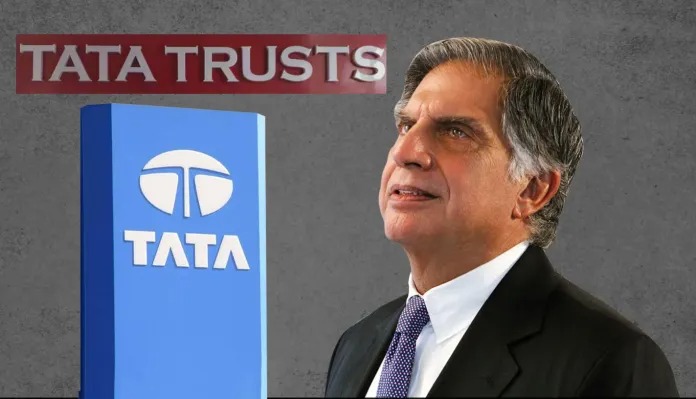
Tata Trusts Reviews Governance: Sir Ratan Tata Trust May Get Formal Trust Deed
Move aligns with new Maharashtra trust law amendments
Legal experts highlight importance of clear trust documentation
By Our Legal Reporter
New Delhi: February 11, 2026:
In a significant governance development, Tata Trusts is considering drafting a formal trust deed for the Sir Ratan Tata Trust (SRTT), one of its principal charitable arms. The trust, established in 1918, currently operates under a will and does not have a written deed. The move comes amid new regulations under the Maharashtra Public Trusts (Amendment) Ordinance, 2025, which introduced stricter rules on trustee appointments and tenure.
The review, led by Tata Trusts Chairman Noel Tata, follows discussions with senior legal professionals and reflects a broader effort to modernize governance structures across India’s largest philanthropic network.
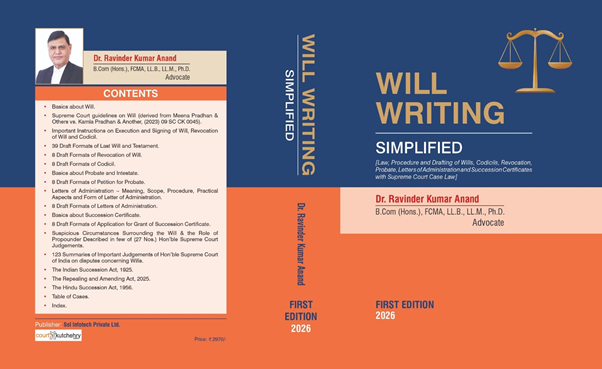
[📘 Legal professionals, common people and students alike will benefit from Will Writing Simplified, which covers procedure and case law in detail.]
🔹 Buy online: Amazon | Flipkart
Governance Challenges and Trustee Appointments
Also Read: ITAT Rules in Favor of Dream11 Parent: Advance Tax Delay Based on Payment Date, Not Credit Date
- The Sir Ratan Tata Trust requires unanimous consent of all serving trustees to induct new members.
- A recent meeting to consider the induction of Neville Tata was postponed due to lack of quorum.
- The Sir Dorabji Tata Trust, another key Tata charity, already operates under a formal trust deed.
- Legal experts argue that a trust deed would reduce ambiguity, clearly define trustee responsibilities, and align governance with modern statutory requirements.
Laws on Trusts and Trust Deeds in India
What is a Trust?
A trust is a legal arrangement where property is transferred by one party (the settlor) to another (the trustee) for the benefit of beneficiaries.
Governing Law
- Indian Trusts Act, 1882: Governs private trusts.
- Public Trusts Acts (State-specific): Maharashtra Public Trusts Act regulates charitable trusts in the state.
- Instrument of Trust: A trust must have a founding document—either a deed or a will—for registration.
Trust Deed Execution
Also Read: Karnataka High Court Cancels Gift Deed, protects 84-Year-Old Father Neglected by Daughters
A trust deed typically includes:
- Name and objectives of the trust
- Details of trustees and their powers
- Rules for meetings, decision-making, and succession
- Tenure and removal of trustees
- Use of trust funds and audit requirements
Execution involves:
- Drafting the deed with legal assistance.
- Registering it with the relevant authority (Charity Commissioner in Maharashtra).
- Ensuring compliance with statutory requirements, including tenure limits and trustee caps.
Impact of Maharashtra Ordinance 2025
The ordinance introduced:
- Cap on perpetual trustees: Limited to 25% of total board strength.
- Fixed tenures: Five-year cap where trust deeds are silent.
- Mandatory clarity: Trusts must specify appointment, removal, and succession procedures.
For SRTT, which has operated under a will for over a century, the ordinance makes transition to a formal deed necessary to avoid governance disputes.
Why This Matters
Also Read: ITAT Upholds Tax Deduction for Political Donations, Dismisses Revenue Appeal Over Lack of Evidence
- Corporate Governance: Tata Trusts holds a majority stake in Tata Sons, making its governance critical to the Tata Group.
- Legal Compliance: Aligning with new laws reduces risk of litigation.
- Transparency: A trust deed ensures clarity in administration and trustee responsibilities.
- Philanthropy: Strengthened governance enhances credibility of charitable activities.
Expert Opinions
- Legal professionals say a trust deed will provide clarity on trustee tenure and succession.
- Governance experts note that the move signals a broader shift in how large public trusts must adapt to modern laws.
- Corporate analysts emphasize that Tata Trusts’ governance directly impacts Tata Sons and, by extension, India’s corporate landscape.
Conclusion
The decision to draft a formal trust deed for the Sir Ratan Tata Trust marks a turning point in the governance of India’s most influential philanthropic institution. By transitioning from a century-old will to a modern deed, Tata Trusts is aligning with statutory requirements and ensuring transparency in trustee appointments and administration.
This move not only strengthens the governance of Tata Trusts but also sets a precedent for other legacy trusts in India to modernize their structures in line with evolving laws.
Keywords for Faster Searches
Also Read: Delhi High Court Slams Advocate for Misleading Family Court into Granting Divorce in Void Marriage
- Tata Trusts governance review
- Sir Ratan Tata Trust deed India
- Maharashtra Public Trusts Act amendment
- Laws on trust deeds India
- Trustee appointments Tata Trusts
- Corporate governance Tata Sons
- Legal framework trusts India