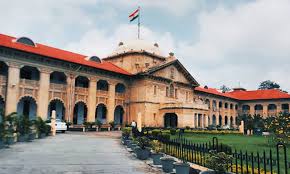
Allahabad High Court: Article 226 Cannot Be Used to Recover Dues from Private Parties
Court Imposes ₹5,000 Cost on Petitioner for Misusing Writ Jurisdiction
Judges Stress That Contractual Disputes Must Be Settled Through Civil Remedies
By Our Legal Correspondent
New Delhi: January 31, 2026:
In a significant ruling, the Allahabad High Court has clarified that Article 226 of the Constitution of India cannot be invoked to recover dues from private parties. The Court dismissed a writ petition filed by a transport company against another private entity, imposing an exemplary cost of ₹5,000 on the petitioner. The judgment underscores the principle that writ jurisdiction is meant for enforcement of fundamental rights and public law remedies, not for resolving private contractual disputes.
Background of the Case
- The case was filed as Writ-C No. 280 of 2026 by Union Transport Corporation, seeking recovery of dues from a private company.
- The petitioner argued that the writ jurisdiction of the High Court should be used to enforce payment obligations.
- The Division Bench comprising Justice Atul Sreedharan and Justice Siddharth Nandan rejected the plea, noting that writ petitions against private parties are not maintainable.
- The Court expressed strong disapproval of such petitions, stating that they waste judicial time and burden the system.
Key Highlights of the Judgment
- Article 226 scope clarified: The Court reiterated that writ jurisdiction is primarily for enforcing fundamental rights against the State or public authorities.
- Private disputes excluded: Recovery of dues from private parties must be pursued through civil suits, arbitration, or other contractual remedies.
- Exemplary costs imposed: The Court levied ₹5,000 on the petitioner to discourage frivolous use of writ jurisdiction.
- Judicial time protected: The ruling emphasized that courts must focus on genuine constitutional and public law matters.
Broader Legal and Social Implications
- Strengthening judicial discipline: The ruling discourages misuse of writ jurisdiction for private disputes.
- Guidance for litigants: Parties must approach civil courts or arbitration for recovery of dues, not High Courts under Article 226.
- Impact on businesses: Companies must ensure proper contractual documentation and legal remedies instead of relying on writ petitions.
- Judicial efficiency: By curbing frivolous petitions, the Court ensures faster resolution of genuine constitutional cases.
Expert Opinions
Legal experts have welcomed the judgment, noting that it aligns with established constitutional principles. Senior advocates pointed out that writ jurisdiction is extraordinary and should not be diluted by private disputes. The ruling also serves as a reminder for businesses to adopt proper legal channels for recovery of dues.
Practical Advice for Citizens and Businesses
- Do not misuse writ jurisdiction: Article 226 is not a shortcut for contractual disputes.
- File civil suits or arbitration claims: These are the proper remedies for recovery of dues.
- Maintain proper contracts: Written agreements and enforceable clauses are essential for legal protection.
- Consult legal experts: Before filing petitions, seek advice on the appropriate forum and remedy.
Recommended Resource for Legal Understanding
If you want practical guidance on drafting wills, codicils, and probate procedures, Will Writing Simplified is an invaluable resource. It provides clear explanations of Indian succession laws and Supreme Court case references.
Conclusion
The Allahabad High Court’s ruling that Article 226 cannot be invoked to recover dues from private parties is a landmark clarification of constitutional law. By dismissing the writ petition and imposing costs, the Court has reinforced the principle that writ jurisdiction is reserved for public law remedies, not private contractual disputes. This judgment will serve as a guiding precedent for litigants and businesses, ensuring that the judicial system is not burdened with frivolous petitions.
Suggested Keywords for Faster Searches
- Allahabad High Court Article 226 judgment
- Article 226 writ petition private party
- Recovery of dues civil suit India
- Writ jurisdiction misuse Allahabad HC
- Union Transport Corporation writ dismissed
- Costs imposed frivolous writ petition India
- Will Writing Simplified book probate guidance
Also Read: COURTKUTCHERY SPECIAL ON #BUDGET2026 ON TAXPAYERS IMPACT