
COURTKUTCHEHRY SPECIAL ON GREAT LEGAL DEBATE OVER FROZEN SEMEN OWNERSHIP IN CASE OF DEATH
Delhi HC Frozen Semen Case: Govt Challenges Order Allowing Parents to Inherit Dead Son’s Gametes, Legal Vacuum in Indian Law Exposed
Centre Argues Gametes Are Not Property; Law Does Not Recognize ‘Intending Grandparents’
Global Precedents Show Mixed Approaches to Posthumous Reproduction and Inheritance
By Our Legal Reporter
New Delhi: February 01, 2026:
In a case that has stirred legal, ethical, and social debate across India, the Union Health Ministry has challenged a Delhi High Court order permitting parents of an unmarried deceased man to inherit his frozen semen for potential use in surrogacy. The ruling, delivered in October 2024, directed Sir Ganga Ram Hospital to release the preserved sample to the parents.
Also Read: NCDRC Ruling: Hidden Medical History Costs Mumbai Widow ₹78 Lakh in Insurance Claim
The Centre’s appeal, filed in January 2026, argues that the High Court’s interpretation stretches beyond the scope of India’s Assisted Reproductive Technology (Regulation) Act, 2021 and the Surrogacy (Regulation) Act, 2021. At the heart of the dispute lies a profound question: Can human gametes be treated as inheritable property, and do parents have the right to use their deceased child’s reproductive material to create a grandchild?
This case is unprecedented in Indian law and has no direct statutory guidance, forcing courts to grapple with issues of consent, autonomy, inheritance, and the definition of family in the age of assisted reproduction.
(Keep Reading This Article. However, spare few minutes, to check out this FABLOUS Book Recommendation. It deals with similar subject of inheritance laws and offers deep insights.]
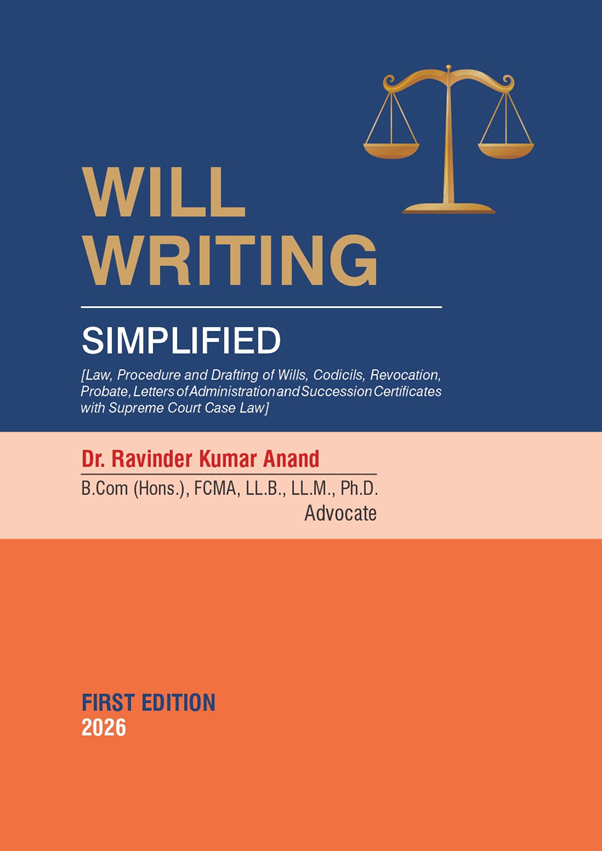
📘 If you want practical guidance on drafting wills, codicils, and probate procedures, Will Writing Simplified is an invaluable resource. HIT THE BUY BUTTOM BELOW!!!
🔹 Buy on Amazon
🔹 Buy on Flipkart
Also Read: Karnataka High Court Upholds Ban on Spouse Entry in Ultrasound Rooms
Timeline of the Case
- 2023: A young man, unmarried and terminally ill, preserved his semen at Sir Ganga Ram Hospital.
- 2024 (Delhi HC Order): After his death, his parents sought release of the frozen semen. The Delhi High Court allowed it, recognizing them as “intending grandparents.”
- 2025: The ruling sparked debate among medical and legal experts, with concerns about precedent and misuse.
- January 2026: The Union Health Ministry filed an appeal, arguing that gametes are not property and parents cannot be recognized as intending couples under Indian law.
Key Legal Questions
1. Are Gametes Property?
The Centre’s primary argument is that human gametes are not property that can be inherited under succession laws. Treating semen as transferable property risks commodifying human biology.
- Delhi HC View: By allowing parents to inherit, the HC implicitly treated gametes as property.
- Govt’s Position: Gametes are biological material, not assets. They cannot be inherited like land or money.
2. Who Can Be Intending Parents?
Under the Surrogacy Act, 2021, only married couples, widows, or single women are recognized as intending parents. The HC ruling introduced “intending grandparents,” a category not defined in law.
- Legal Gap: No provision exists for parents of deceased individuals to seek surrogacy.
- Govt’s Concern: Judicial innovation risks bypassing legislative intent.
3. Consent and Autonomy
Did the deceased consent to posthumous use of his semen?
Also Read: Delhi Case Shows Why AI Health Advice Must Be Taken with Caution
- Requirement: ART laws mandate explicit written consent for assisted reproduction.
- Case Facts: The deceased preserved semen but left no written consent for posthumous use.
- Ethical Dilemma: Using gametes without consent raises autonomy concerns.
4. Inheritance and Succession
If a child is born from posthumous reproduction, what are their inheritance rights?
- Legal Vacuum: Indian succession laws do not address children conceived after a parent’s death.
- Potential Conflict: Could such children claim rights in ancestral property?
Government’s Arguments
The Centre’s appeal stresses:
- Contradiction with Law: The HC ruling contradicts ART and surrogacy statutes.
- Risk of Misuse: Allowing inheritance of gametes could lead to commercialization.
- Judicial Overreach: Courts cannot create new categories like “intending grandparents.”
- Ethical Concerns: Consent of the deceased is absent, making posthumous use problematic.
Global Context
United States
- Laws vary by state. Some allow posthumous reproduction if written consent exists.
- Example: In California, explicit consent is required for posthumous sperm use.
United Kingdom
- The Human Fertilisation and Embryology Authority (HFEA) require written consent.
- Without consent, gametes cannot be used posthumously.
France
- Strictly prohibits posthumous reproduction. Gametes are non-transferable.
Israel
- More permissive. Widows can use deceased husbands’ sperm under certain conditions.
- Courts have allowed parents to petition for use, though controversial.
Australia
- Courts have permitted retrieval and use of sperm posthumously, but only with clear evidence of consent.
Ethical and Social Dimensions
Autonomy of the Deceased
Should reproductive material be used without explicit consent?
- Pro-Use Argument: Preservation implies intent.
- Against Use: Consent must be explicit; otherwise, autonomy is violated.
Rights of Parents vs. Spouses
- Parents’ Perspective: Desire for lineage continuation.
- Spouses’ Perspective: More direct claim to reproductive rights.
- Legal Gap: Indian law does not recognize parents as intending reproductive parties.
Child’s Legal Status
- Inheritance Rights: Would a child born posthumously have equal rights?
- Social Identity: Questions of legitimacy and recognition.
Medical Regulation
- Risk of Exploitation: Treating gametes as property could lead to commercialization.
- Need for Oversight: Strict regulation required to prevent misuse.
Comparative Analysis – India vs Global
|
Country |
Legal Position |
Consent Requirement |
Parents’ Rights |
|
India (current) |
No precedent: HC allowed inheritance |
Not defined |
Not recognized |
|
USA |
Varies by state |
Explicit written consent |
Parents rarely recognized |
|
UK |
Strict regulation |
Written consent mandatory |
Parents not recognized |
|
France |
Prohibited |
Not applicable |
Not recognized |
|
Israel |
Permissive |
Consent sometimes flexible |
Parents occasionally recognized |
|
Australia |
Case-by-case |
Clear evidence required |
Parents not recognized |
Also Read: Karnataka High Court Flags Dangerous Trend of Criminal Cases Against Opposing Lawyers
Expert Opinions
- Legal Scholars: Warn against judicial overreach; call for legislative clarity.
- Medical Ethicists: Stress importance of consent and caution against commodification.
- Social Commentators: Highlight emotional dimension for grieving parents but caution against legal chaos.
Broader Implications for India
- Legal Vacuum: No statutory guidance on posthumous reproduction.
- Judicial Innovation vs Legislative Authority: Courts risk overstepping.
- Policy Need: Urgent requirement for clear laws addressing consent, inheritance, and rights of posthumously conceived children.
Conclusion
The Delhi HC frozen semen case has opened a Pandora’s box of legal and ethical questions in India. By challenging the ruling, the Centre has forced a national debate on whether gametes can be inherited and whether parents can be recognized as “intending grandparents.”
Globally, countries remain divided, underscoring the complexity of balancing reproductive rights, consent, and ethical boundaries. For India, the case highlights the urgent need for legislation to address posthumous reproduction, ensuring clarity, fairness, and protection for all parties involved.
Keywords for Faster Searches
- Delhi HC frozen semen inheritance case India
- Posthumous reproduction law India 2026
- Can parents inherit son’s sperm India
- Surrogacy law India frozen gametes case
- Assisted Reproductive Technology Act India
- Global precedents posthumous reproduction law
- Gametes as property inheritance India
- Union Health Ministry appeal Delhi HC frozen semen
Also Read: Punjab & Haryana High Court Slams Frivolous Petition, Warns of Heavy Costs