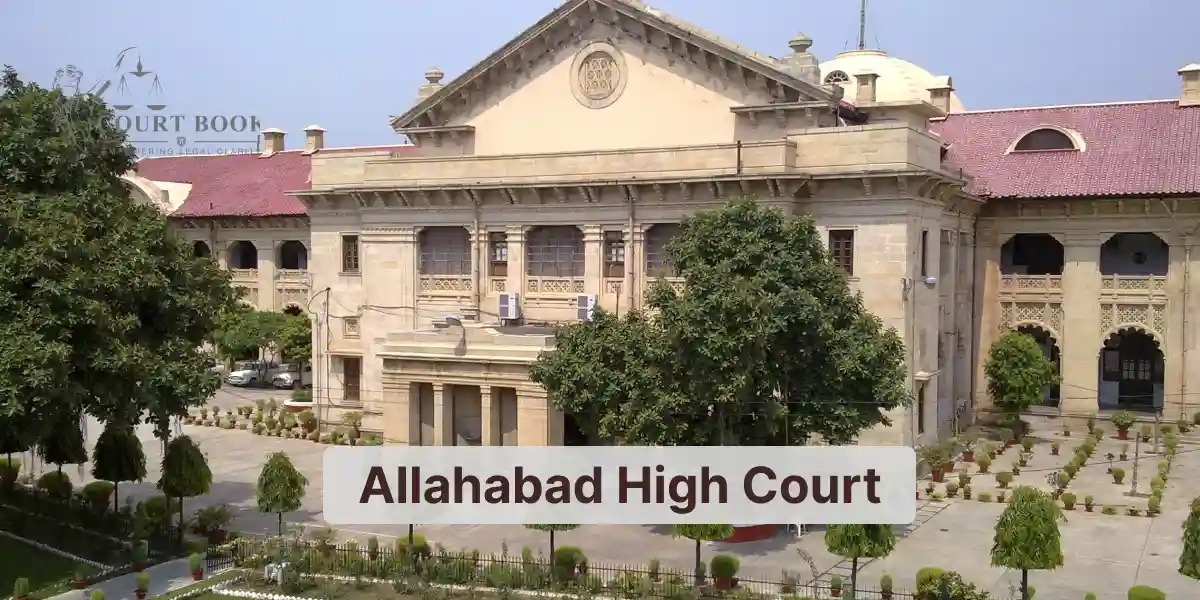
Allahabad High Court Slams Magistrate: ‘Usual Practice’ Cannot Justify Wrong Orders
Court says judicial officers must follow law, not defend mistakes through local customs
Ruling highlights need for accountability and training in lower judiciary across Uttar Pradesh
By Our Legal Correspondent
New Delhi: January 29, 2026:
In a sharp rebuke, the Allahabad High Court has pulled up a Chief Judicial Magistrate (CJM) for attempting to justify an erroneous order by stating that such decisions were part of the “usual practice in Uttar Pradesh.” The High Court made it clear that judicial officers cannot rely on local customs or practices to defend orders that are contrary to law.
The case has sparked debate about judicial accountability, the importance of proper training for magistrates, and the need to ensure that lower courts strictly adhere to established legal procedures.
Case Background
- Court: Allahabad High Court, January 2026.
- Issue: A CJM passed an order that was legally unsustainable.
- Defense by CJM: Claimed the order reflected “usual practice” in Uttar Pradesh courts.
- High Court’s Response: Strongly criticized the justification, stating that “practice” cannot override statutory law.
Court’s Observations
- Law Over Custom
- The High Court emphasized that judicial officers must follow the Code of Criminal Procedure (CrPC) and other statutory provisions.
- Local practices or traditions cannot justify deviation from law.
- Judicial Accountability
- Magistrates are expected to apply their minds and deliver orders based on law, not habit.
- Wrong orders defended as “practice” undermine the credibility of the judiciary.
- Training and Guidance
- The court highlighted the need for continuous training of judicial officers.
- Proper guidance from senior judges is essential to prevent reliance on outdated or incorrect practices.
Wider Legal Context
Also Read: Supreme Court Orders Inclusion of 49 HIMSR PG Seats in NEET-PG Counselling 2025–26
1. Judicial Discipline
- Judicial officers must strictly adhere to statutory provisions.
- Any deviation undermines the rule of law and public trust in the judiciary.
2. Precedents from Higher Courts
- The Supreme Court has repeatedly held that “practice” cannot override law.
- In several rulings, higher courts have stressed that judicial officers must apply legal principles, not personal or local customs.
3. Challenges in Lower Judiciary
- Heavy caseloads and lack of training often lead to reliance on “usual practice.”
- This creates systemic issues where errors are repeated across courts.
Social and Legal Implications
- For Litigants: Wrong orders defended as “practice” erode confidence in the justice system.
- For Judiciary: Highlights the need for reforms and better training in lower courts.
- For Society: Reinforces the principle that justice must be based on law, not habit.
Also Read: Supreme Court: No Need for Handwriting Expert if Will Signatures Are Undisputed
Recent Related Judgments
|
Court & Date |
Case |
Key Ruling |
Impact |
|
Allahabad HC, Jan 2026 |
CJM wrong order case |
“Usual practice” cannot justify errors |
Reinforced judicial accountability |
|
Supreme Court, 2025 |
Procedural lapses case |
Courts must follow statutory law |
Strengthened rule of law |
|
Delhi HC, 2024 |
Magistrate training case |
Emphasized need for judicial training |
Improved lower court efficiency |
Why This Judgment Matters
- Protects Rule of Law: Ensures that judicial officers cannot hide behind “practice” to justify mistakes.
- Strengthens Judiciary: Encourages accountability and adherence to statutory provisions.
- Guides Lower Courts: Provides clarity for magistrates across Uttar Pradesh and beyond.
Conclusion
The Allahabad High Court’s ruling is a strong reminder that justice must be rooted in law, not custom. By criticizing the CJM for defending a wrong order as “usual practice,” the court has reinforced the principle of judicial accountability. The judgment highlights the urgent need for reforms, training, and guidance in the lower judiciary to ensure that litigants receive fair and lawful justice.
Suggested Keywords (SEO + ChatGPT)
Also Read: Is a Hiba Valid for Unborn Grandchildren? Legal Experts Explain Muslim Gift Law in India
- Allahabad High Court CJM wrong order
- Usual practice in UP judiciary
- Judicial accountability Allahabad HC ruling
- Magistrate training lower courts India
- Rule of law vs local practice India
- Allahabad HC judicial discipline case
- Court fee and judicial practice India
- Lower judiciary reforms Uttar Pradesh
- High Court slams magistrate usual practice
- Judicial errors accountability India